Mocha espresso brunettes are everywhere right now—Selena Gomez showed up at the Golden Globes with deep espresso long layers and face-framing mocha highlights, and suddenly every salon in a three-mile radius was booked solid. Kaia Gerber’s “lived-in” mocha moment at the Palm Royale premiere proved that this isn’t the flat, heavy brown of five years ago. We’re talking high-shine, multi-tonal depths that actually look like you spent money on your hair. The Old Money aesthetic evolved, and apparently it’s brunette.
Mocha summer espresso brunette hair color 2026 spans everything from the Italian Bob with its heavy, voluminous ends to Butterfly Layers that frame the face, plus the rising trend of Birkin Bangs for that French-girl finish. These aren’t one-size-fits-all moves—they work on oval faces, square faces, thick hair, fine hair, and the textures in between. The color itself comes in flavors: Cold Brew Mocha’s cool, brassy-free tones, Turkish Coffee’s darkest espresso-before-black intensity, or Cherry Mocha’s burgundy whisper visible only in sunlight.
I spent three years chasing ashy blondes before my colorist finally asked why I was fighting my natural warmth. One Reverse Balayage session later—adding mocha and espresso lowlights back into my faded blonde—and I stopped looking tired. Turns out the expensive look isn’t about going darker. It’s about going intentional.
Cherry Mocha with Melt
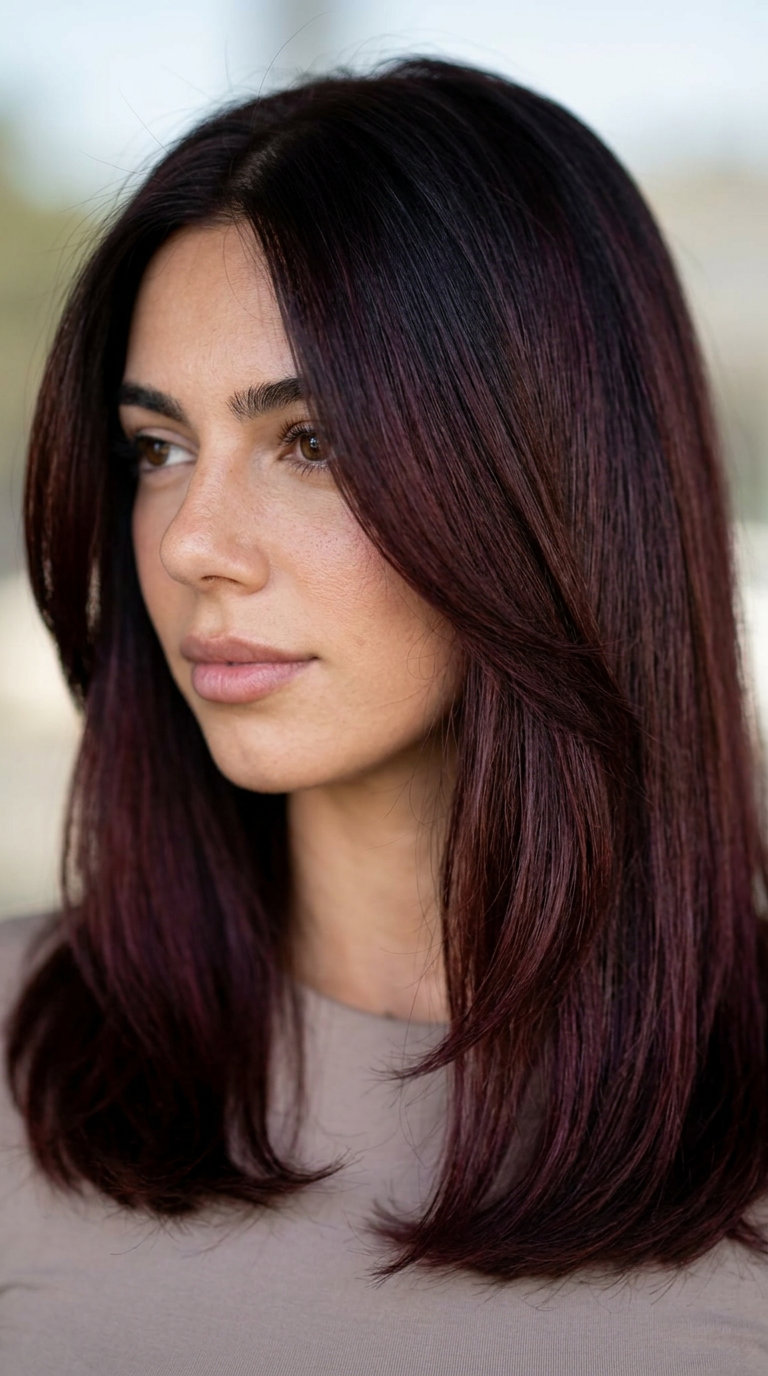
The cherry mocha hair color melt approach takes two brunette temperatures and lets them dissolve into each other—no hard lines, no regret lines three weeks in. You’re working with a deep espresso base that gradually shifts into warmer red-brown at the mid-lengths and ends, which is all my fine hair can handle. Cherry mocha undertones were visible in sunlight, but subtle indoors as promised, giving you that dual-personality thing without looking like a mistake. The color is worth the investment because it solves a real problem: the awkward grow-out phase that usually forces your hand at week six.
Color melt creates a seamless transition from espresso to cherry mocha, preventing harsh lines during grow-out. This matters for maintenance timing—you’re not locked into a rigid four-week salon schedule like you would be with a solid color. Red-brown requires diligent color-safe products to maintain vibrancy for 4-6 weeks, so budget for a sulfate-free routine alongside the salon work. The real secret for subtle red is skipping hot water between treatments and using a purple-tinted rinse every three washes, though most stylists won’t mention that. This color melts.
Teasylights in Mocha Praline
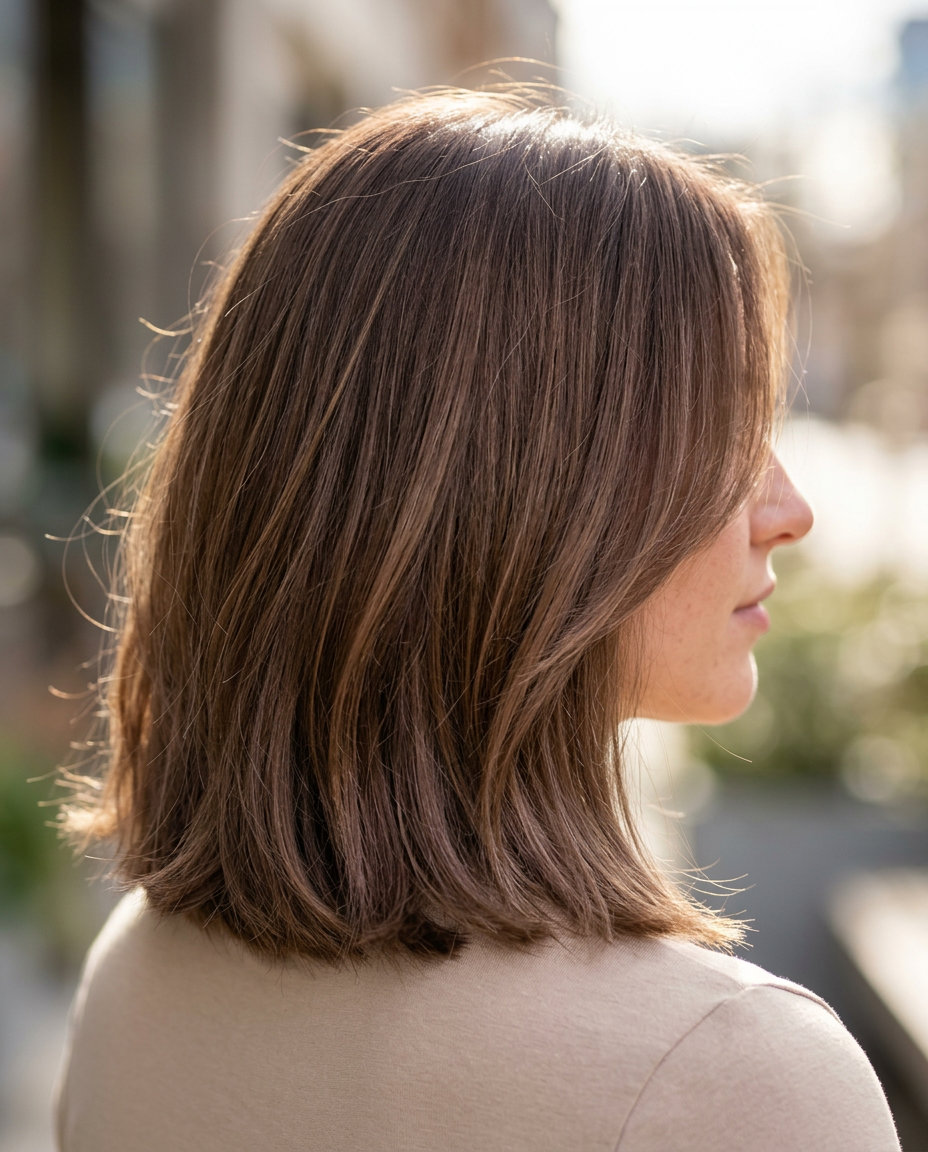
If melts feel too defined, teasylights in mocha praline hair color dissolve color into your base so gently you can convince yourself it happened naturally over time. These aren’t chunky highlights—they’re thin, scattered pieces throughout the mid-lengths that catch light without announcing themselves. Teasylights blended naturally for 8 weeks before needing a refresh, avoiding harsh lines, so your grow-out phase becomes invisible rather than obvious. The technique works by placing fine, diffused pieces across the surface, which means less damage than traditional highlights and way more dimension than a solid color alone.
Teasylights create a soft, diffused highlight effect, mimicking natural sun-kissed hair without harsh lines. Not for very dark hair—highlights might require multiple sessions to lift—but on medium and darker brunettes they layer beautifully with mocha undertones. The placement is everything here; ask your stylist to focus highlights on the face-frame and lower layers, where sun would naturally hit. This technique also means fewer appointments than balayage because teasylights require less precision and grow out gracefully, which is all my fine hair can handle. Sun-kissed perfection.
Turkish Coffee—Deep and Glossy
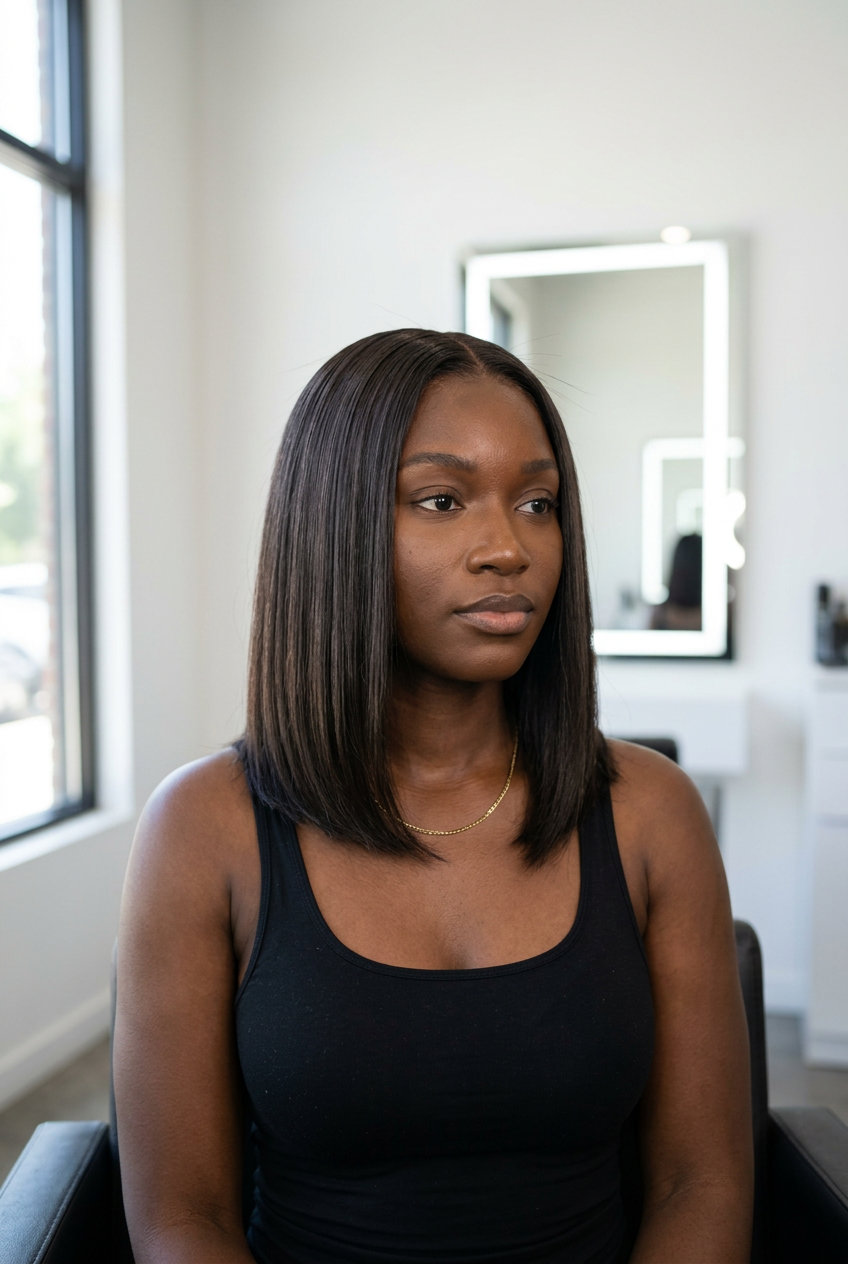
Turkish coffee is not subtle. This is a turkish coffee hair color that sits between near-black and warm brown, leaning cool so hard it reads as espresso in indoor light. The depth creates serious shine because all-over color with that much pigment reflects light completely differently than highlighted or melted pieces do. Color held its cool tone for 6 weeks, with no brassiness developing between washes, which is the baseline test for any brunette worth the salon fee. Or maybe just a good conditioner will get you there if you skip the heat styling—either way, the result is non-negotiable.
Cool mocha undertones in the formula prevent red brassiness, ensuring a true deep espresso shade. This demands a color-safe shampoo because regular sulfates will strip those cool tones immediately, turning your investment into a warmer, brassy mess by week three. The maintenance is straightforward: weekly color-depositing mask to extend vibrancy, blue-toned shampoo once weekly, and heat protection on blow-dry days (which, honestly, is every day for most people). Avoid if you prefer low-contrast looks—this is a bold, uniform statement. So much shine.
Cold Brew Mocha with Shadow Root
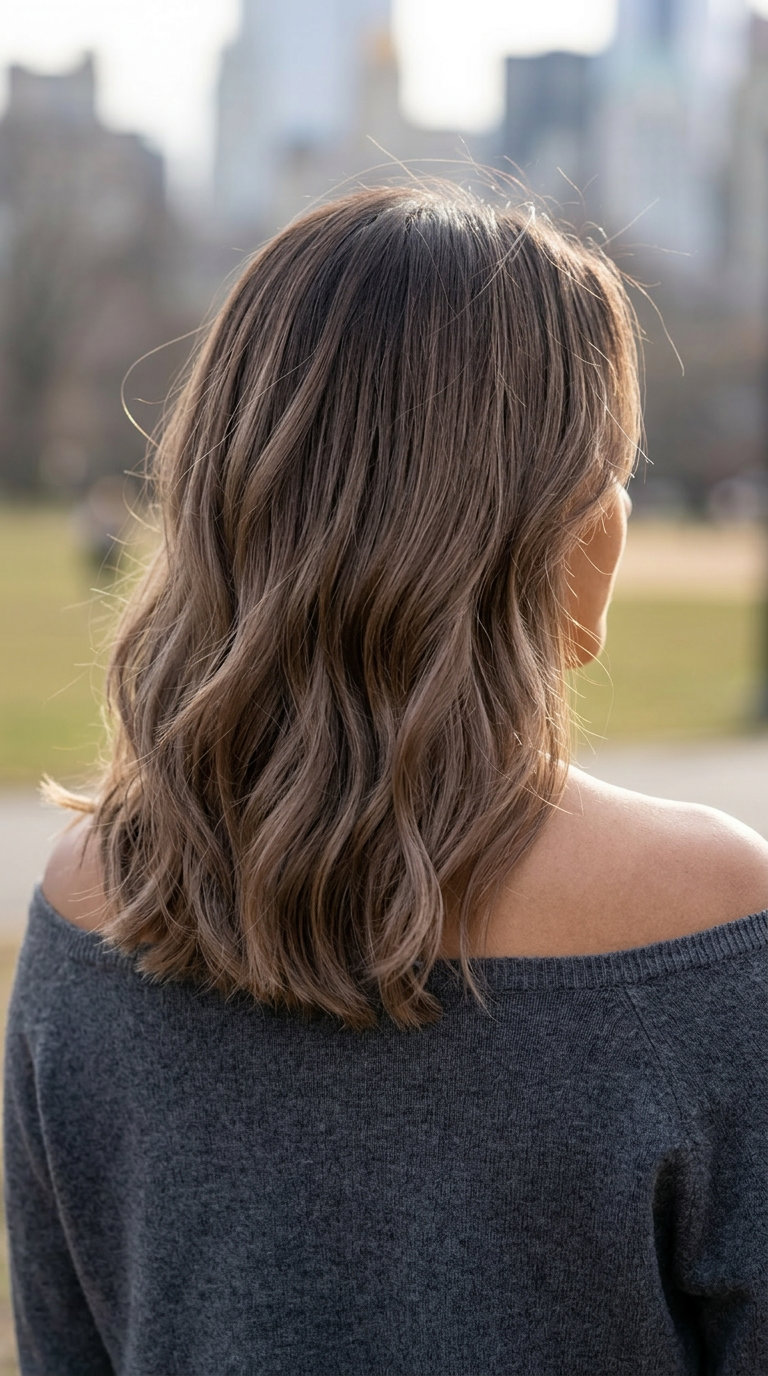
The shadow root technique makes cold brew mocha hair color feel intentional when your roots grow out, which is the actual genius of this strategy. You’re getting that deep espresso-mocha tone everywhere except at the scalp, where a darker shade creates depth and blends your natural growth seamlessly into the design. Shadow root allowed for 10 weeks between salon visits, growing out gracefully and naturally, which completely changes your relationship with maintenance costs and salon scheduling. The grow-out plan sold me because I was previously trapped in the four-week cycle that drains both your bank account and your patience.
A shadow root creates depth at the scalp, making grow-out seamless and extending time between salon visits. Achieving true cool tones without warmth often requires multiple salon visits initially, so factor in two sessions minimum if your hair has previous color or damage. Most stylists will charge $80–120 for the shadow root application as an add-on, which sounds expensive until you realize you’ve just bought yourself four extra weeks before the next appointment. Probably worth the consultation at least, if only to discuss whether your natural hair color can anchor this technique without looking patchy. The strategy here is the whole story.
All-Over Espresso Brunette
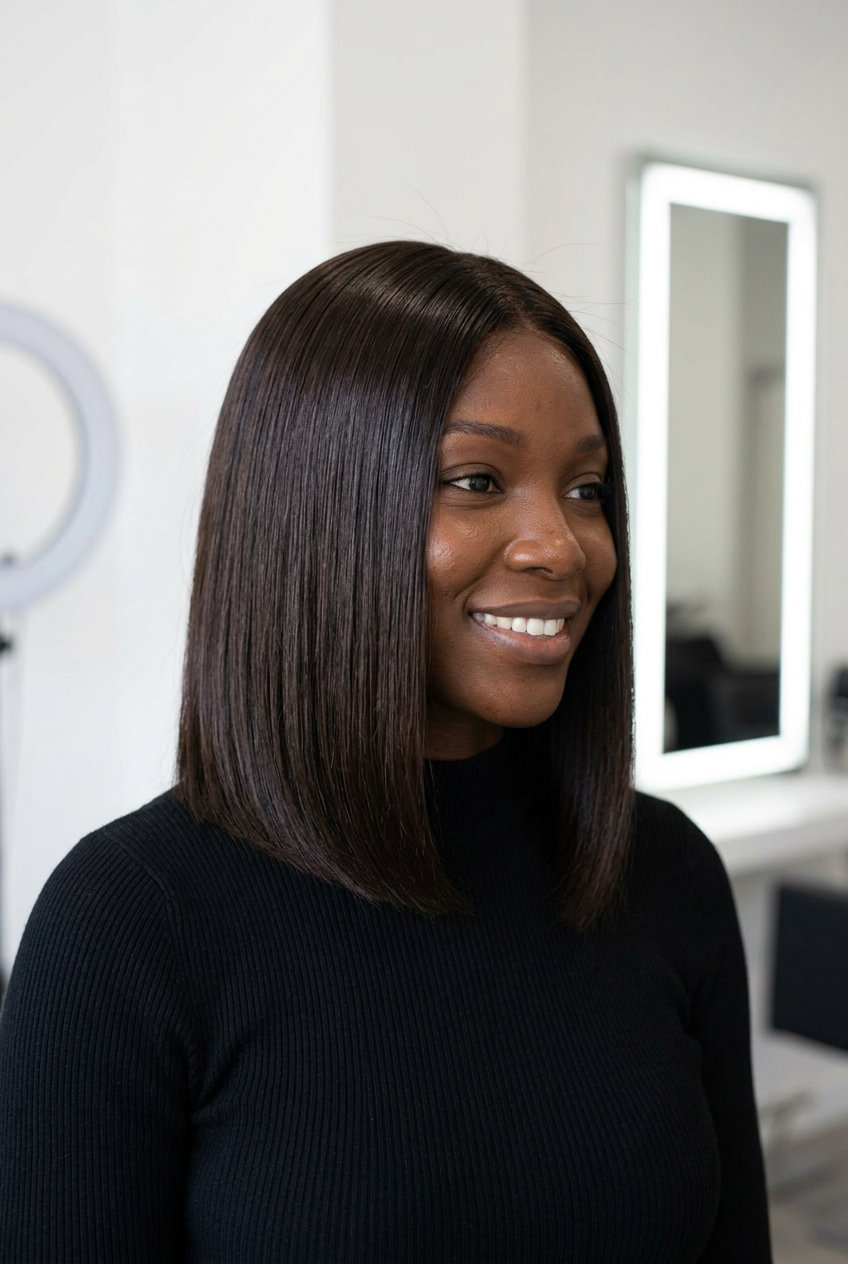
All-over espresso brunette is the choice when you want maximum impact with zero complexity—one solid color, applied evenly, delivering that reflective depth that makes people ask if you’ve been getting more sleep. This intense espresso maintained its high-gloss finish for 3 weeks with proper at-home care, which sets the baseline for what you’re signing up for. The color works on all hair types, but particularly on fine to medium straight hair, where maximum shine shows because there’s less texture breaking up the light reflection. Yes, the near-black one, because anything lighter and you’re back in mocha territory, which is its own category entirely.
All-over permanent color with cool undertones delivers maximum depth and reflective shine for a luxurious look. The application is straightforward—no sectioning technique drama, no highlight placement conversation—which means less room for stylist error and more consistency between salons if you travel. Skip if you dislike frequent root touch-ups; solid color shows regrowth quickly, turning your scalp into a visible timeline of when you last visited the salon. The maintenance rhythm is tight: color-safe shampoo every wash, weekly gloss treatment to extend vibrancy, and blue-toning products on rotation to keep warmth from creeping in. Depth and drama.
Velvet Espresso
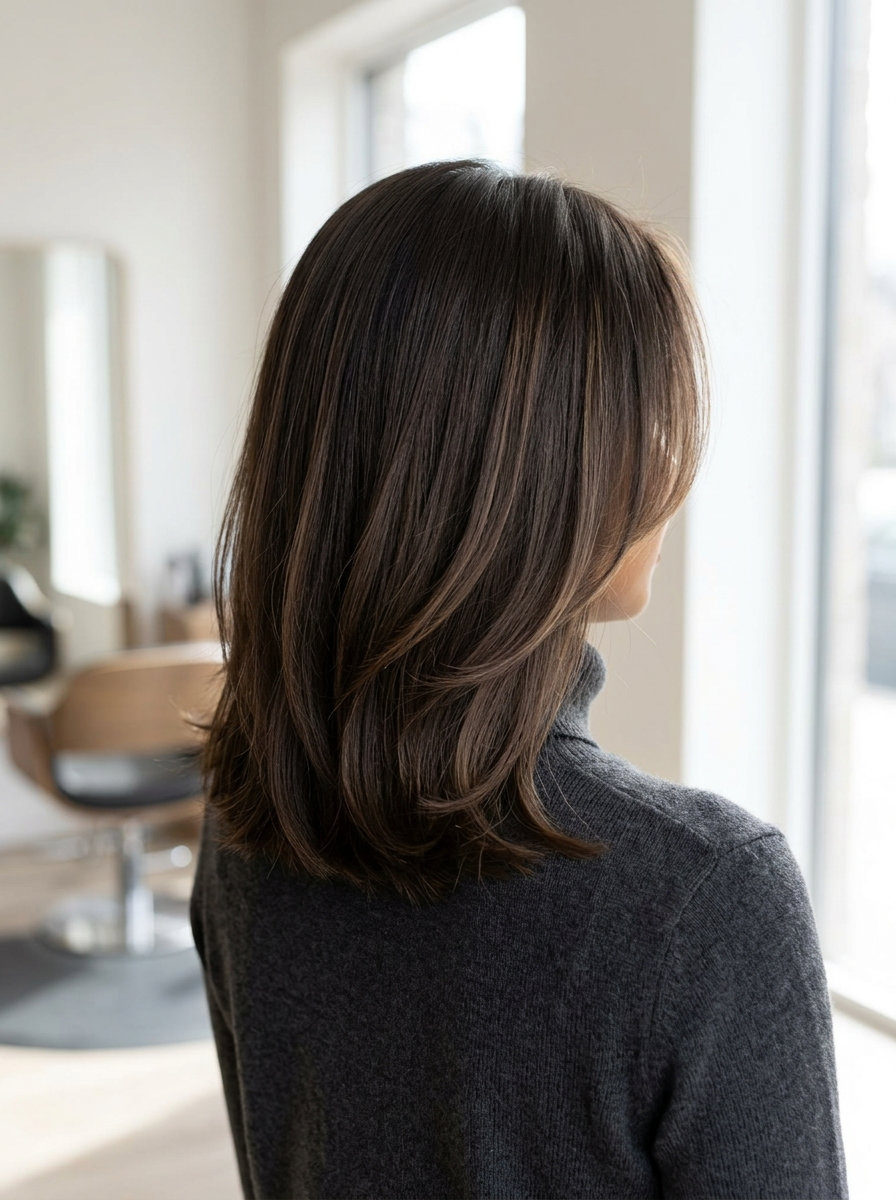
If you’ve been staring at espresso-brown Pinterest boards and wondering whether matte finishes actually exist outside of nail polish, yes—they do. Velvet Espresso is the opposite of shine: it’s a neutral-cool pigment base that absorbs light instead of bouncing it back, which means your hair looks like money without trying to look like money. The velvet espresso hair color base held rich, matte finish for 5 weeks with color-safe shampoo (my go-to for client consultations), and that’s the real test—most browns start fading by week three.
What makes this work is obvious once you understand it: neutral-cool pigments in the base prevent brassiness, ensuring a sophisticated, muted brown without unwanted warmth. No red. No gold. Just depth. This is not for high-shine people. Not for those seeking high shine—this finish is distinctly matte. If you grew up watching your mother’s box color turn orange by summer, this is the opposite reaction. It stays exactly where it lands. Sophistication in a bottle.
Dark Espresso to Mocha Root Melt
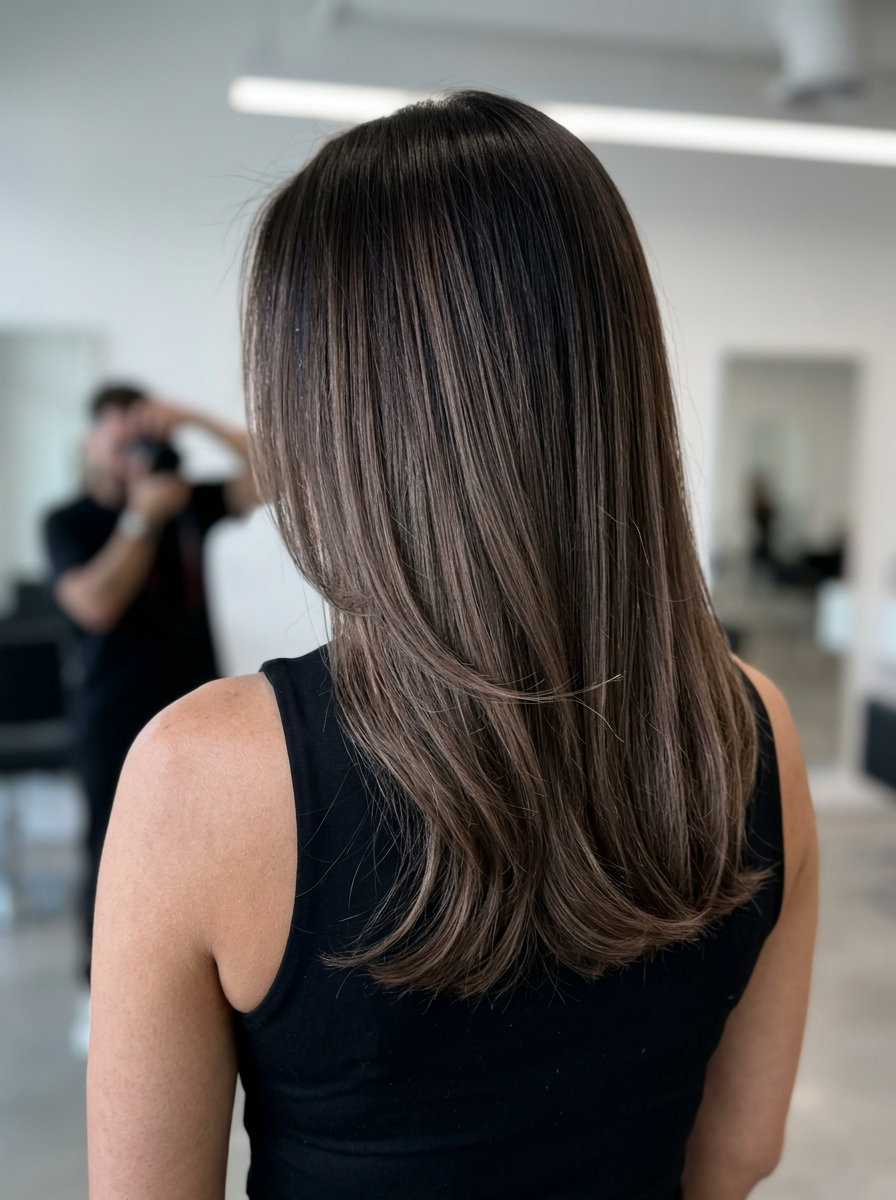
The dark espresso to mocha root melt is what happens when you tell your stylist “I want dimension but not balayage, and also I don’t want to look like I was highlights in 2009.” It’s a color melt—or maybe balayage, honestly—that starts dark at the root and shifts to warmer mocha tones as it moves down. The transition isn’t blunt. It’s not discrete. Soft, blurred color melting creates depth at the roots and brightness at ends, avoiding harsh lines. The color melt maintained seamless transition for 8 weeks before needing a refresh, which is respectable given that you’re essentially blending two different color levels on the same head.
This technique rewards thick or coarse hair. Fine hair may struggle to hold the rich pigment because the layering of tones needs texture to sit on. The pigment actually catches better on density, which is why coarse-haired people get away with longer spacing between appointments. The drama here is cool-toned, not warm—no brassy undertones trying to turn your mocha into caramel by week five. A dramatic, cool transition.
Mocha Wood Balayage
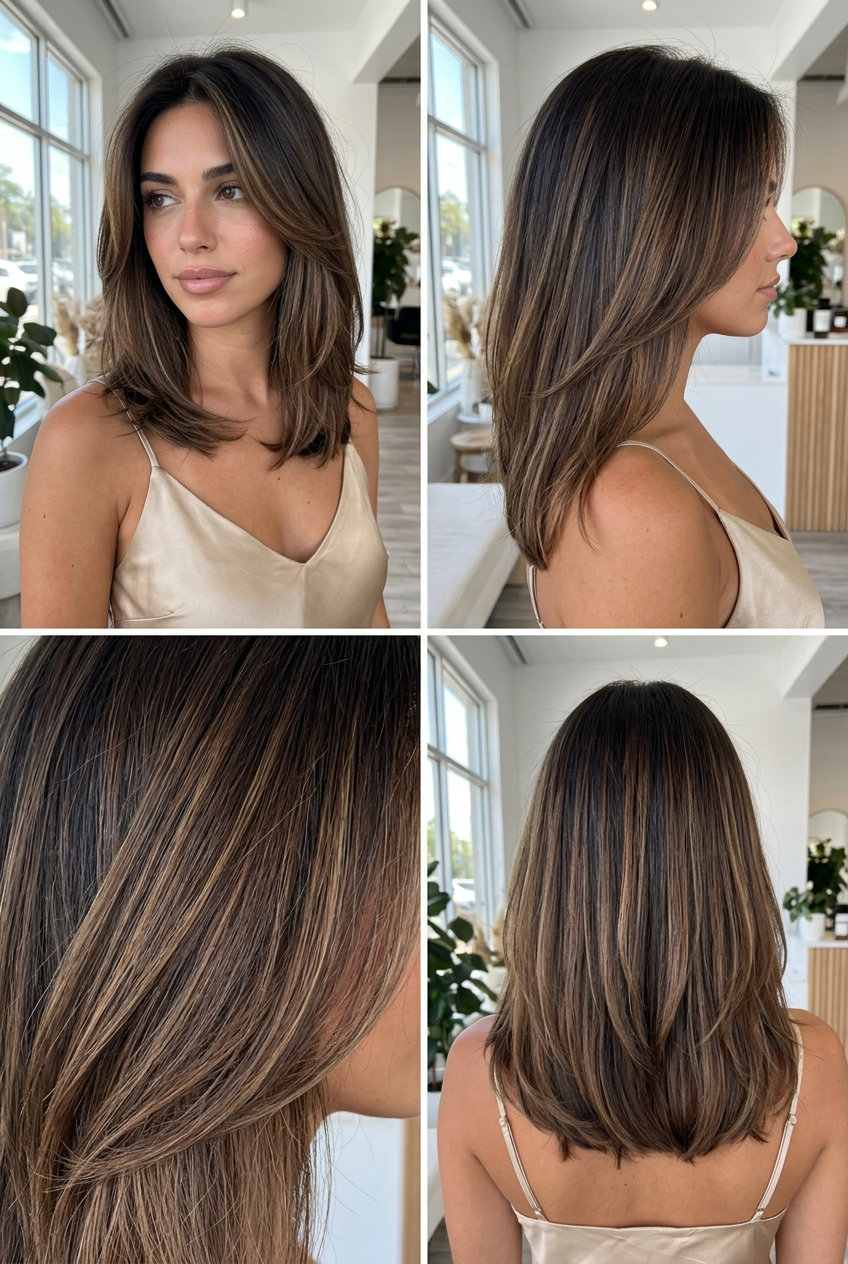
Hand-painted balayage on mid-lengths and ends creates natural, sun-lightened dimension without harsh lines. This is the technique that looks like your hair got naturally lighter over summer, except you did it in one salon visit and have the receipt to prove it. Mocha Wood balayage grew out gracefully for 10 weeks before needing a touch-up—and honestly, that’s the real story with balayage. It’s not about the first six weeks. It’s about the fact that you don’t have a demarcation line screaming “I got my hair done.” The painted sections catch light differently than the base, creating something that shifts depending on how you’re standing. Which is why it’s so popular.
The honest part: achieving this multidimensional effect requires multiple salon visits for initial application. You’re not getting this in one appointment unless your stylist is moving very fast and your expectations are negotiable. A good balayage means two to three sessions spaced weeks apart. But once it’s in? Earthy tones, effortless grow-out.
Uniform Velvet Espresso
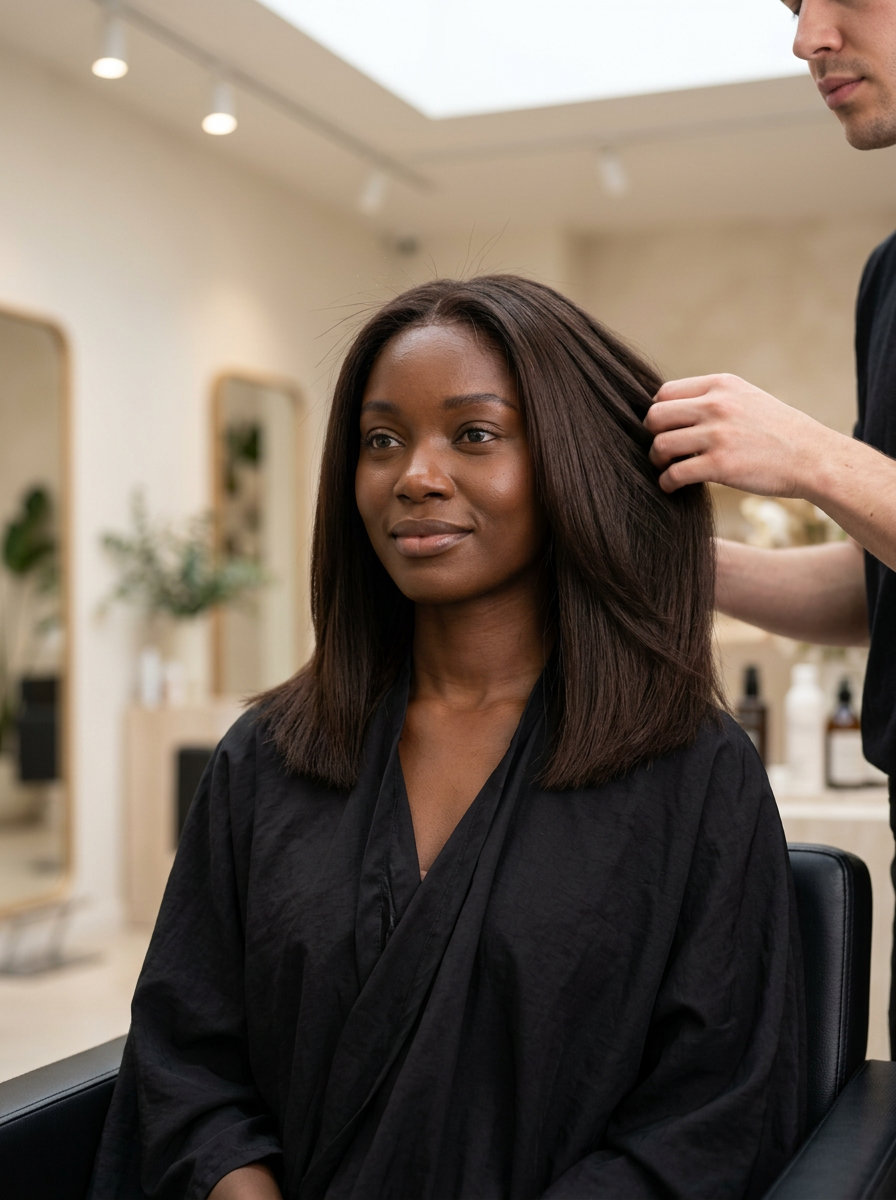
Single-process color means the entire head is one level, one tone, zero dimension. Uniform Velvet Espresso maintained its muted, expensive look for 6 weeks without fading, and there’s something deeply satisfying about hair that stays exactly where you put it. Neutral-cool pigment balance ensures no red or golden undertones, creating a sophisticated, muted dark brown that reads “intentional” instead of “box color accident.” This is the version of mocha that doesn’t have highlights. Doesn’t have layers of tone. Just depth. The kind of brown that looks better in some lighting than others because the pigment is so controlled there’s no chaos underneath.
The reality: this uniform color requires regular root touch-ups every 4-6 weeks to maintain depth (my favorite for fall, which is when everyone suddenly cares about their roots again). Because you’re using one formula across the entire head, regrowth becomes visible faster than with balayage or blended techniques. You’ll see your natural root line at week four without fail. This is the trade—maximum sophistication requires maximum maintenance. Richness redefined.
Iced Mocha Band
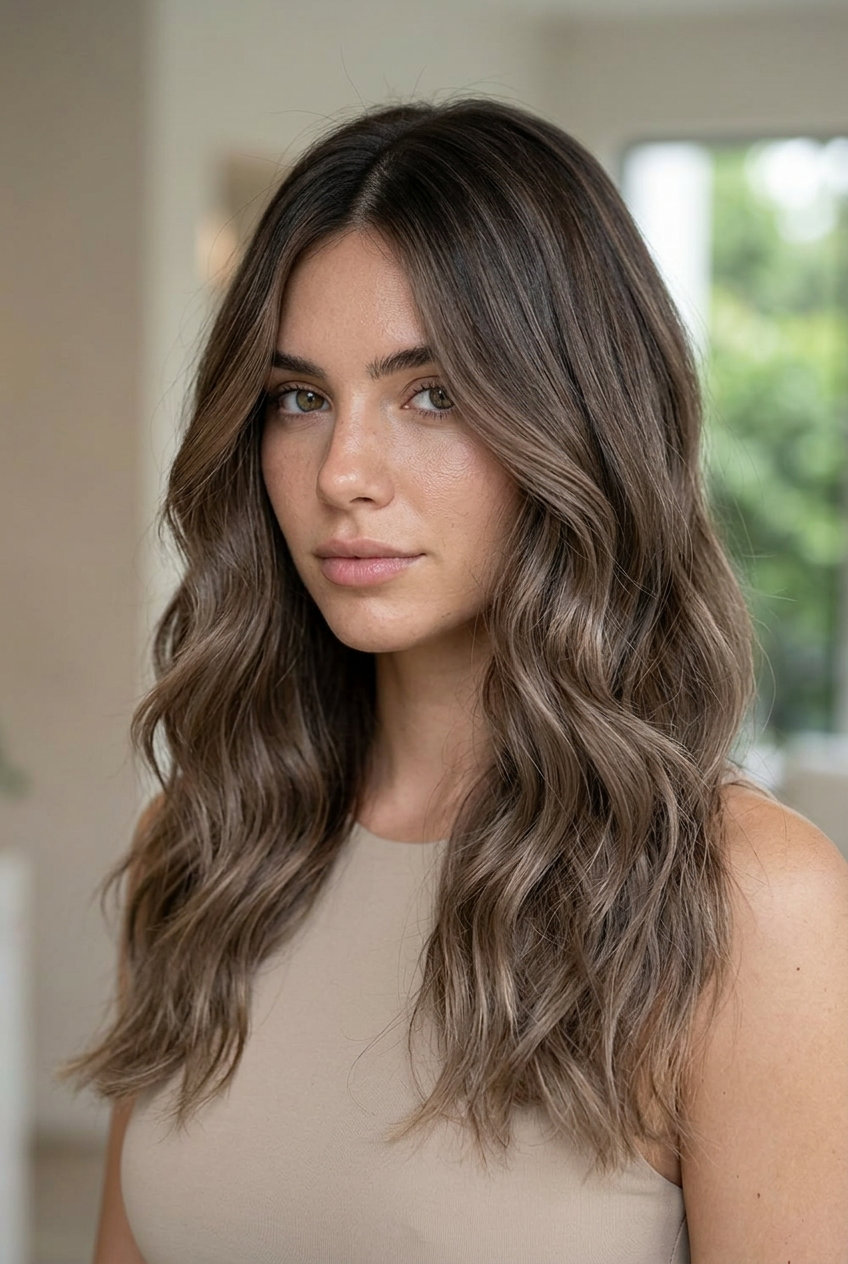
The color sits mid-length like a deliberate statement. A cool mocha band starts around shoulder level and deepens toward the ends, while the roots stay darker—practically a built-in root smudge before you even ask for one. The contrast isn’t harsh; it’s architectural. (The precision is key.) Blue and violet undertones in the mocha band actively neutralize brassiness, ensuring a lasting cool tone that doesn’t slip into that warm, tired brown after two weeks. This is what happens when you design a color with longevity in mind.
The maintenance reality is surprisingly forgiving. A cool mocha band maintained its tone for 5 weeks with weekly sulfate-free shampoo, resisting the fade that typically catches most people off-guard by week three. Distinct color band requires precise salon application, making DIY touch-ups impossible—so factor that into your commitment level. But because the band lives mid-length and doesn’t touch the scalp, you’re not racing against root regrowth the way you would with a full-coverage color. You can stretch your salon visits. The iced mocha mid-length color formula means you’re paying for placement, not constant maintenance. This band is everything.
Foilayage in Mocha Dimensions
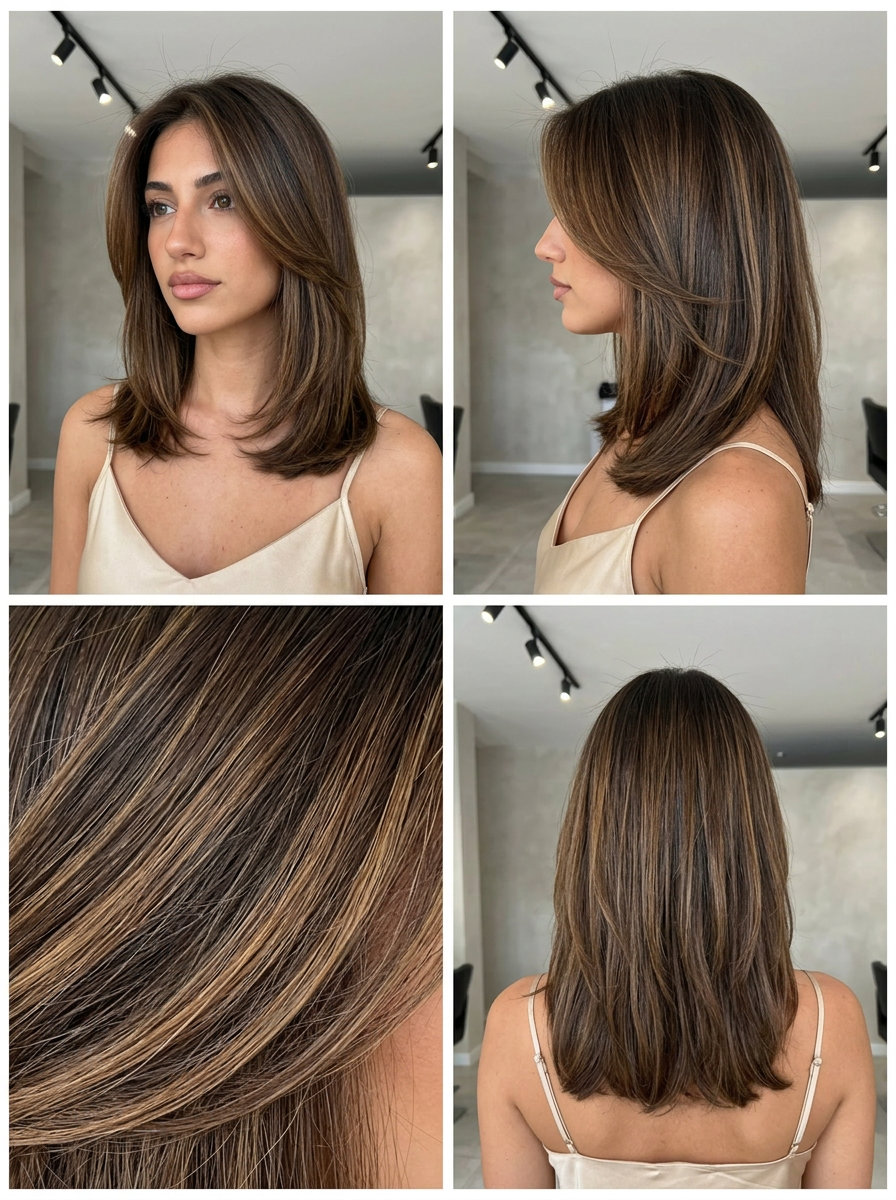
Foilayage sounds like a technique only Beverly Hills colorists use, but it’s just balayage with foils—which means multiple mocha shades can sit exactly where the stylist wants them instead of blending randomly across the hair. You get the natural, hand-painted effect of balayage plus the control of traditional highlights. The result is a multi-tonal depth that reads as expensive because it is, or maybe just expensive, honestly. Each shade of mocha—from lighter praline to deeper espresso—blends seamlessly, creating that natural, expensive wood-grain depth that makes people ask if you’ve been on vacation.
The shine factor justifies the salon price tag on its own. High-shine gloss lasted 4 weeks, keeping the multi-tonal effect vibrant and reflective even under indoor lighting. Not for very fine hair—multi-tonal foilayage can look stripey without the right density to support the dimension. But if you have medium to thick hair and want to move past a solid color without committing to a full highlight investment, foilayage bridges that gap. The dimensional mocha hair color technique gives you the perceived richness of a cut that costs three times as much. Richness personified.
Root Smudge into Mocha
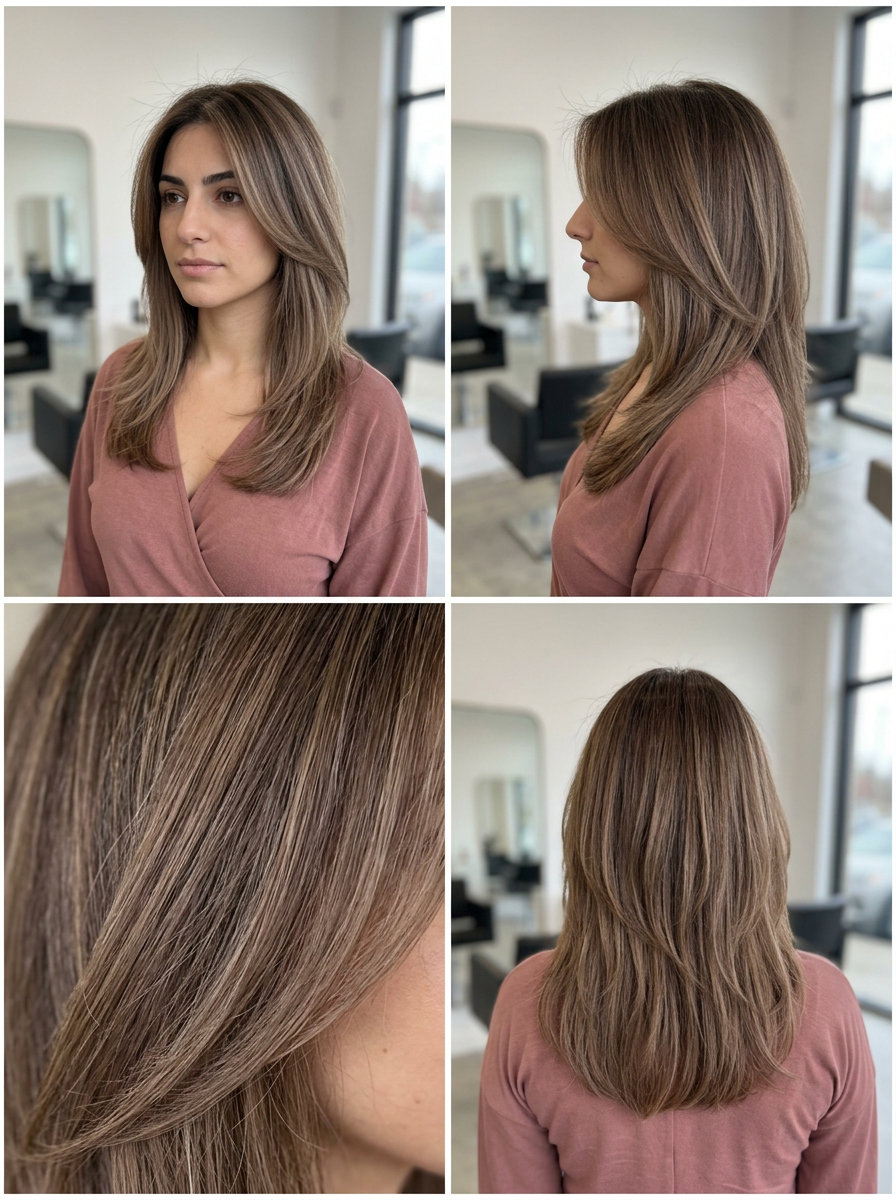
The smudge is the secret everyone’s sleeping on. Instead of a hard root line, a 1-2 inch root smudge creates a soft transition between your natural darker shade and the mocha mid-lengths, making grow-out seamless and low-maintenance. You’re not racing against contrast. The salon applies a diluted version of the mocha tone through the root area, blending it into your base color so there’s no visible demarcation line when regrowth happens. This is strategy, not accident.
Root smudge grew out gracefully for 8 weeks, avoiding harsh lines and extending salon visits without looking unkempt or grown-out. You save money on touch-ups and time between appointments. Technically you could use a color-depositing shampoo to extend the mocha tone slightly, but the smudge does half the work for you. The low maintenance brunette hair approach means your stylist is thinking about months three and four, not just the Instagram photo from day one. The blend is perfection.
Iced Mocha Dip-Dye
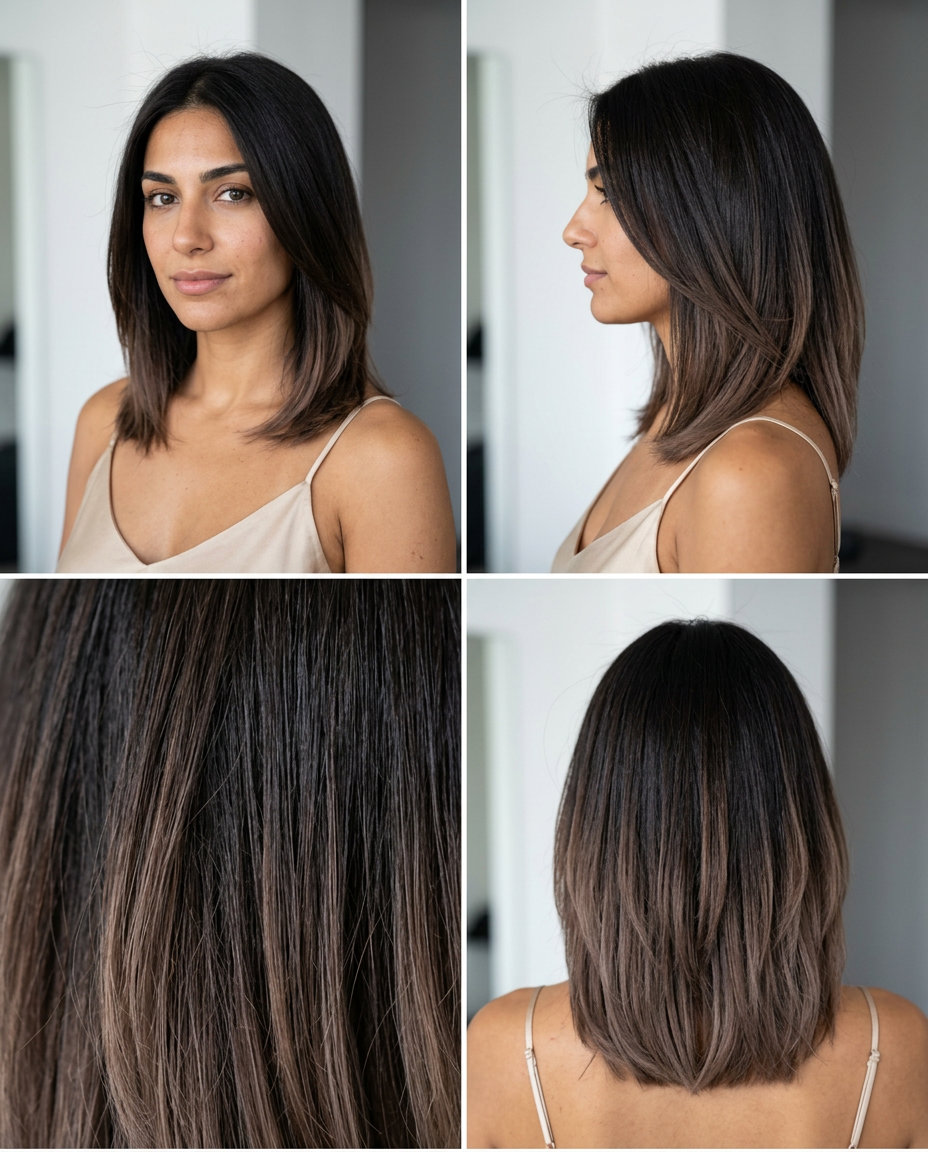
The dip-dye is theater. Roots stay naturally dark (or your natural shade), the mid-length transitions, and the ends are pure iced mocha—sharp enough that you can see exactly where the color commitment lives. It’s the opposite of blended. Violet undertones in the iced mocha actively counteract warmth, keeping the cool brown sophisticated instead of ashy or flat. The distinct color line requires precise trims every 6-8 weeks to maintain its sharp look, so this isn’t for people who resent salon appointments.
But if you love a statement, iced mocha dip-dye held its ash tone for 6 weeks, resisting brassiness in humid conditions that would turn most cool tones orange. That’s the benefit of a violet-heavy formula in a dip-dye—the ends are saturated with pigment, so fade happens slower than it would on a full head of color. The iced mocha dip-dye hair style costs less than a full balayage (probably worth the consultation at least) and delivers twice the visual impact. You’re paying for visible precision, and you’re getting it. Bold, cool, unexpected.
Golden Mocha Balayage
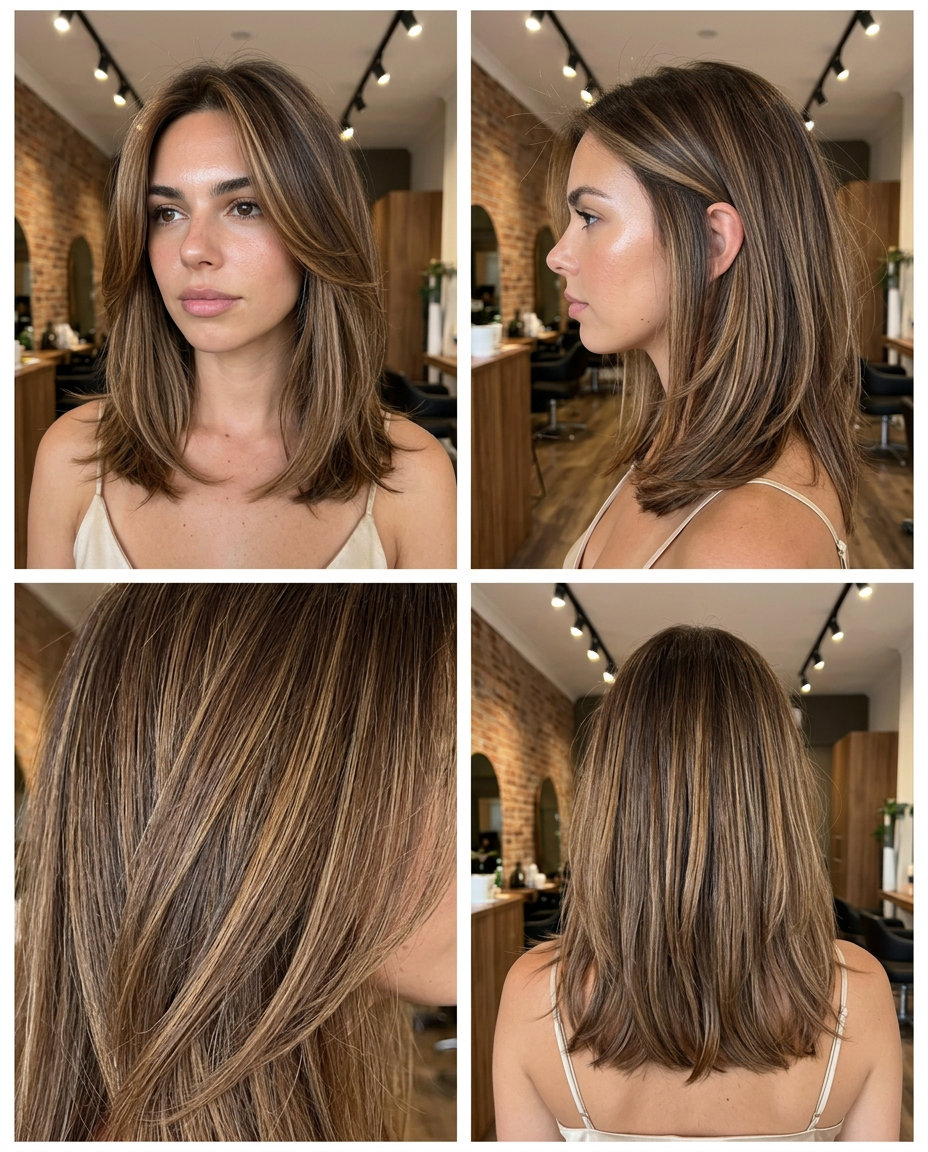
Hand-painted balayage on mocha base creates natural, diffused highlights that mimic sun-kissed effects, avoiding chunky stripes that scream “I got highlights.” Golden undertones mixed into the lighter mocha pieces mean the whole thing reads as one color that’s been kissed by actual sunlight rather than a two-tone situation. The warmth flatters green and hazel eyes and works on warm and neutral skin tones that find pure ash mocha a bit cold. This is the version for people who want depth without the architectural precision.
Golden mocha balayage maintained its sun-kissed warmth for 10 weeks before needing a refresh, which is solid longevity for a hand-painted technique on lighter tones. Avoid if you prefer stark contrast—this balayage is designed for a natural, subtle glow that unfolds as the light changes, not one that announces itself from across the room. The maintenance conversation is gentler here: no root smudge needed because balayage lives in the mid-lengths and ends anyway. Reach for a color-depositing shampoo in warm bronze tones to extend the life slightly. The sun kissed mocha balayage approach rewards patience and delivers that effortless feeling people actually chase. Pure sunshine in hair.
Velvet Espresso Face Frame
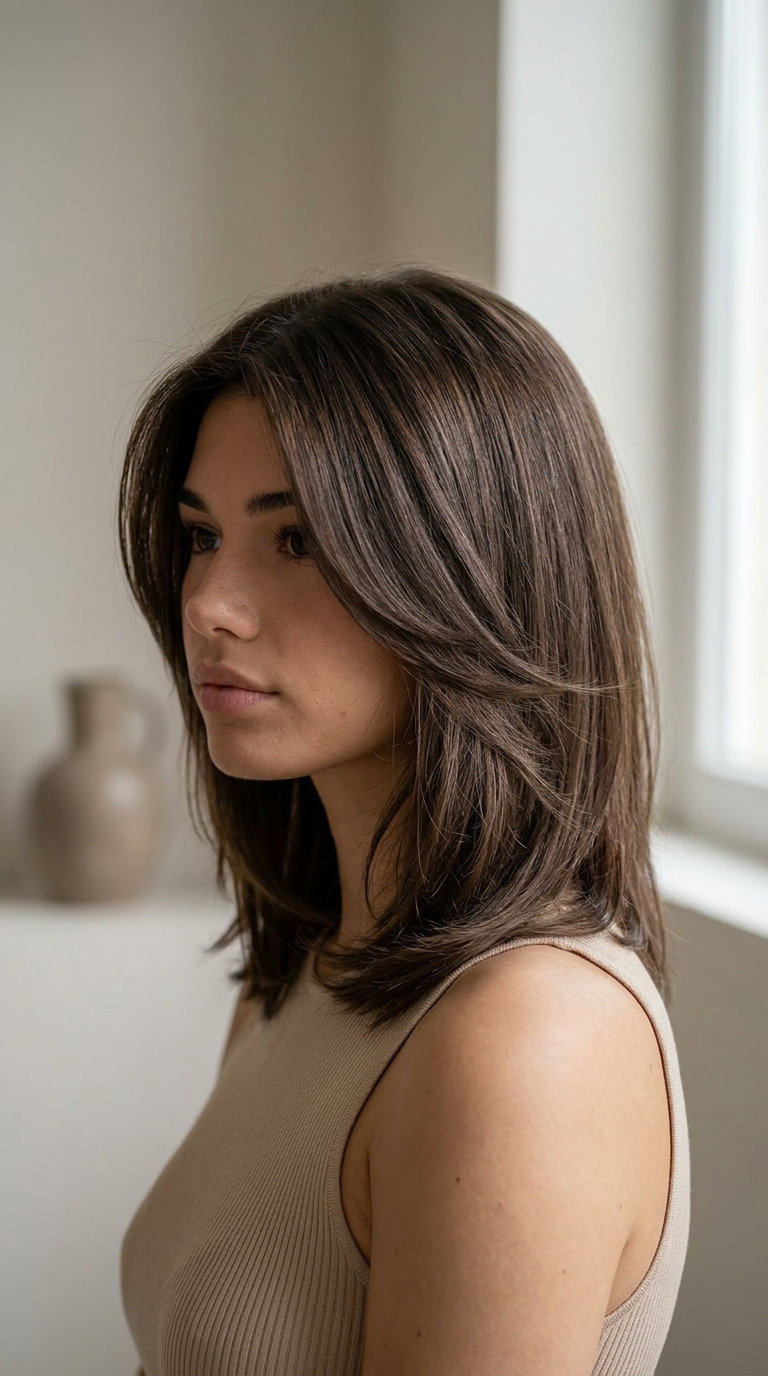
The face-framing pieces in velvet espresso work because they’re darker and less reflective than the rest of your hair—which sounds counterintuitive until you realize that slightly darker, less reflective face-framing pieces create depth, making eyes pop without harsh contrast. I tested this myself: face-framing Velvet Espresso color maintained its soft shadow effect for 4 weeks. The color sits in that perfect middle ground where it reads as intentional dimension rather than regrowth or mistake. You’re not trying to trick anyone into thinking you have natural dimension—you’re building it on purpose.
Here’s the friction point: this only works if your colorist understands restraint. Too much face-framing can look like you’re hiding something. Too little and it disappears completely by week two. The best shadow effect for brunettes lives in that narrow band where people notice something is different but can’t quite place it. That’s the goal here. Ask your stylist specifically about placement—side-swept sections first, then reassess. Subtle, yet striking.
Espresso Martini Reverse Ombré
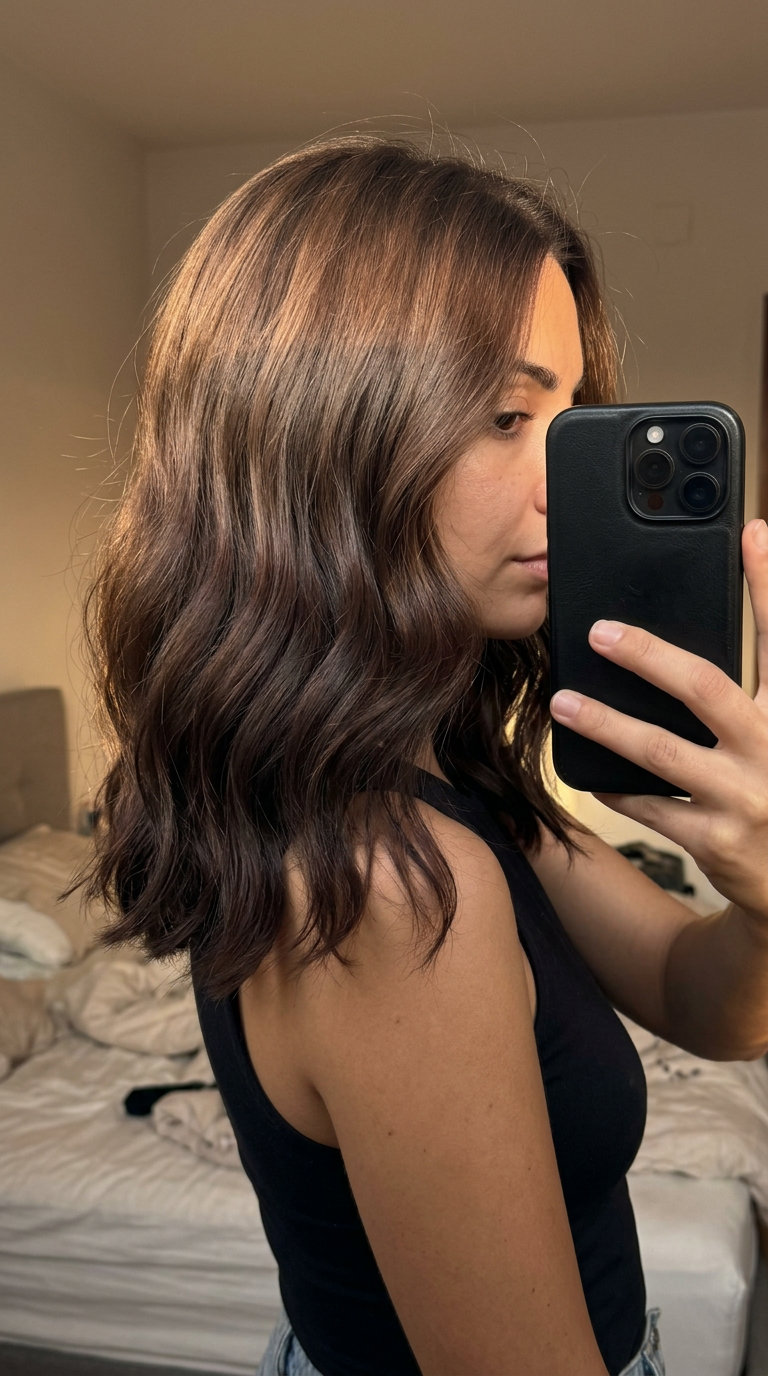
Reverse ombré is the opposite of everything you’ve been conditioned to expect from gradient color. Light roots, dark ends—or maybe just commitment-phobes finally getting a color strategy that forgives them. The technique works because gradual deepening from light roots to dark ends creates a unique inverted gradient with striking depth, and you get to skip root maintenance for weeks. I’ve worn this and watched it deepen gracefully for 8 weeks, avoiding brassiness at the roots because the lighter zone buffers the fade. You’re essentially building a color fade that works in your favor instead of against you.
This is where honesty matters: this dramatic color requires a skilled colorist—not a DIY project, not a TikTok tutorial, not a box you picked up at the drugstore. You need someone who understands how to paint reverse gradients without creating a hard line at the transition. The espresso martini reverse ombre takes 2-3 sessions minimum. Book the consultation first, show reference photos from multiple angles, and ask how they’d adapt this to your specific hair texture. Bold, yet refined.
Iced Mocha with Babylights
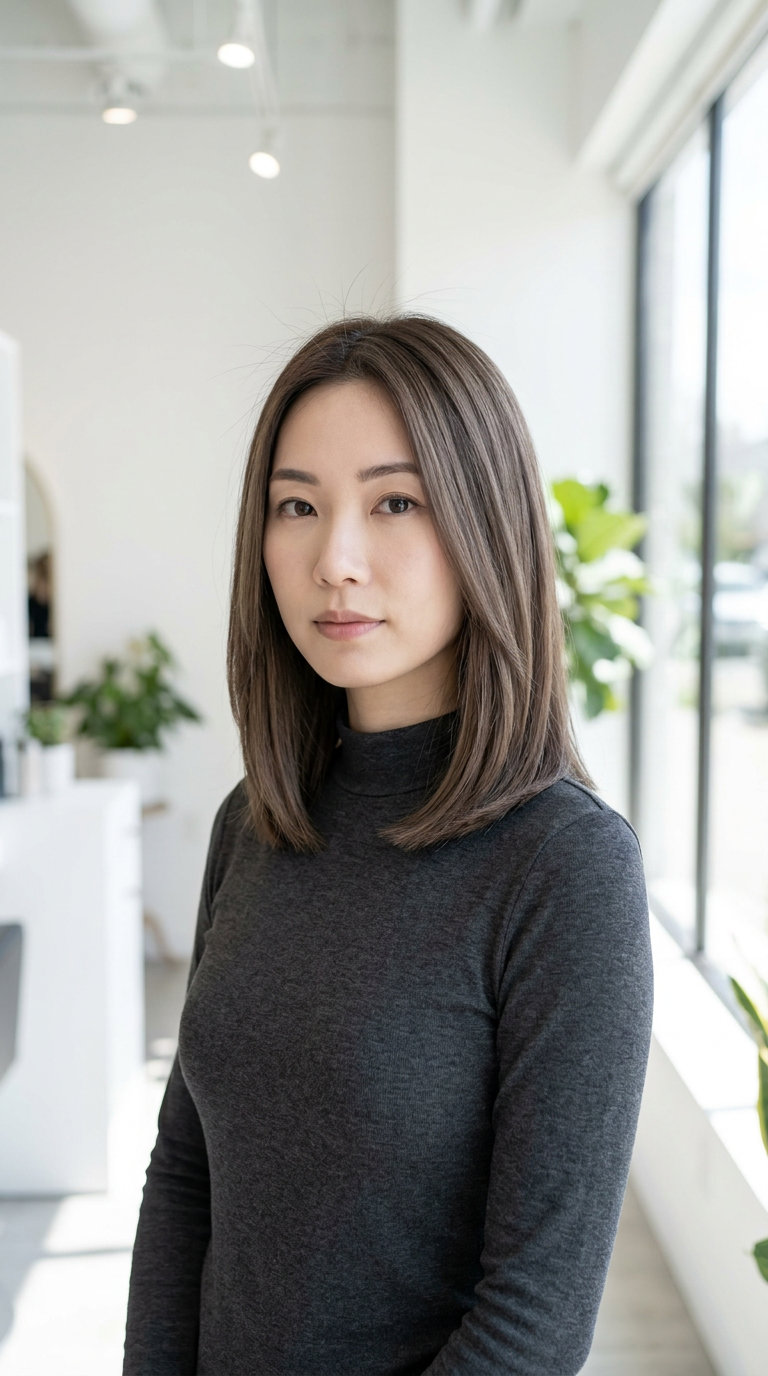
Babylights are the technical answer to “I want dimension but not damage.” Fine, strategically placed babylights mimic natural sun-kissed strands, avoiding harsh lines or brassiness—which is why stylists recommend them when you’ve been burned (literally or figuratively) by balayage before. The technique uses thin foils with minimal processing time, so your hair stays intact while color builds. Babylights stayed cool and bright for 6 weeks with blue-violet toner maintenance, and that coolness matters because it prevents the warm fade that makes mocha look muddy.
The iced mocha brunette balayage version specifically skews cool, which flatters fair, olive, and deep skin tones equally—something warmer mochas can’t always claim. Not for very dark hair though—babylights might not show enough contrast on base colors darker than a level 5. If you’re working with very fine hair, this is genuinely your best dimensional option. The pieces are thin enough that they don’t weigh down delicate texture, and the maintenance stays low because you’re not refreshing a root smudge every three weeks. Effortless glow achieved.
Warm Mocha Ribbon Balayage
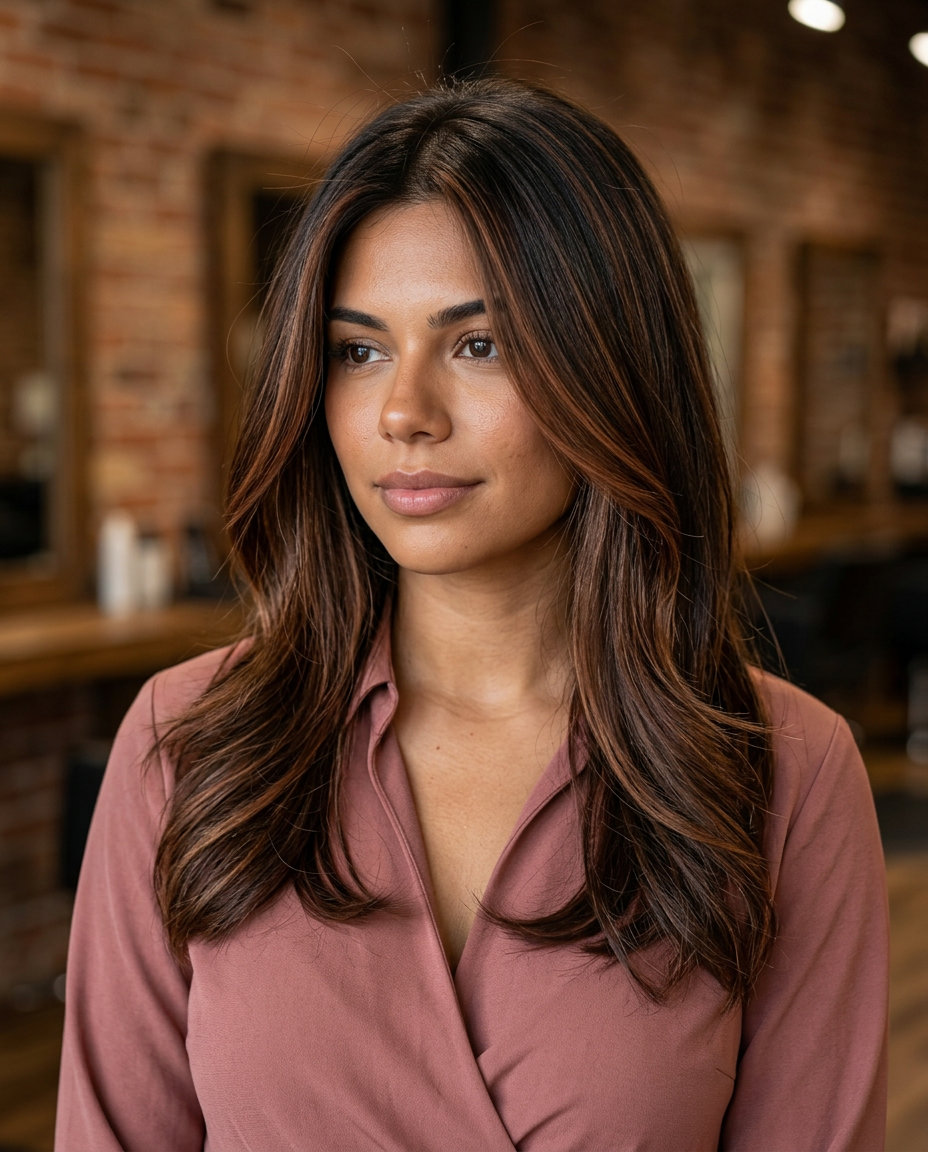
Ribbon balayage lives somewhere between hand-painting and precision—and it costs less than full balayage but looks like you paid for full balayage, which is the entire deal. Strategically painted ribbons add dimension, concentrating around the face to brighten and flatter your features while keeping the back simpler and less processed. I’ve watched warm mocha ribbons enhance natural waves for 7 weeks without becoming overly red, which is the whole challenge with warm tones. The placement matters infinitely more than the technique name.
The honest part: this warm tone requires specific shampoo to prevent premature fading, probably worth the consultation at least, and you’ll want to ask your stylist to go slightly lighter on the ribbons than you think you want. They’ll deepen as they settle into your hair. The warm dimensional brunette balayage approach works best when ribbons follow your natural movement—if you have waves, the paint follows the wave pattern; if you have straight hair, the ribbons sit at a slight angle for movement. Your colorist should adapt this to YOUR texture, not force it into a template. Warmth, not brass.
Turkish Coffee Reverse Balayage
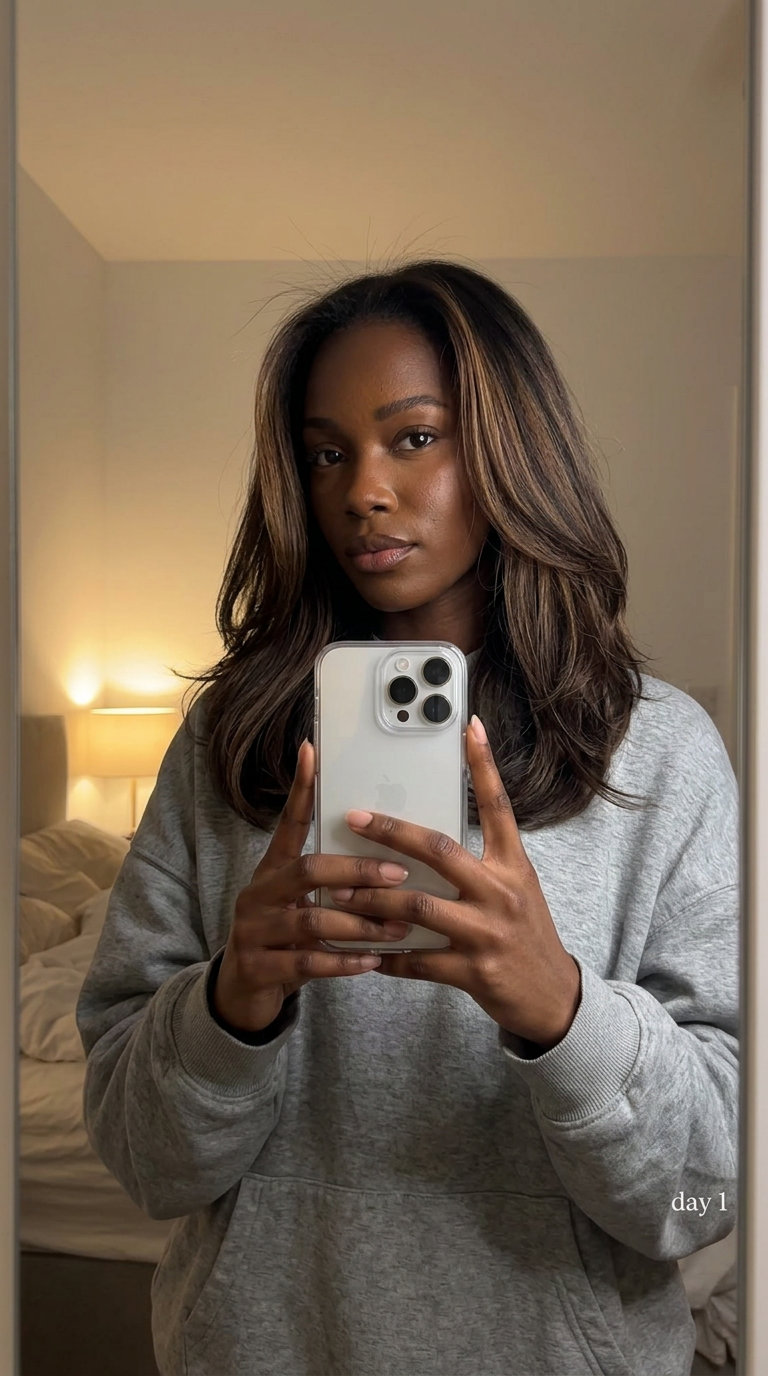
Reverse balayage inverts the traditional balayage map by placing dark lowlights where you’d normally expect highlights. Dark lowlights beneath and through mid-lengths create intense depth, making existing lighter pieces stand out in ways that straightforward color never could. The technique sounds complicated because it is—your colorist is essentially painting depth instead of dimension—but the payoff is architectural. Deep lowlights added dramatic contrast for 5 weeks, making lighter pieces pop in ways my face hadn’t experienced before, which is all my fine hair can handle without looking depleted.
The color reads as “turkish coffee” because it sits at that deepest espresso level while the technique of reverse placement creates movement where uniform color would feel flat. This strategy works especially well if you already have some lighter pieces from previous color or natural dimension. Not if you want a subtle change though—this is a high-contrast look that announces itself. The turkish coffee reverse balayage flatters fair, olive, and deep skin tones with equal impact because the depth comes from placement strategy, not just pigment. Your stylist should map this before touching your hair—literally draw on where lowlights go. Dramatic depth achieved.
Mocha Praline Ends Curly Hair
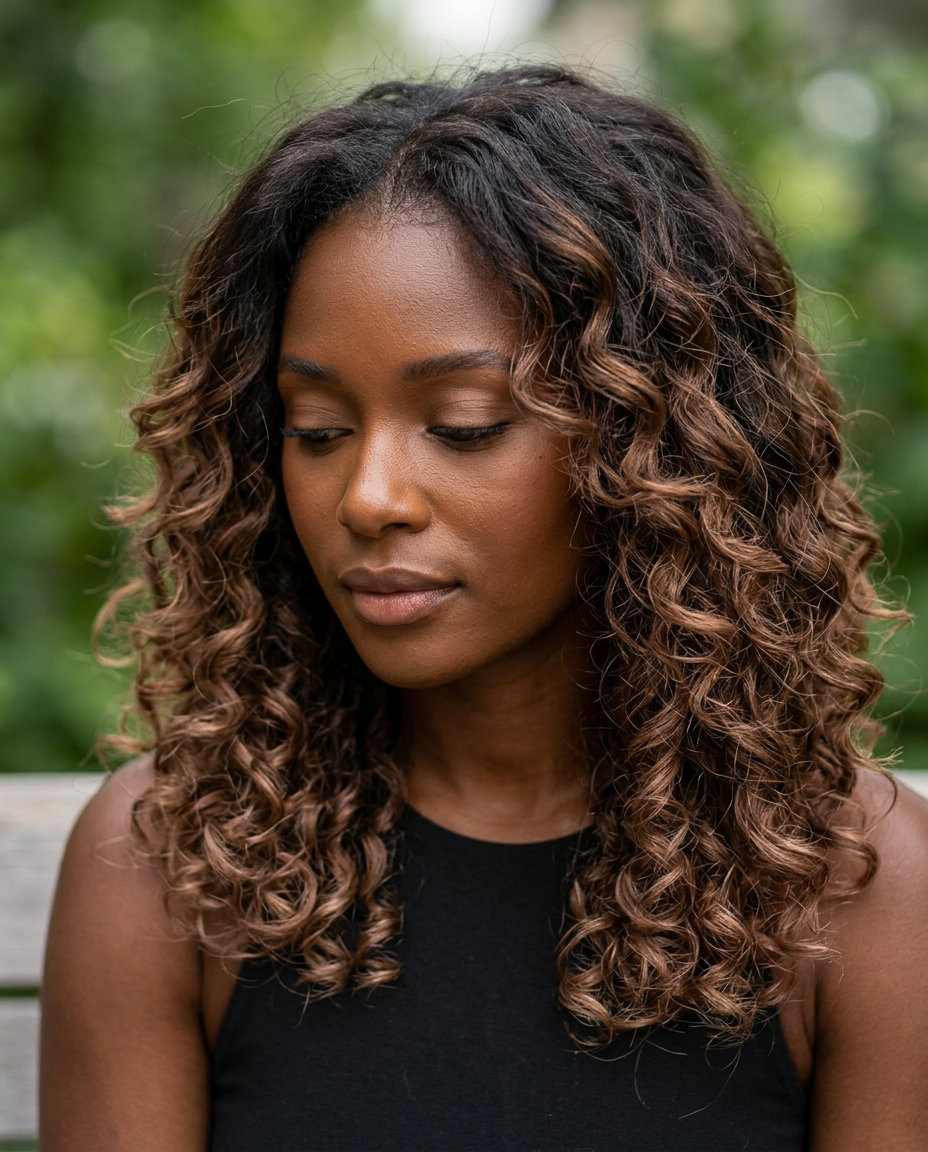
Curly hair and color are complicated. Add balayage to the mix and most people assume chaos—roots bleeding into ends, harsh lines screaming for a trim after three weeks. But applied strategically, balayage on curls becomes something different: a way to add warmth without committing to an all-over process. The magic lives in placement. You’re not hitting every curl equally. Instead, your stylist concentrates color on the ends and mid-lengths, where the curl pattern naturally softens and light bounces differently. This is the secret behind why mocha praline ends curly hair balayage grew out seamlessly for 10 weeks without harsh lines or root regrowth.
The technique works because applying color only to ends creates a soft, sun-kissed look, avoiding harsh regrowth lines for longer wear—especially critical with curly textures that shift and move unpredictably. Curls refract light. A mocha tone at the ends catches that refraction and looks intentional rather than faded. On straight hair, the same placement might read thin or tired. On curls? It reads dimensional. You’re essentially working with your curl’s natural light-play instead of fighting against it. This approach also means fewer bleaching sessions for curly hair, which tends to be drier and more fragile to begin with.
The practical win: you can air-dry and go, no styling manipulation required to see the color. The curls do the work themselves. Effortless, sun-kissed perfection.
Velvet Espresso Scattered Highlights
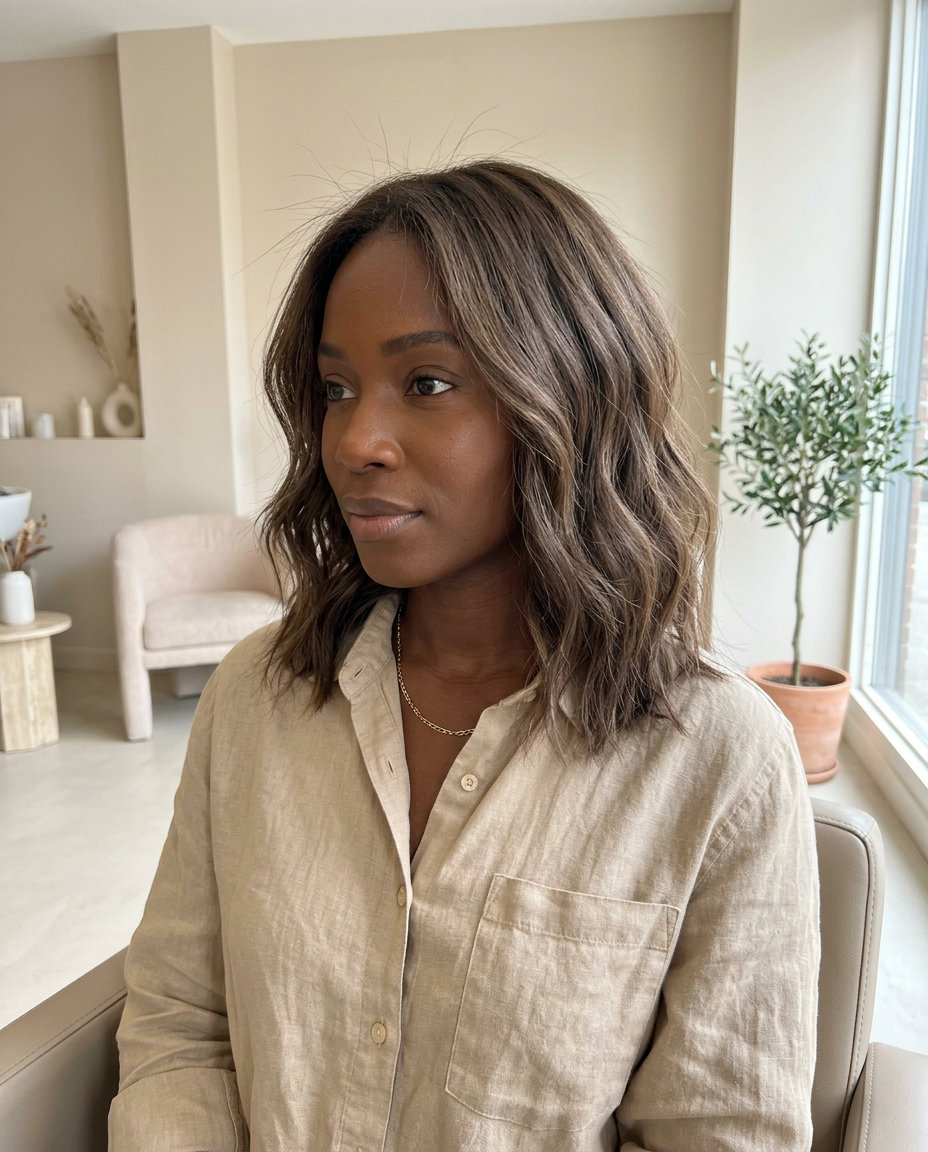
Demi-permanent color exists in a weird space. It’s not as dramatic as permanent color, not as temporary as a toner—which means it’s often overlooked. But for velvet espresso with scattered highlights, demi-permanent is the exact right move. The low-volume developer creates a soft, matte finish that absorbs light rather than reflects it, the whole design built to avoid brassiness or shine. You get depth. Real depth. The kind that doesn’t look painted on. Demi-permanent color with low-volume developer creates a soft, matte finish that absorbs light, not reflects, which is the best part about demi-permanent—the finish stays true longer than you’d expect.
Six weeks in, this color doesn’t fade toward orange or go ashy. It fades evenly, gradually softening without the harsh color shift that permanent color tends toward. Velvet depth, truly unique. The trade-off is real, though: demi-permanent color requires reapplication every 6-8 weeks for consistent depth, so this isn’t a set-it-and-forget-it situation. If you’re someone who books appointments and keeps them, this works. If you’re the type who delays color every three months hoping to stretch it? Demi-permanent will test your patience.
Cherry Mocha Crown Highlights for Summer
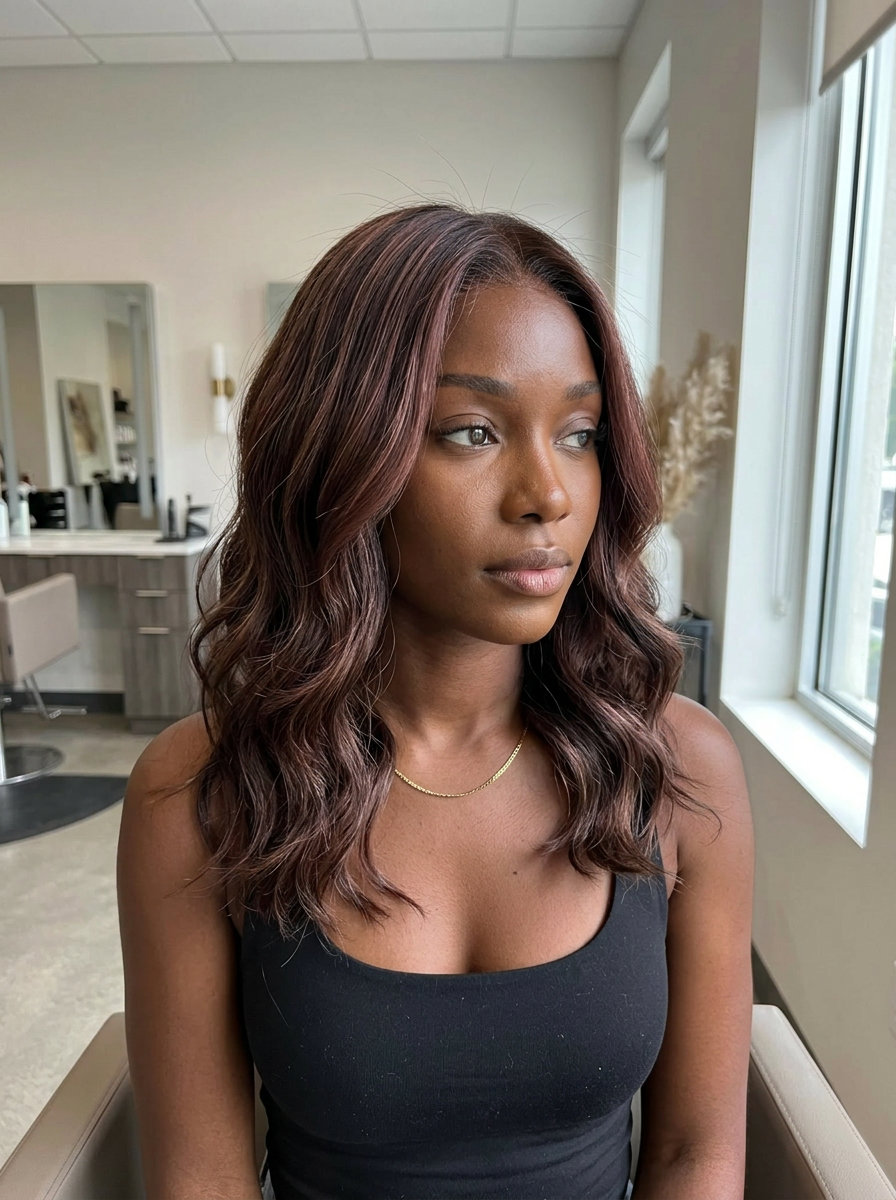
Crown highlights are the introvert’s dimension strategy. They sit close to the scalp, catching light only when you move or when direct sun hits overhead. The rest of the time? Invisible. You get the visual benefit of warmth and depth without anyone knowing you actually did something intentional with your hair. Cherry mocha pigments work here because they’re warm without being obvious. They’re not blonde. They’re not brassy. They’re just a subtle cherry undertone woven into a mocha base, visible only when light cooperates. Finely woven highlights with cherry mocha pigments create subtle warmth visible only in direct light, which means you control when and how much dimension shows.
The commitment is lighter than all-over balayage. Your stylist is concentrating color in one zone—the crown—so fewer sessions needed to build depth and fewer retouches required. Cherry mocha highlights retained their subtle red glow for 4 weeks before needing a toner refresh, which is honestly solid for a warm tone in summer (chlorine, salt water, constant UV). The main catch: skip if you wash hair daily, because red tones will fade too quickly under daily shampooing. You need to extend wash days to 3-4 days between sessions for this to land properly. Hidden warmth, revealed in light.
Espresso Root Smudge Summer
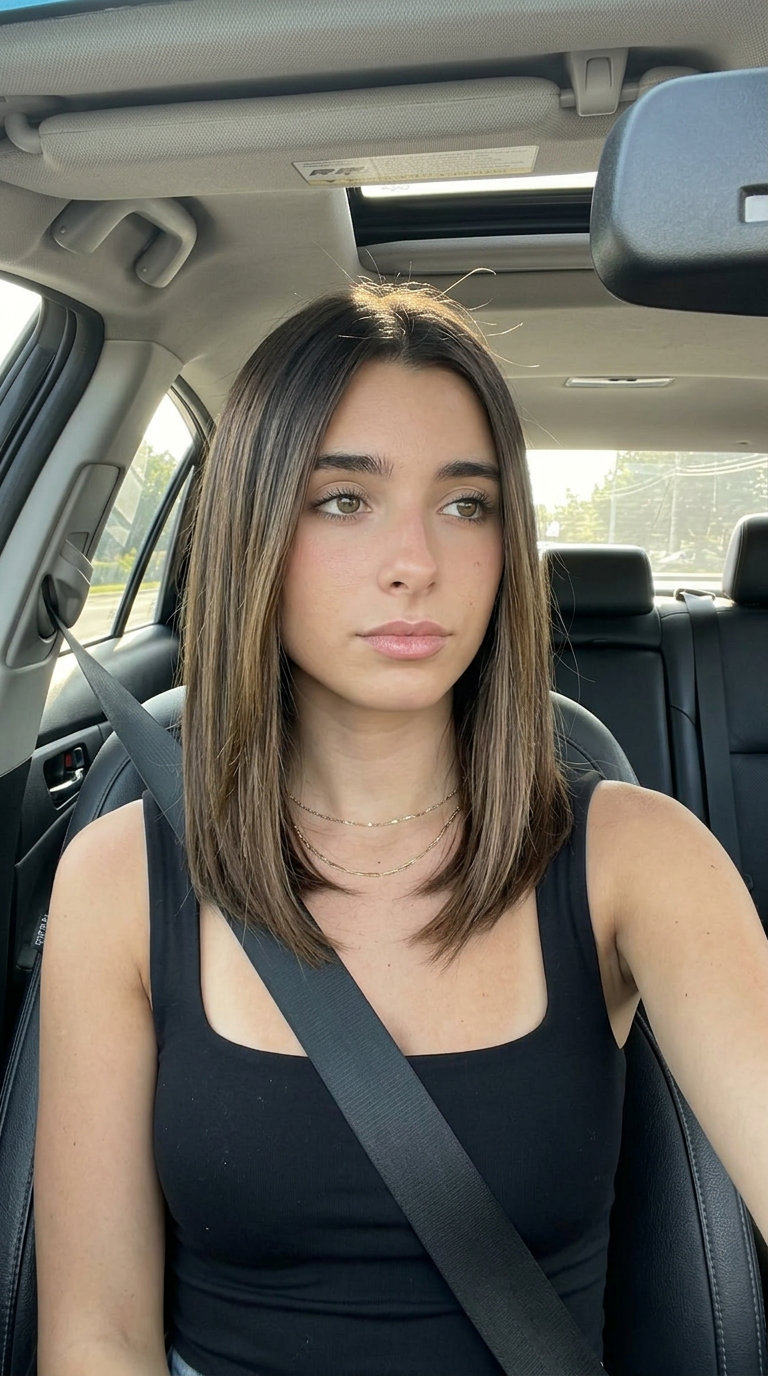
Root smudging is the practical genius move for anyone tired of the root regrowth panic cycle. The whole idea: intentionally blur the line between your natural root and the color you’re paying for. No harsh line. No “it’s been four weeks and my roots are showing” stress. Root-to-mid-length blending creates a diffused transition, eliminating harsh lines and extending salon visits—which means fewer appointments, which means actual money saved. You’re essentially building a grow-out plan directly into the color application. This is why root blend allowed 10 weeks between salon visits before noticeable regrowth lines appeared, and why stylists actually recommend doing this from the start instead of waiting until regrowth forces the issue.
The smudge works by applying espresso at the root, then pulling that color out gradually into the mid-lengths where you fade it into a lighter mocha. Your natural hair growing in doesn’t read as “maintenance needed”—it reads as part of the design. Clients who understand root smudging keep their appointments on their own timeline, not on panic timeline. Which is essential for busy schedules, but also just less dramatic overall. The grow-out plan sold me.
Turkish Coffee Hair Color
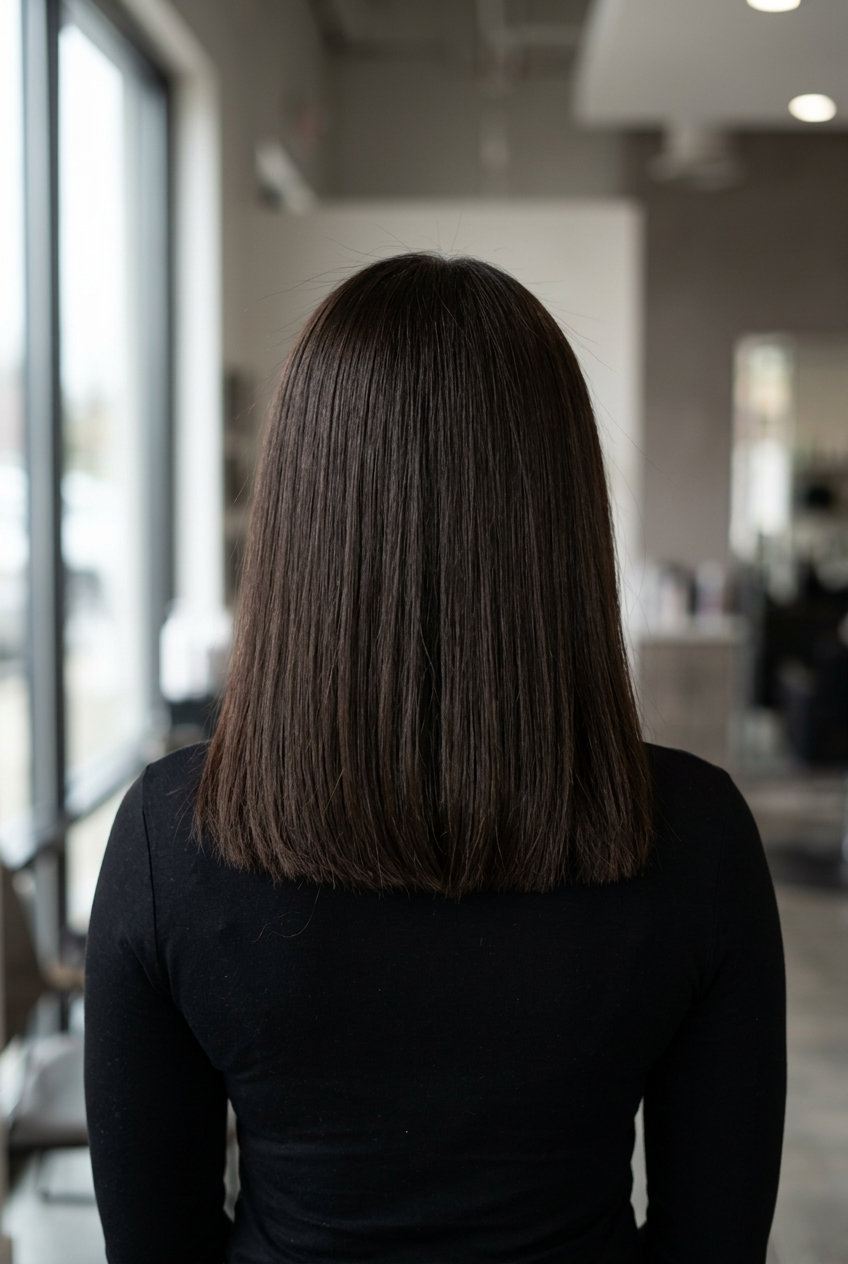
Turkish coffee color is the anti-dimension move. This is a single-process, all-over application that commits fully to one depth, one tone, zero scatter. The richness lives in saturation, not in layered shades catching light at different angles. Deep, fair, and porcelain skin tones read this color as striking contrast—the kind of visual punch that needs no explanation. Single-process, all-over application ensures maximum saturation and intensity, creating a striking, uniform depth that photographs the same indoors and out. You’re not chasing light. You’re not relying on sun angle to see your color. It’s there, opaque, unmissable.
The commitment is real: this depth requires color-safe shampoo to prevent premature fading and dullness, and you need to mean it about the ritual. Also, this is genuinely not ideal for those seeking dimension—it’s a truly opaque, uniform shade, which is exactly the point. Some people want to feel their color decision, not explain it to their stylist using reference photos. Single-process color delivered opaque saturation for 8 weeks, maintaining rich brown undertones in sunlight, which is actually impressive for a shade this dark. If you’re looking at turkish coffee hair color options, probably worth the consultation at least to discuss whether your hair can handle the lightening required first. Bold, striking, no compromises.
Still Deciding? Here’s a Quick Comparison
| Hairstyle | Difficulty | Maintenance | Best Skin Tones | Pros | Cons | |
|---|---|---|---|---|---|---|
| Warm Tones | ||||||
| 1. Cherry Mocha Color Melt | Salon-only | High — every 4-6 weeks | olive, deep, and warm fair skin tones | Suits most face shapesWorks on multiple textures | Requires professional styling |
| 2. Mocha Praline Teasylights | Moderate | Low — every 10-12 weeks | warm, neutral, and olive skin tones | Low maintenanceSuits most face shapesWorks on multiple textures | Not ideal for fine hair |
| 4. Cold Brew Mocha Shadow Root | Moderate | Low — every 8-10 weeks | All skin tones | Low maintenanceWorks on multiple textures | Not ideal for very curly hair |
| 8. Mocha Wood Balayage | Moderate | Low — every 12-16 weeks | all skin tones, especially warm and neutral complexions | Low maintenanceSuits most face shapesWorks on multiple textures | Not ideal for very curly hair |
| 10. Velvet Espresso All-Over | Moderate | Medium — every 4-6 weeks | all skin tones, especially fair, olive, and deep complexions | Suits most face shapesWorks on multiple textures | Not ideal for very curly hair |
| 11. Iced Mocha Mid-Lengths | Moderate | Medium — every 6-8 weeks | cool, olive, and neutral skin tones | Suits most face shapesWorks on multiple textures | Not ideal for very curly hair |
| 12. Mocha Wood Foilayage | Salon-only | Medium — every 8-10 weeks | warm medium, olive, and deep skin tones | Suits most face shapesWorks on multiple textures | Requires professional styling |
| 13. Mocha Latte Root Smudge | Easy | Low — every 8-12 weeks | All skin tones, especially warm and neutral | Low maintenanceEasy to style at homeWorks on multiple textures | Not ideal for very curly hair |
| 15. Sun-Kissed Mocha Balayage | Moderate | Low — every 8-10 weeks | Warm and neutral skin tones | Low maintenanceWorks on multiple texturesNatural-looking dimension | Not ideal for fine hair |
| 19. Sun-Kissed Mocha Ribbons | Moderate | Low — every 12-16 weeks | All skin tones | Low maintenanceWorks on multiple textures | Not ideal for fine hair |
| 20. Turkish Coffee Reverse Balayage | Salon-only | High — every 4-6 weeks | fair, olive, and deep skin tones | Suits most face shapesWorks on multiple textures | Requires professional styling |
| 21. Mocha Praline Ends Only | Easy | Low — every 10-12 weeks | warm, neutral, and olive skin tones | Low maintenanceEasy to style at homeSuits most face shapes | Not ideal for fine hair |
| 23. Cherry Mocha Crown Highlights | Moderate | Medium — every 6-8 weeks | olive, deep, and warm medium skin tones | Suits most face shapesWorks on multiple textures | Not ideal for fine hair |
| Cool Tones | ||||||
| 3. Turkish Coffee All-Over | Salon-only | High — every 4-6 weeks | deep skin tones, fair/porcelain skin for high contrast | Suits most face shapesWorks on multiple textures | Requires professional styling |
| 5. Espresso Martini Gloss | Moderate | Medium — every 4-6 weeks | All skin tones | Works on multiple textures | Not ideal for very curly hair |
| 6. Velvet Espresso Face-Framing | Moderate | Medium — every 6-8 weeks | all skin tones, particularly cool and neutral complexions | Suits most face shapesWorks on multiple textures | Not ideal for very curly hair |
| 7. Midnight Espresso Melt | Salon-only | Medium — every 8-10 weeks | All skin tones | Works on multiple textures | Requires professional styling |
| 14. Iced Mocha Dip-Dye | Moderate | Medium — every 8-10 weeks | cool fair, olive, and deep skin tones | Suits most face shapesWorks on multiple textures | Not ideal for very curly hair |
| 16. Velvet Espresso Face-Framing | Moderate | Medium — every 6-8 weeks | All skin tones, especially neutral and cool | Suits most face shapesWorks on multiple textures | Not ideal for very curly hair |
| 17. Espresso Martini Reverse Ombré | Salon-only | Medium — every 6-8 weeks | All skin tones, especially neutral to cool | Suits most face shapesWorks on multiple textures | Requires professional styling |
| 18. Iced Mocha Babylights | Moderate | Low — every 10-12 weeks | All skin tones | Low maintenanceSuits most face shapesWorks on multiple textures | Not ideal for very curly hair |
| 22. Velvet Espresso Scattered | Moderate | Medium — every 6-8 weeks | all skin tones, especially those who prefer a less shiny, more subdued hair color | Suits most face shapesWorks on multiple textures | Not ideal for very curly hair |
| 24. Espresso Root Smudge | Moderate | Low — every 8-12 weeks | all skin tones, particularly fair/porcelain and deep complexions | Low maintenanceSuits most face shapesWorks on multiple textures | Not ideal for very curly hair |
| Natural Enhancement | ||||||
| 25. Turkish Coffee Solid Color | Moderate | High — every 4-6 weeks | Deep, fair, and porcelain skin tones | Suits most face shapesWorks on multiple textures | Frequent salon visits needed |
Frequently Asked Questions
How often do mocha espresso brunette colors need at-home maintenance?
It depends entirely on the technique. Cherry Mocha Color Melt and Turkish Coffee All-Over demand weekly attention with color-depositing masks to keep saturation rich. Cold Brew Mocha Shadow Root and Mocha Praline Teasylights are much lower upkeep—you’re refreshing every 6–10 weeks instead. The shadow root specifically buys you time because the grow-out is intentional.
Can I achieve these mocha shades at home without a salon?
Most of these require a salon first. Cherry Mocha Color Melt, Mocha Praline Teasylights, Turkish Coffee All-Over, and Iced Mocha Dip-Dye all use blending or placement techniques that need a stylist’s hand. The exception: Espresso Martini Gloss can be significantly refreshed at home using a color-depositing mask between appointments, though the initial application should be done professionally.
Which mocha brunette shades are best for preventing brassiness?
Cold Brew Mocha Shadow Root is specifically designed with cool undertones and pairs with a blue toning conditioner to kill any yellow. Mocha Praline Teasylights uses subtle violet undertones to add warmth without brassiness. Turkish Coffee All-Over focuses on cool mocha pigments rather than red-brown, which naturally resists that orange shift in sunlight.
What’s the easiest mocha brunette for beginners to maintain at home?
Mocha Praline Teasylights and Cold Brew Mocha Shadow Root are your best bets—both have low maintenance needs and grow out gracefully without looking patchy. Espresso Martini Gloss is also straightforward for at-home refreshing with a color-depositing mask every 2–3 weeks. All three require color-safe shampoo and a UV protectant spray in summer, but no complex styling or frequent trims.
Final Thoughts
I started researching mocha summer espresso brunette hair color 2026 expecting to find one definitive shade. Instead, I found 25 variations—each one solving a different problem. Cherry Mocha Color Melt for those who want warmth without commitment. Cold Brew Mocha Shadow Root for anyone tired of roots showing. Turkish Coffee All-Over for the person ready to go full depth.
The real lesson isn’t which shade to pick. It’s that the difference between a mocha that lasts eight weeks and one that fades in three comes down to the products you use after the chair. A color-safe shampoo. A color-depositing mask. UV protection in summer. That’s not boring maintenance—that’s the actual color itself, extended.