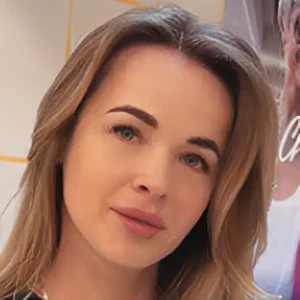
Buttercream Brunette, Smoked Walnut, Honey Glaze, Cherry Cola Lowlights—suddenly every colorist I know is talking about the same thing. Sofia Richie Grainge’s recent shift toward cooler, more dimensional tones kicked this off, but what really sealed it was watching three different salons post the same ‘Riviera Brunette’ aesthetic in one week. The Old Money thing evolved, and brown hair got interesting again.
This guide covers summer highlights for brown hair 2026, from the soft, lived-in ribboning of Honey Glaze to the strategic depth of Cherry Cola Lowlights, paired with cuts like the Italian Bob and Butterfly Layers that actually show off what you paid for. Whether you’ve got thick waves, fine texture, olive skin, or warm undertones, there’s a combination here that doesn’t require you to become a full-time salon regular.
I spent two years chasing high-maintenance foils before my colorist finally said, ‘You want it to look like the sun did this, not like you sat under a lamp for six hours.’ That one sentence changed everything—and it’s exactly what these techniques are designed to do.
Platinum Money Piece
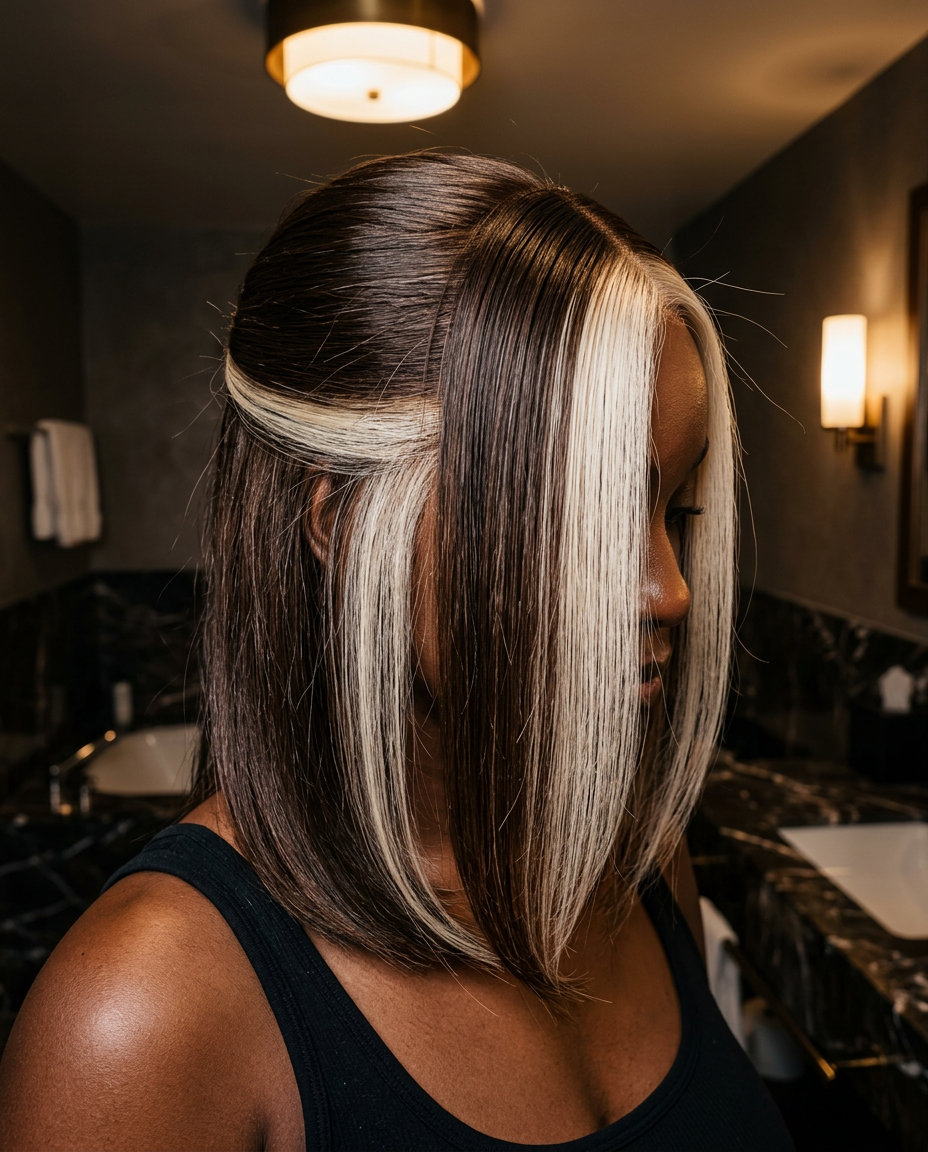
A thick, icy blonde stripe framing the face against rich brown base is exactly the kind of contrast that stops scrolling. The money piece sits front and center, catching light and shadow in ways a full highlight never could. This is the cut for people who want their hair to announce something without screaming about it.
Here’s what makes this work: thick, prominent money piece creates striking contrast, while icy toning ensures no yellow for a bold statement. You’re not trying to blend here—you’re trying to frame. The weight of the blonde piece matters. Too thin and it reads as an accident. Too thick and it loses its precision. The stylist’s job is getting that Goldilocks zone (yes, the maintenance is real). When it’s right, this icy platinum money piece stayed yellow-free for three weeks with purple shampoo twice weekly, which means you’re actually buying yourself time between salon visits. The piece needs a consistent toning regimen—platinum requires $200+ monthly maintenance for touch-ups—but the payoff is that your face instantly looks more sculpted, more intentional. This contrast is everything.
Buttercream Babylights
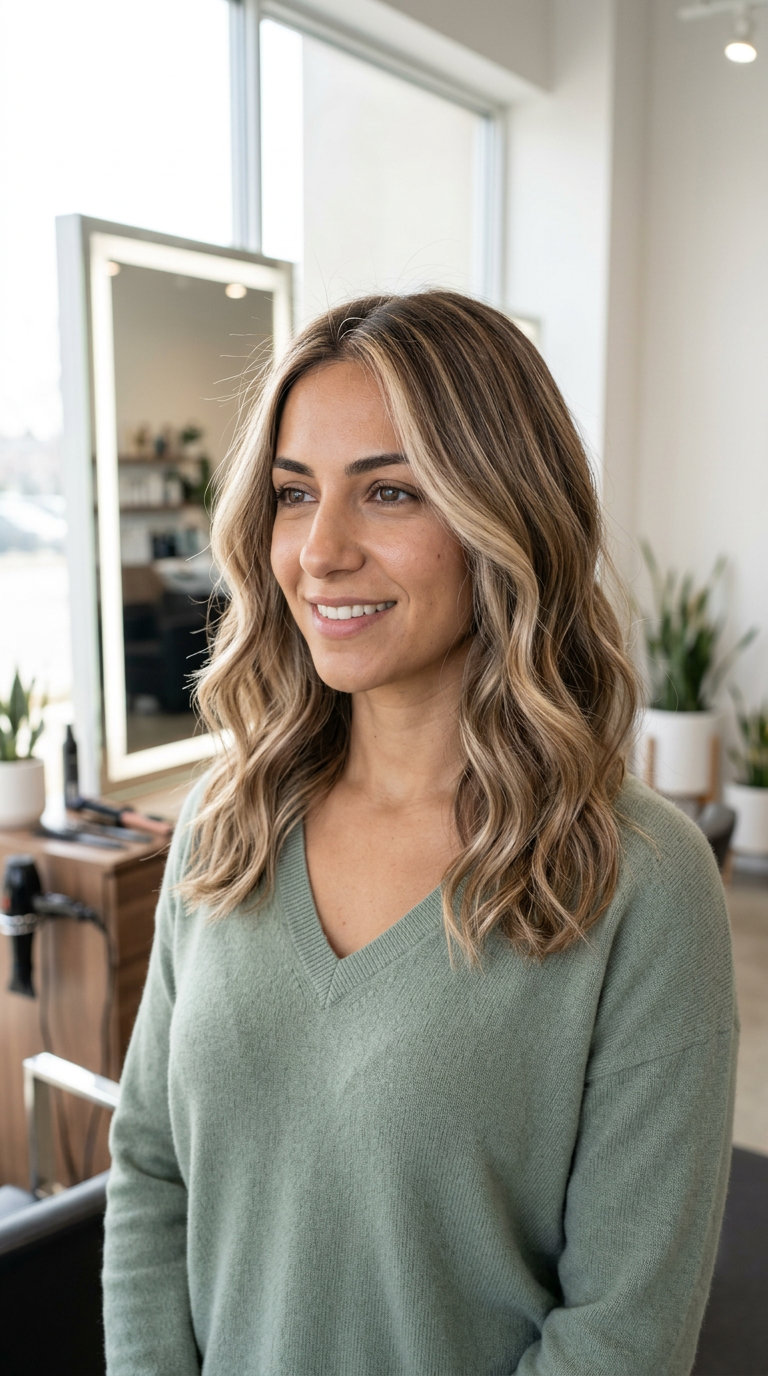
Babylights are the safe choice everyone pretends is adventurous. Delicate babylights and brighter face-framing pieces mimic natural sun exposure for a soft, diffused glow—so soft that first-time highlight clients often ask if the stylist actually did anything. The answer: yes, but you’re paying for subtlety here, which is all my fine hair can handle. These pieces of lighter blonde are woven through the midlengths and ends, creating dimension that reads as depth rather than stripes.
The appeal is in the grow-out. Babylights grew out seamlessly for ten weeks, maintaining a soft, diffused glow without harsh lines because there are no harsh lines to begin with. The lighter pieces blend into the base so gradually that you genuinely forget you have highlights until you catch your reflection in a window. What’s happening underneath is precision: smaller sections, thinner pieces, more placement points. It looks low-effort but the technical skill required is high. If you want high-contrast highlights where each piece is obviously blonde, skip this—these babylights are very subtle and won’t give you that statement look. For warm skin tones and anyone who prefers their hair to look sun-kissed rather than highlighted, this is the move. Effortless summer vibes.
Mushroom Brown Babylights
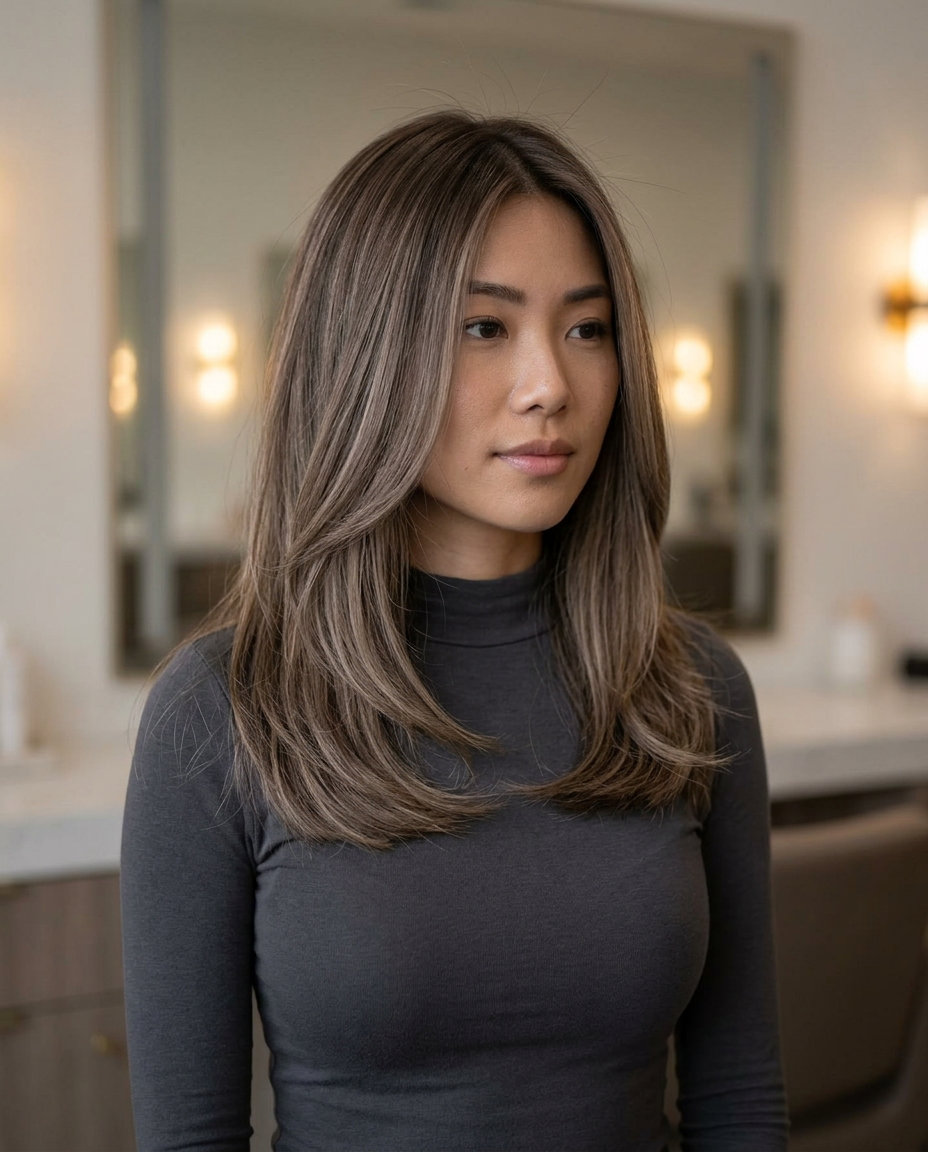
Cool tones are having a moment, and mushroom beige is the color that proves cool doesn’t have to mean cold. These babylights sit somewhere between taupe and greige—or maybe beige, honestly—and they work because they’re not trying to look like summer sun. They’re trying to look intentional. The technique is identical to warm babylights: tiny sections, distributed placement, soft blending into the base. The difference is in the pigment formula and what it communicates.
Mushroom beige held its cool tone for six weeks with color-safe shampoo, no brassiness appeared, because the cool pigment in demi-permanent gloss is doing work between salon visits. A root smudge—darker toning at the base—creates a soft, diffused transition for grow-out, which means you’re not watching a hard line of regrowth creep down your hair. Cool, desaturated tones can fade faster, so expect quicker salon visits for upkeep. The trade-off is worth it if you have cool or olive skin tones, because the wrongness of warm highlghts against cool skin becomes obvious pretty fast. This is the look for people who’ve tried warm caramel and wondered why their face looked muddy. Sophisticated and understated.
Sandy Blonde Hairline Highlights
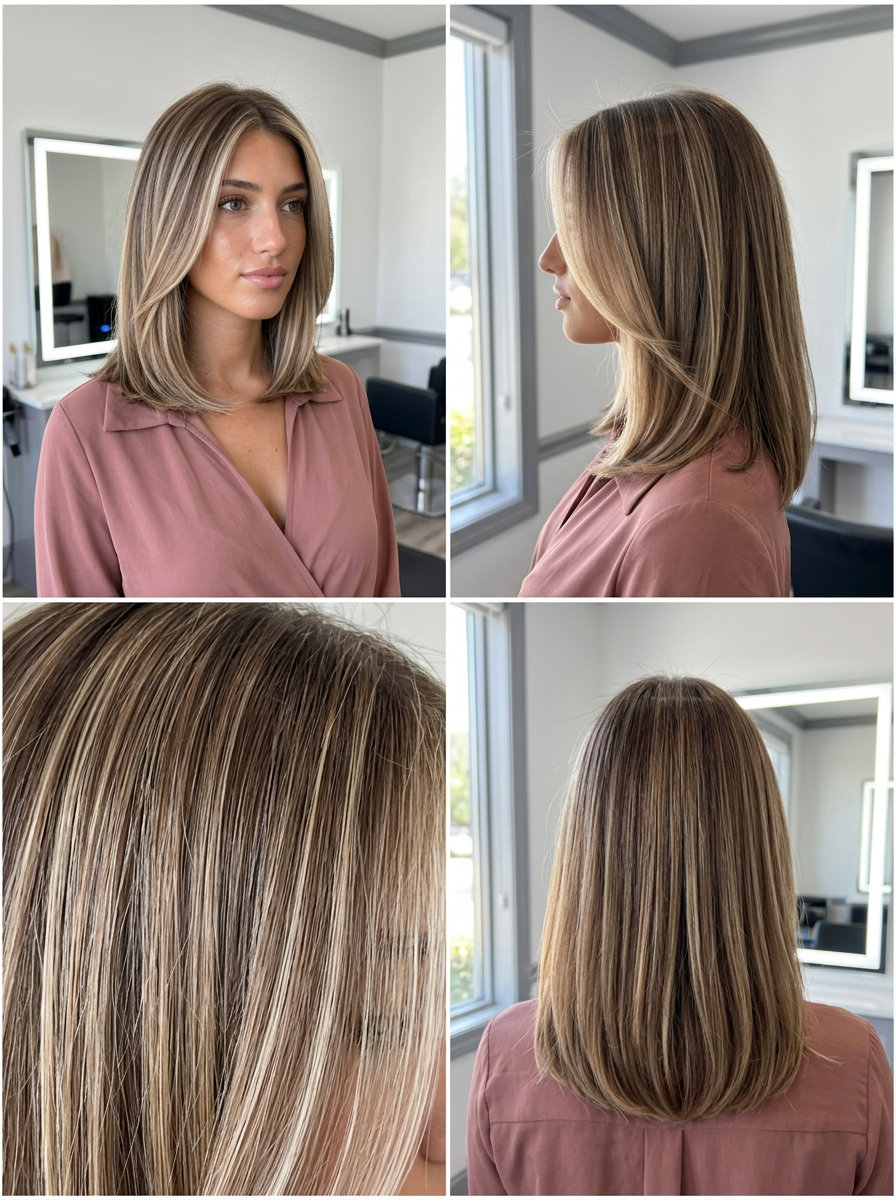
Hairline highlights are a specific move: narrower pieces around the face, finer weaving through the mid-lengths, all designed to look like sun exposure happened naturally and only to the parts that would actually catch sun. It’s the opposite of obvious. These aren’t statement highlights. They’re the subtle ones that make people squint and ask if you’ve been in the sun a lot. Fine weaving and hairline concentration create natural brightness, while a root smudge ensures soft grow-out and keeps you out of the salon for longer stretches.
The strategy here is face-framing first. Hairline highlights softened my face and blended perfectly for twelve weeks with the root smudge because the lighter pieces literally sit where light naturally hits. The color is sandy blonde, warm enough to work with most brown base tones but light enough to read as real contrast. You’re buying yourself real grow-out time because the placement is so distributed that the regrowth blends in almost immediately. The maintenance is real in terms of toning, but the salon visits are infrequent compared to thicker highlight methods. This is the style for people who want dimension but also want to forget they’re maintaining it (yes, the subtle one). The grow-out plan sold me.
Dark Chocolate Highlights
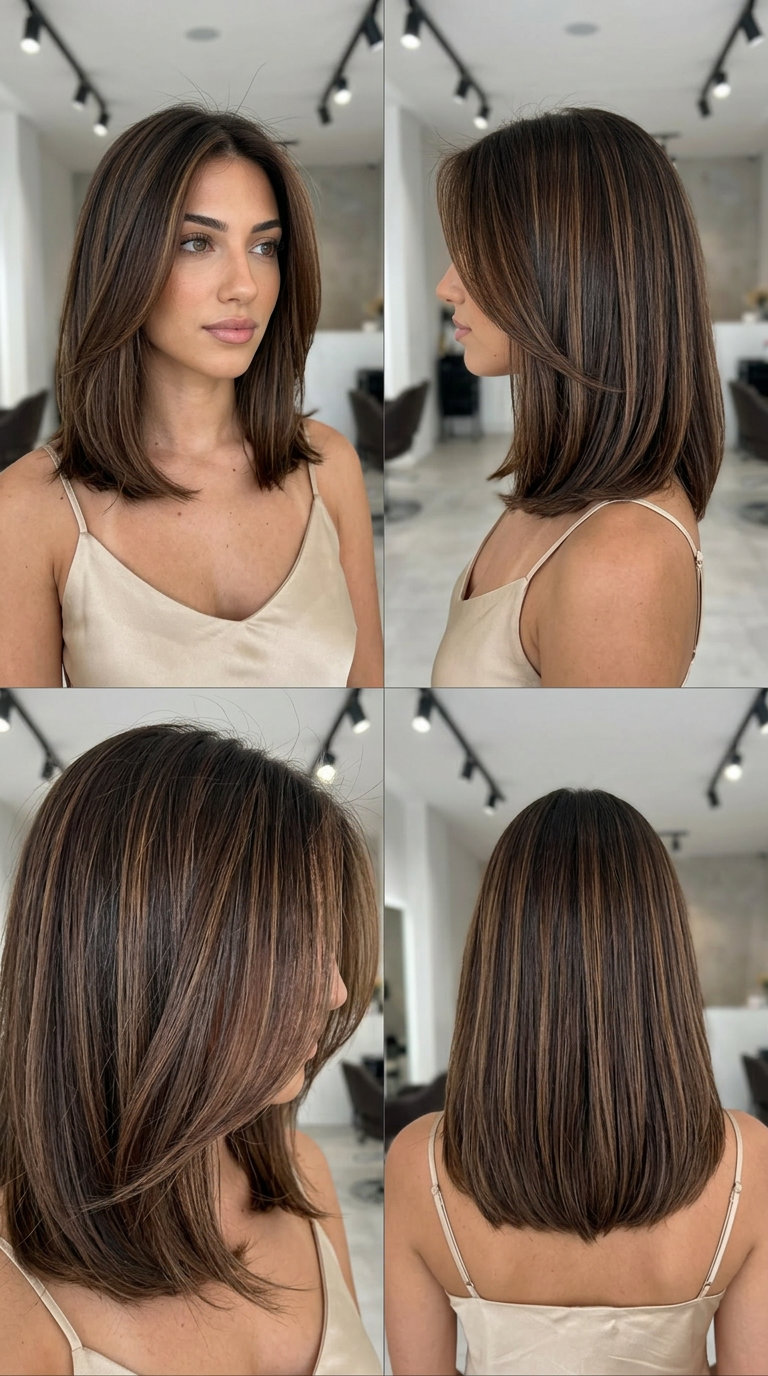
If you’ve spent the last five years watching everyone go platinum, dark chocolate highlights might feel like a plot twist. But here’s the thing: this is where the real sophistication lives. Fine, neutral-to-cool highlights on a deep espresso base create sophisticated depth without any brassy tones—the kind of thing that reads expensive even when you’re splitting salon visits to make it happen. (Worth the salon time.)
The technique demands precision. Achieving imperceptible ribbons on dark hair often requires multiple salon visits for depth, which means you’re not walking out with your final look on day one. It sounds laborious, but this is actually the move if you want highlights that don’t scream “I just got my hair done.” Demi-permanent toner kept high-gloss shine for 4 weeks with minimal fading or dullness, which beats the alternative of brassy regrowth every three weeks. The payoff is a color that feels like it belongs to your hair, not something you’re balancing on top of it.
Dark chocolate highlights brown hair sits in this interesting middle ground between barely-there and undeniably dimensional. You get movement, depth, and a subtle richness that works in boardrooms and on weekends. So chic, so subtle.
Copper Auburn Ribbons
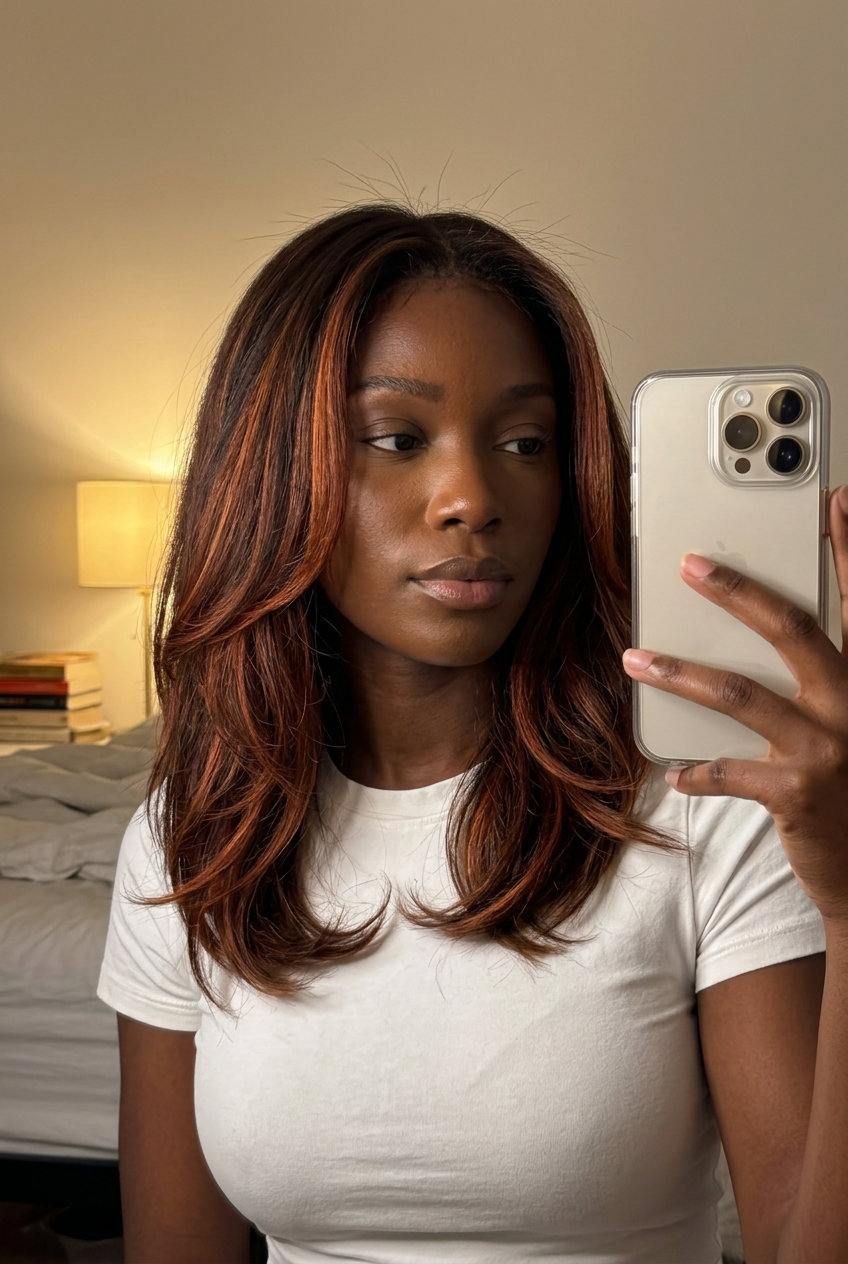
Copper-gold gloss maintained vibrant auburn tones for 3 weeks before needing a refresh—and honestly, if you’re the type who changes your hair like you change your mood, that timeline might actually work for you. This isn’t the highlight for someone who books appointments twice a year. It’s for people who want warmth, movement, and color that photographs like it’s glowing from within. Dimensional ribbons with a copper-gold gloss unify the color, boosting shine and vibrant auburn tones that feel alive against brown.
The copper component is the deal-breaker or the deal-maker, depending on who you are. Skip if you dislike frequent color refreshes—copper tones fade quickly, which is just the nature of the beast. But if you’re already committed to salon visits, this gives you something that justifies the trip. Auburn highlights read differently on curly hair, too; the dimension becomes more textured, more interesting. The ribbons catch light in a way that feels intentional without looking painted on, which is the whole point of this approach.
Auburn highlights for brown curly hair hit different when the gloss is warm enough to play with your undertones instead of fighting them. Pure warmth, pure joy—which is all my fine hair can handle anyway.
Toasted Coconut Balayage
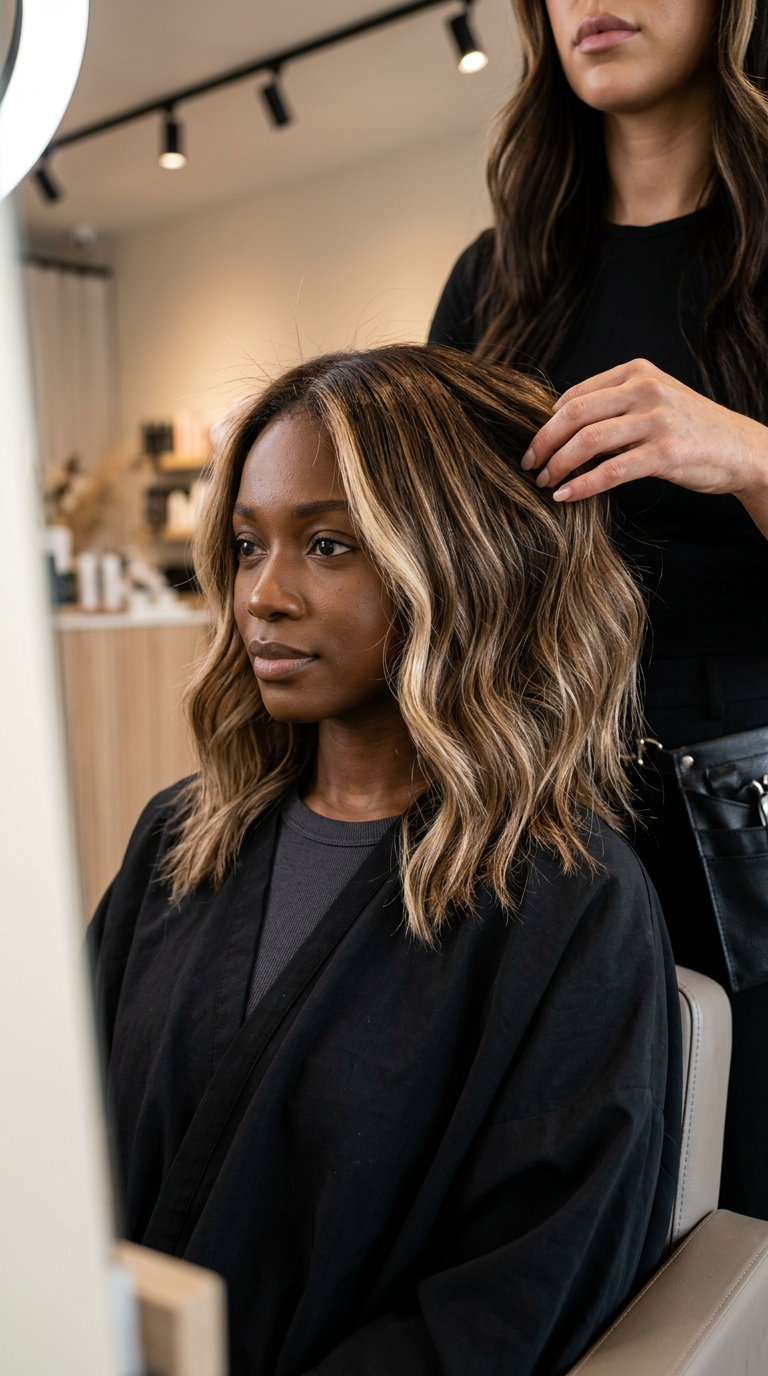
Strategic placement of warm beige and golden blonde highlights mimics natural sun-lightening for low-maintenance beauty—and yes, I said low-maintenance while talking about balayage, which usually costs more than my monthly coffee budget. Initial balayage for this diffused warmth can be a significant investment in time and cost, but the grow-out is genuinely forgiving. Highlights grew out seamlessly for 10 weeks before needing a subtle toner refresh, which means you’re not locked into quarterly salon visits. The technique works because it’s designed to blend, not to contrast.
Toasted coconut balayage sounds like a dessert, and that’s exactly the vibe—warm, soft, diffused throughout. Or maybe balayage, honestly, because the line between “balayage” and “dimensional hand-painted highlights” gets blurry depending on who you ask. What matters is that the placement sits on mid-lengths and ends, leaving your base dark enough that regrowth becomes a feature instead of a flaw. This is the highlight category that actually rewards you for skipping appointments.
If you want color that looks intentional but doesn’t announce itself, toasted coconut balayage is the move. Summer in a bottle.
Cool Beige Balayage with Shadow Root
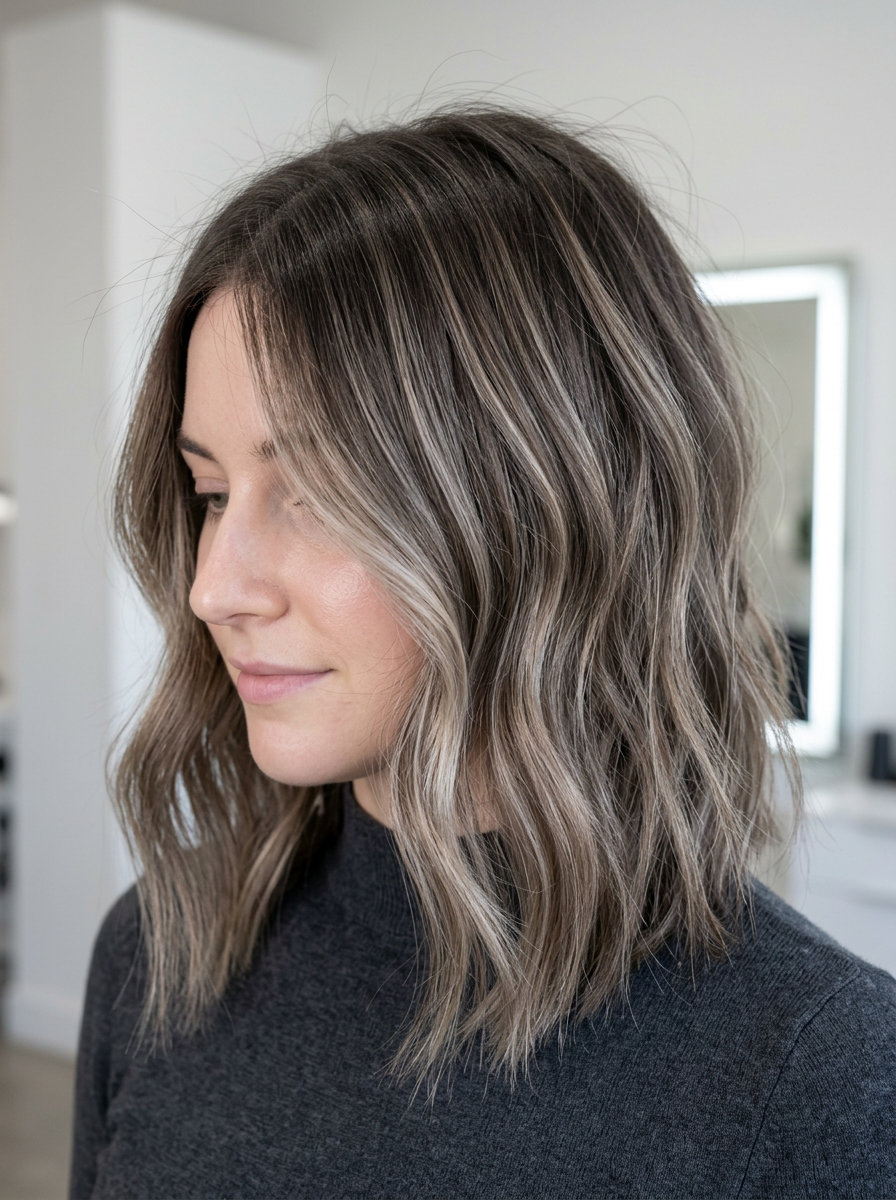
A soft shadow root with cool beige highlights creates a sophisticated, low-maintenance look by extending grow-out time—which is literally the opposite energy from copper ribbons. This is the look you get when you decide that blonde is happening, but only if it doesn’t require you to live at the salon. Shadow root allowed 12 weeks between salon visits, maintaining a natural, blended look that costs you less money in the long run, even though the initial investment stings. The strategy here is that the darker root blends with your base, so the only thing fading is the beige, not the contrast.
Cool beige tones are harder to achieve than warm ones—they don’t happen by accident, and they’re not what your hair naturally wants to do. Achieving cool beige tones without warmth requires an expert colorist and higher salon cost, which is why this is probably worth the consultation at least. The beige should sit in that neutral zone where it doesn’t read yellow or brass or gray; it reads intentional. Probably worth the consultation at least.
Cool beige balayage shadow root is for people who want dimension without the commitment cycle. Elevated, understated elegance.
Golden Honey Ombré
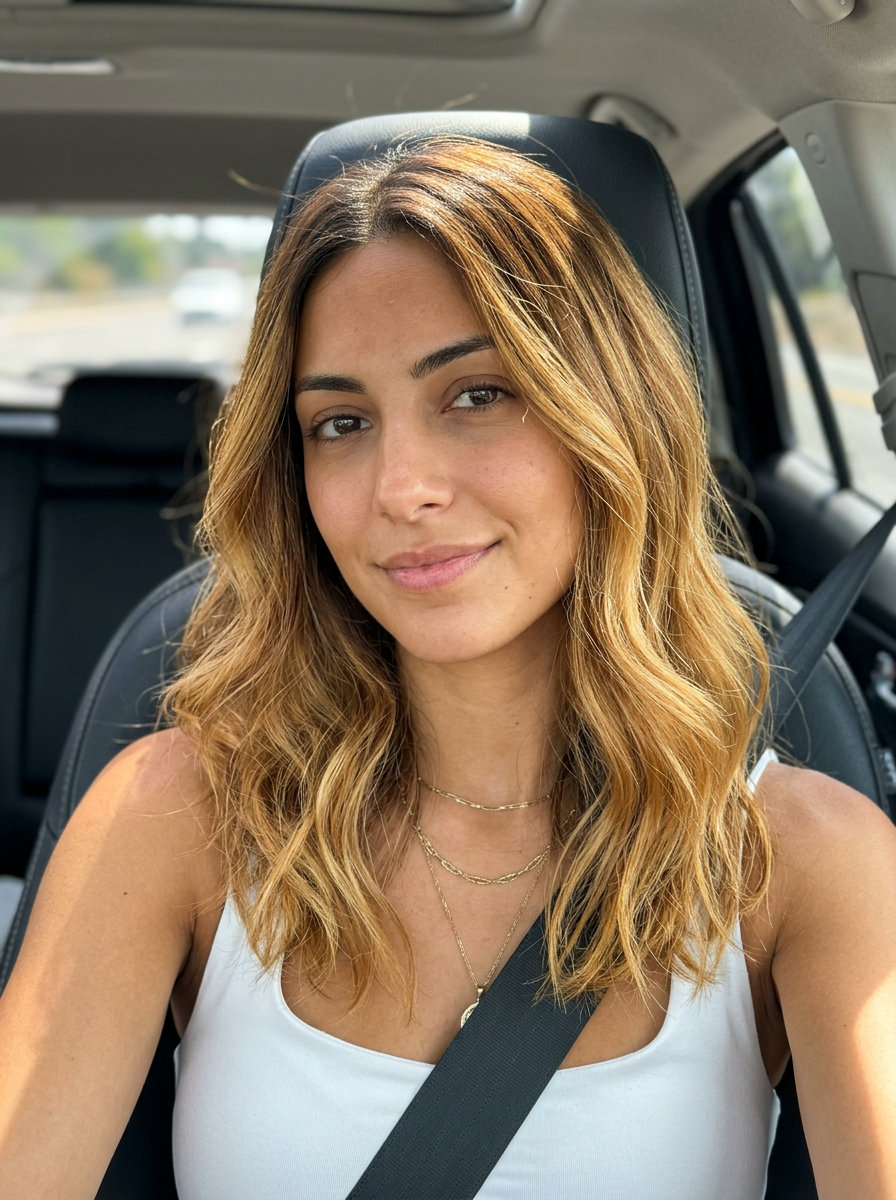
Warm caramel tones woven into the ombré transition create a seamless, melted blend from dark to light—the kind of gradient that reads like you spent all summer in the sun instead of in a chair. Ombré transition remained soft and blended for 4 months before needing a tone refresh, which is the ROI calculation that makes this worth considering over standard balayage. The difference is in the intentionality of the placement: ombré is engineered to shift from dark to light in a specific way, whereas balayage is more scattered. Both work, but ombré gives you a more controlled narrative. (My favorite summer vibe.)
Golden honey ombré suits almost every skin tone because the warmth is diffused across the entire gradient, not concentrated in one zone. Avoid if you prefer a high-contrast look—this is all about melted blend, which means no sharp lines, no obvious shadow root, no resistance between dark and light. The whole point is that your eye travels from root to tip without catching on anything.
Golden honey ombré brown hair is the full-circle moment if you’ve been following the warm trend all summer. The ultimate sun-kissed look.
Cool Beige Balayage with Shadow Root
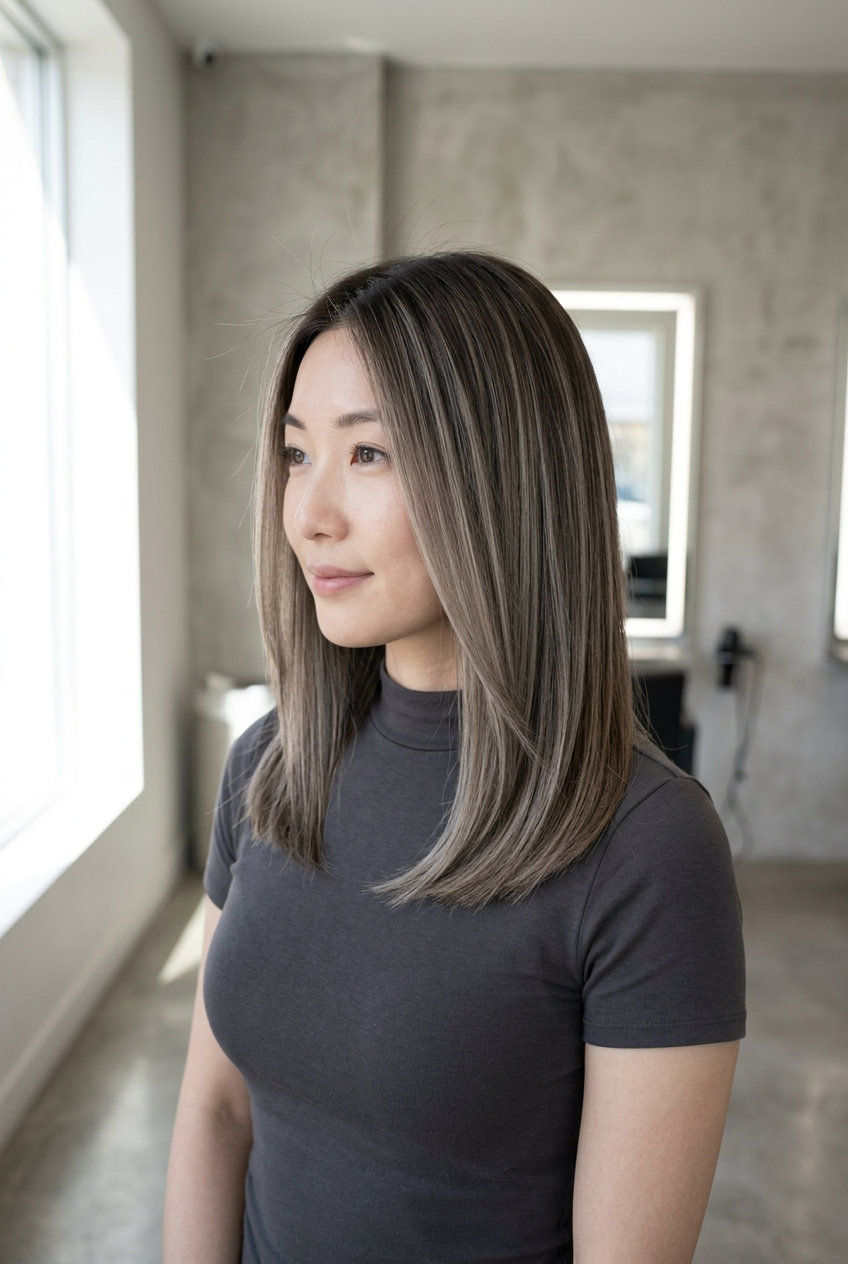
If warm highlights feel overdone, cool-toned balayage exists for the skeptics. The smoky, almost matte finish sits somewhere between ombré and barely-there—a vibe that works whether you’re sitting in meetings or at brunch. This technique uses blue-violet based toner to neutralize yellow and orange undertones, creating the kind of dimensional depth that doesn’t scream “I was just at the salon.”
The real trick? Maintenance. Cool blue-violet toner kept brassiness away for 5 weeks with weekly purple shampoo, but achieving this cool, smoky tone requires regular toning appointments, adding to salon cost. You’re looking at touch-ups every four to five weeks if you want that crisp, smokiness to stick around. The shadow root helps mask regrowth, which is honestly the smartest part of this whole approach—it buys you time between colorist visits. Without the root work, you’d be back at the chair in three weeks flat.
The placement matters too. Colorists typically apply cool tones to the mid-lengths and ends, keeping roots darker and more neutral. This creates an almost matte quality that photographs differently than warm highlights—less “glow,” more “moody.” It flatters cool fair, olive, and deep dark skin tones, with particular magic for blue and grey eyes. Ask your stylist specifically for blue-violet toning (not just ash blonde), because the difference between a cool tone and a truly smoky one is night and day. Cool girl magic.
Amber Highlights for Brown Hair
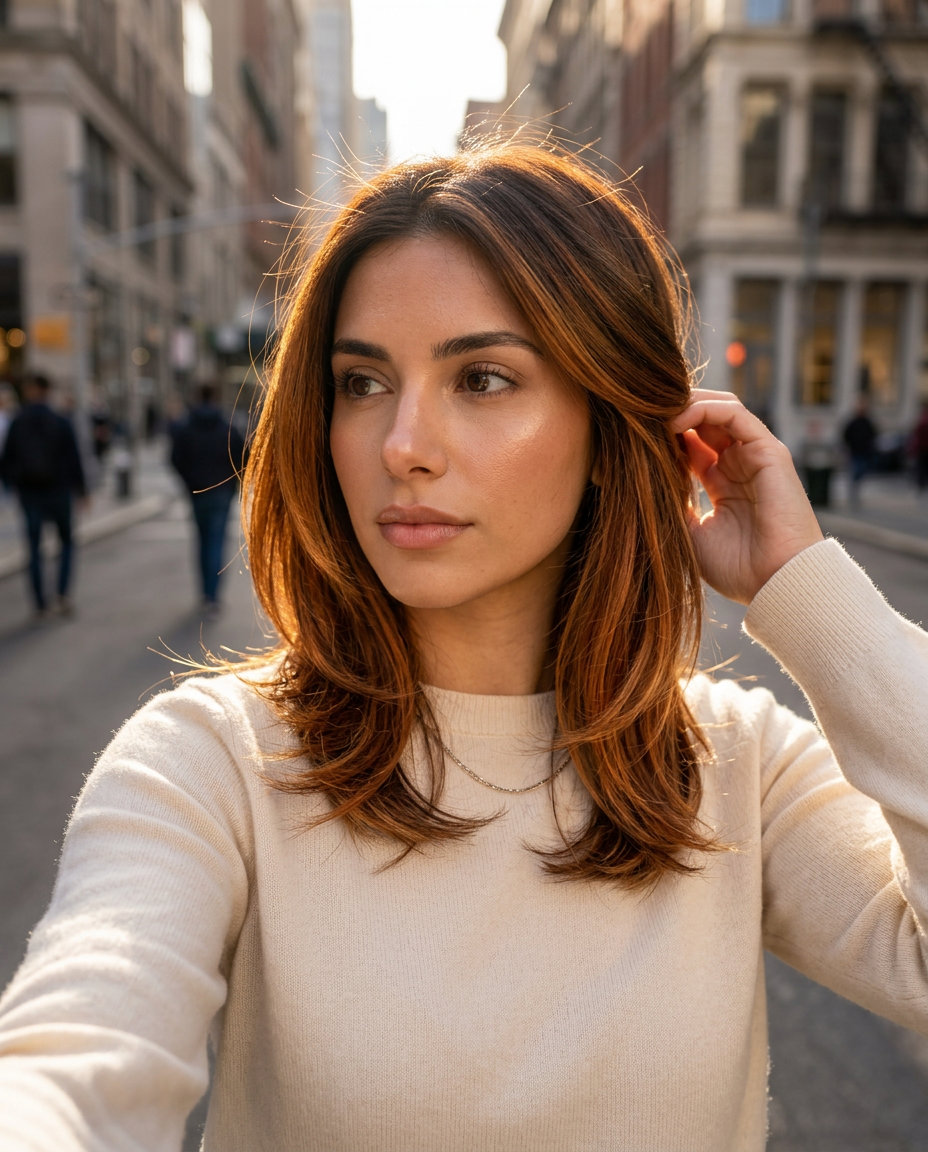
Warmth is not subtle this season. Amber highlights are basically what happens when you ask your colorist to make your hair look like it spends weekends near a bonfire. This is concentrated mid-length and end placement (yes, the warm one)—think less “face-framing” and more “entire head dimension.” The technique creates a sun-drenched effect by enhancing natural dimension rather than fighting it, which means even if your base is a rich medium brown, the ambers still register as intentional, not accidental.
Amber highlights maintained their warmth and shine for 6 weeks with color-safe shampoo, which is solid performance if you’re not obsessive about touch-ups. The warmth deepens slightly as the weeks pass, which some people see as a fading problem and others see as a natural progression. The real thing to know: this is not a subtle technique. Concentrated amber against a medium-to-dark brown base reads as a serious style choice, not “I was just in the sun.” Skip if you prefer cool tones; this fiery amber will clash with your preference—you’ll spend the whole summer fighting the warmth instead of enjoying it.
The color hits differently depending on your undertones. If you lean warm-skinned or have a natural tan, amber reads as an extension of your own coloring. If you’re cooler-toned, the same amber can feel a bit orange unless your stylist adds hints of red or gold to balance it. Ask your colorist to swatch three amber levels on your hair before committing, because “amber” means wildly different things depending on who’s mixing the bottle. Sun-kissed perfection.
Espresso Reverse Balayage
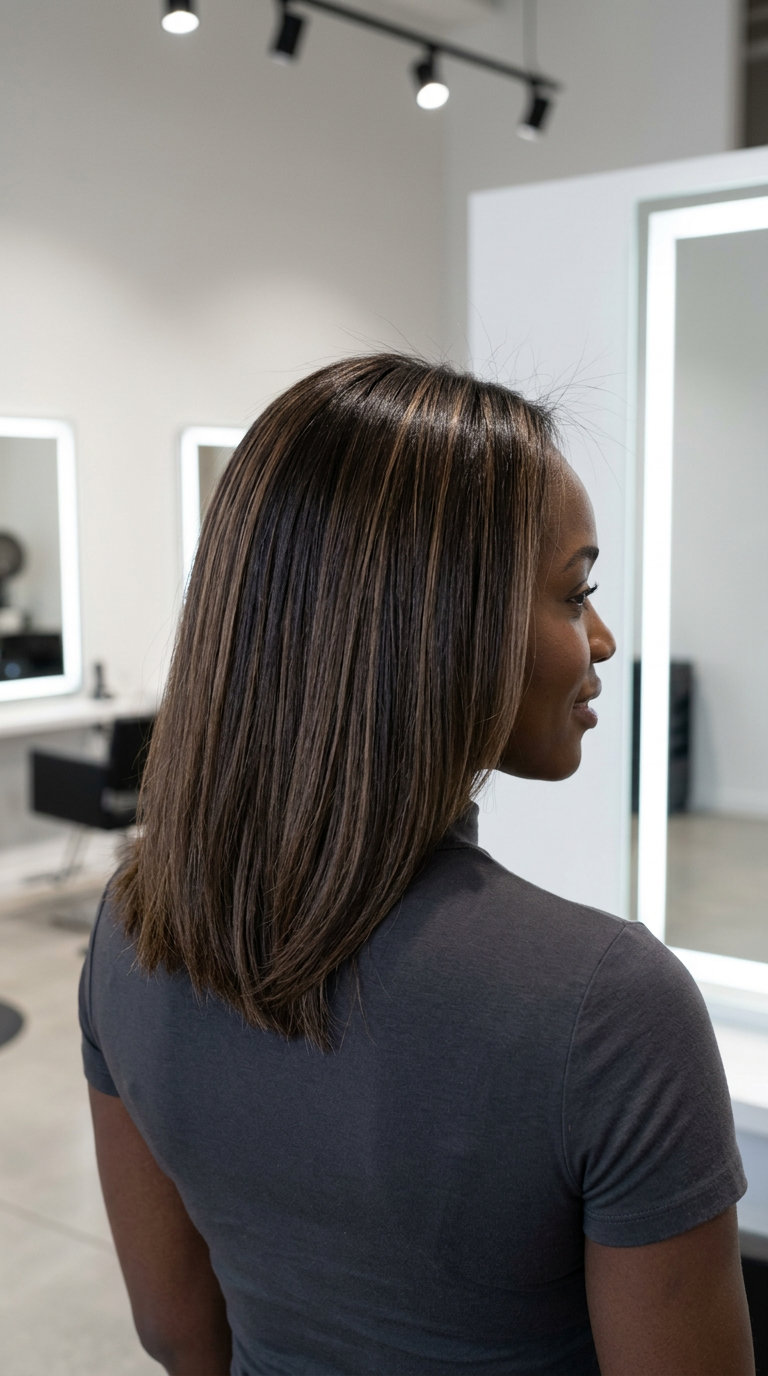
Dark lowlights are having a moment, and honestly, the logic checks out. While everyone’s chasing brightness, reverse balayage goes the opposite direction—hand-painting darker tones through mid-lengths and ends to create rich, almost smoky depth. This isn’t about going darker overall; it’s about strategic placement that makes your base color look richer and your hair look thicker, which is all my fine hair can handle. Colorists typically concentrate the dark tones around the mid-shaft, creating dimension that reads as intentional rather than grown-out.
Cool espresso lowlights added depth and richness, making fine hair appear thicker for 8 weeks without any loss of the dimension. That’s the real win here—depth that doesn’t fade into flatness by week four. Strategically placed darker lowlights create incredible dimension, making hair look fuller and richer, which matters especially if your base is already a medium to light brown. The lowlights anchor the look and prevent that “all one color” situation that happens when highlights fade.
The technique requires a skilled colorist because placement is everything. Too much, and you look like you’re going through a grow-out. Too little, and the effect disappears entirely. Ask for “hand-painted lowlights” rather than “babylights,” because the width of the stroke matters—you want dimension, not speckle. The espresso tone should complement your skin undertone, not fight it, which means cool espresso works best on fair or olive skin, while warmer espresso suits warmer complexions. Depth for days.
Honey Balayage Brown Hair
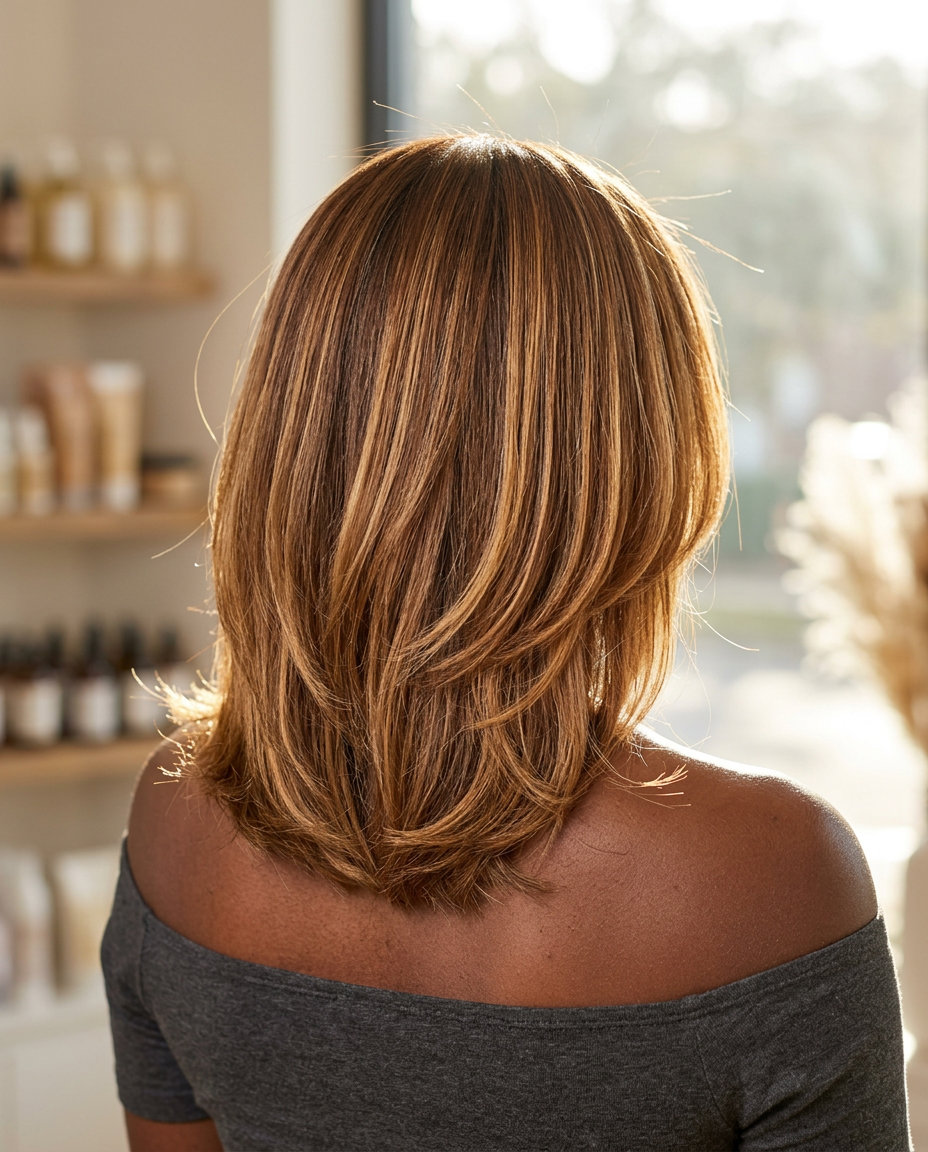
Honey gold highlights are the warm equivalent of the cool-toned looks, except they photograph like actual sunlight trapped in your hair. This is balayage with a focus on warmth and shine—the kind of dimensional effect that makes people ask if you just got back from somewhere tropical. The technique concentrates lighter tones throughout the mid-lengths and ends, or maybe a demi-permanent, honestly, depending on your maintenance tolerance and how fast your hair tends to grab color.
Honey gold highlights brightened my face for 7 weeks before needing a refresh, which is respectable if you’re using color-safe products. The thing about honey tones is they’re incredibly forgiving as they fade because the warmth reads as natural deepening rather than brassiness. A warm, clear gloss enhances shine and blends tones seamlessly, mimicking natural sun exposure, which is why this technique feels less “done” and more “lucky genetics.” The downside: warm gloss might fade faster than permanent color, requiring more frequent salon visits if you want that glossy finish to stick around.
Honey works on almost every brown base because it’s warm enough to feel intentional but not so dark that it disappears. Fine hair picks up honey tones beautifully and holds them longer than you’d expect, partly because the warmth doesn’t read as brassy when it softens. Ask your colorist for a “honey gloss” rather than a straight balayage if you want that extra shine component—it’s the gloss that makes the whole thing feel elevated rather than just highlighted. Golden hour glow.
Riviera Brunette Balayage
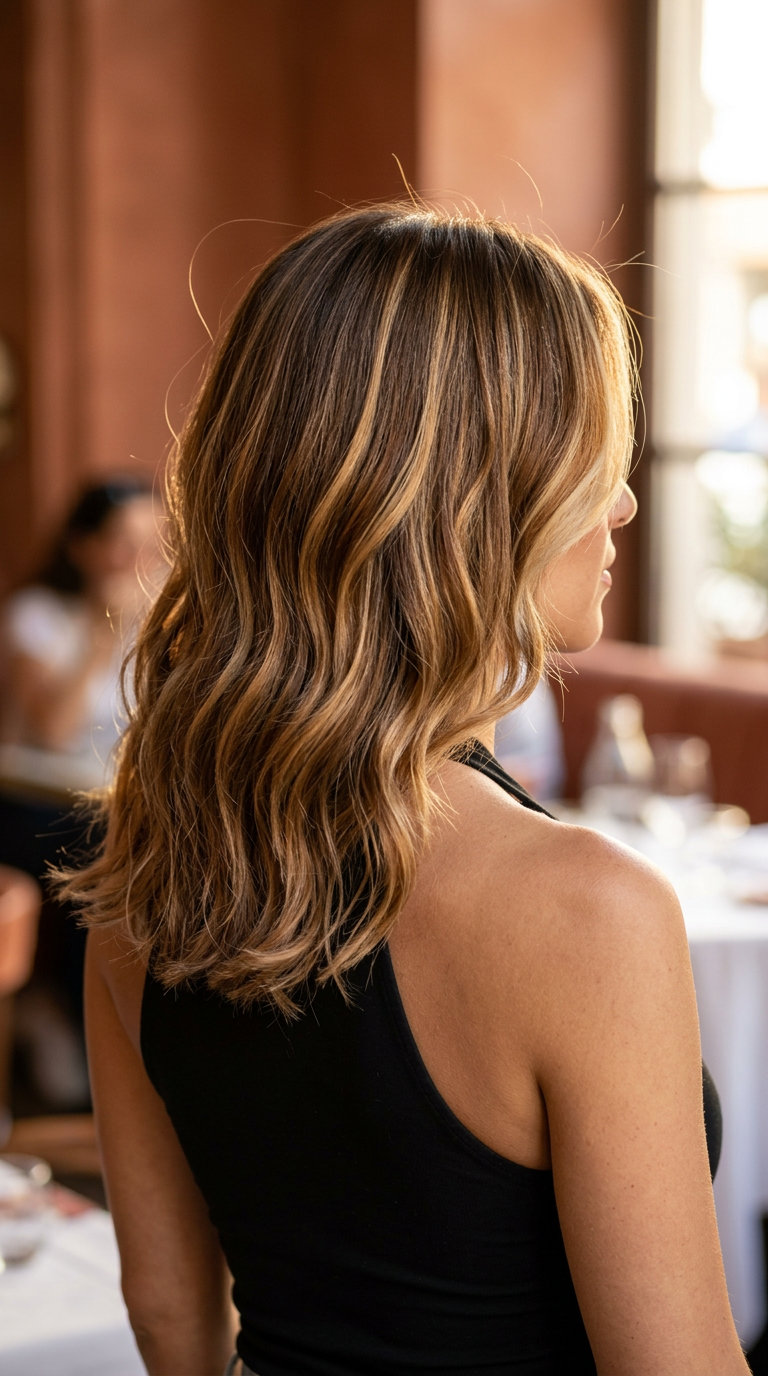
Wide ribbon highlights are the uncompromising version of balayage—thicker, more deliberate placement that reads as a statement rather than a suggestion. This is what happens when a colorist decides subtlety is optional. The technique uses wider hand-painted sections (think actual ribbons of color rather than delicate pieces) to create high-impact dimension that flatters warm and neutral skin tones, especially those with a natural tan, and complements all eye colors without flinching. The placement is strategic but obvious—you’re not hiding the work here.
Wide ribbon highlights grew out gracefully for 10 weeks, avoiding harsh lines because the width of the placement meant no blunt demarcation between tones. That’s the technical advantage most people don’t anticipate—wider placements blend more naturally as they fade. The key is consistent width and intentional spacing, which means this is not a DIY-friendly technique. Your colorist needs to hand-paint with precision, probably without rushing, because a sloppy ribbon is basically a stripe.
Not for those wanting subtle highlights; these ribbons are designed for high impact, which means you’re committing to a visible color change. Wide ribbon highlights mimic natural sun-lightened sections, creating a high-shine dimensional effect that works best on medium to dark brown bases where the contrast actually registers. The tone can be warm or cool depending on your preference, but the width stays consistent—that’s the signature. Ask your stylist to show you reference photos of their ribbon work specifically, because the difference between skilled ribbon placement and uneven striping is enormous, and probably worth the consultation at least. Pure luxury.
Espresso Brown with Ash Highlights
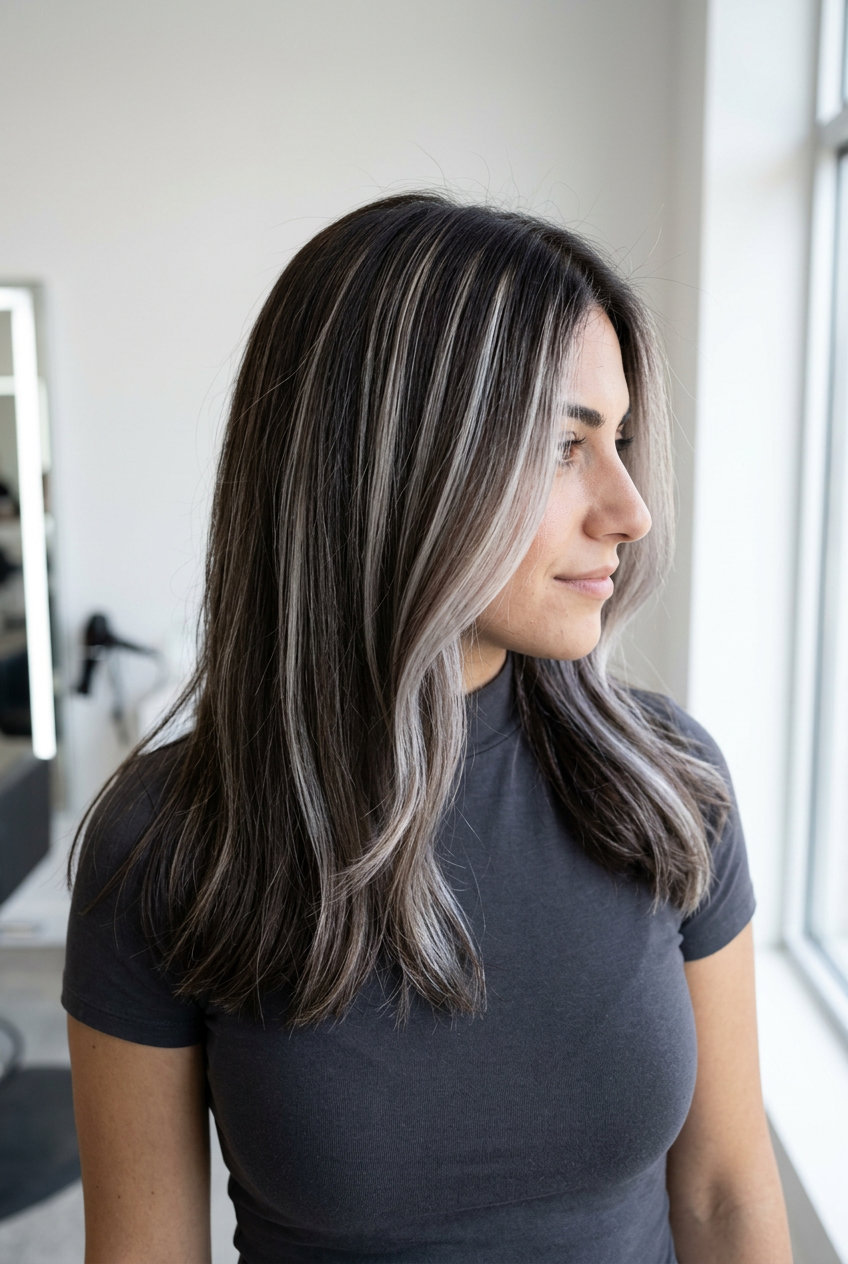
The antidote to warm tones is this: a deep espresso base with pearl and ash blonde highlights that refuse to look brassy no matter how much sun exposure they get. This is the color for people who go swimming in July and don’t want their highlights turning into a brass situation by August. Lifting to a clean level nine to ten and toning with blue-violet ensures icy highlights, preventing unwanted brassiness—that’s the science part, which is hard to achieve on dark hair. It requires a stylist who understands tone correction and won’t just throw bleach at your head and call it done.
Pearl and ash blonde highlights maintained cool tone for five weeks using purple shampoo weekly, which means you’re committing to a specific at-home routine. The ash sits cool against the espresso base, creating contrast without warmth, and the whole thing reads as deliberate restraint rather than trend-chasing. This works for people with cool or neutral undertones; skip if you have warm undertones—this cool tone might wash you out. The icy perfection is there if you’re willing to show up with the purple shampoo every single week and not experiment with a regular conditioner because you got lazy.
Mahogany Highlights Dark Brown Hair
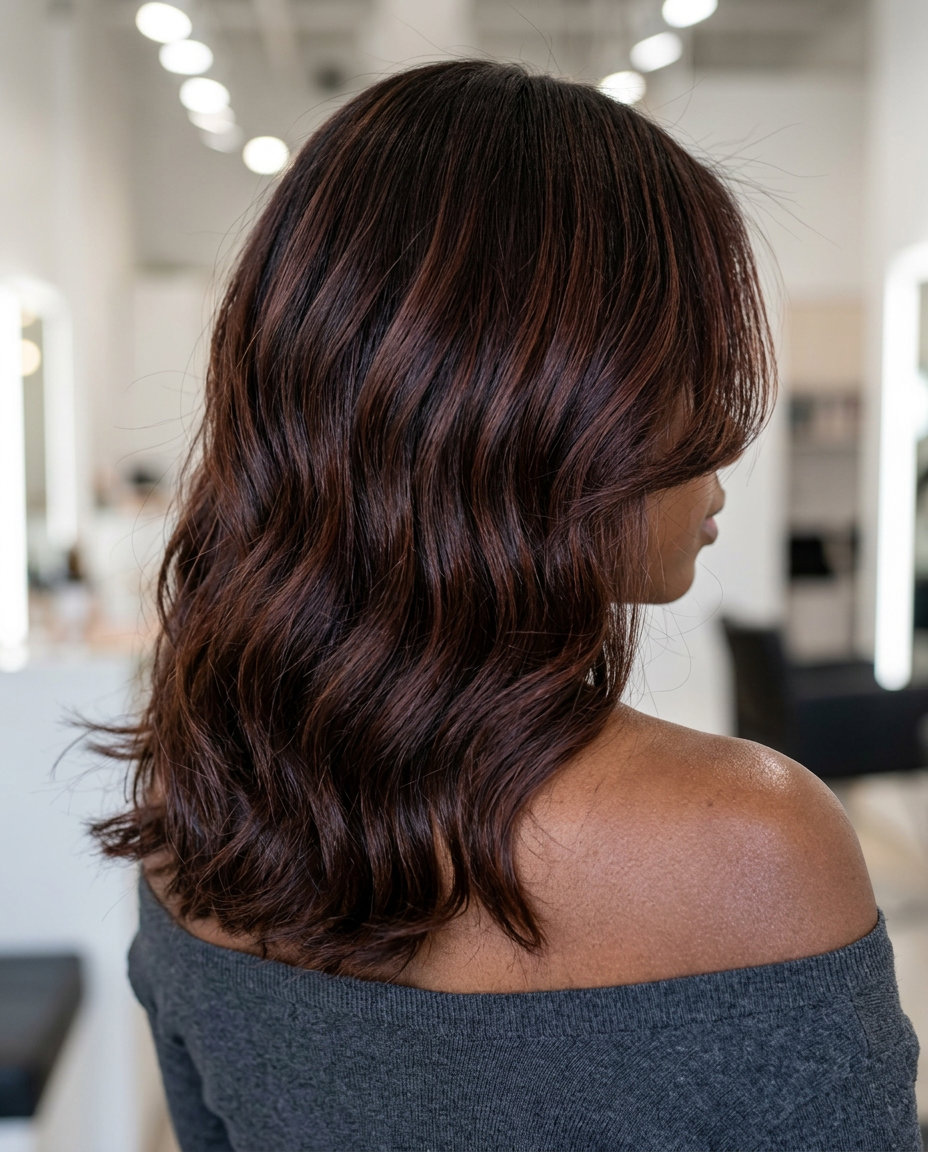
Mahogany is what happens when you want dimension without drama, a reddish-brown that sits somewhere between wine and wood stain. The technique uses a demi-permanent mahogany gloss that enhances shine and unifies tones, making the red dimension blend seamlessly rather than popping off your head like a warning sign. Hand-placement is key here, probably needs a professional eye for placement, but once it’s applied you get that one-session result that doesn’t require a color correction appointment two weeks later. Mahogany highlights remained vibrant for six weeks with minimal fading using sulfate-free shampoo, which is honestly the best case scenario for anyone who doesn’t want to think about their hair every other day.
This is the color that works on medium to darker brown hair without looking fake, and it’s warm enough to flatter olive and deeper skin tones while being subtle enough that your conservative relatives won’t have opinions about it. The red sits within the brown rather than on top of it, which is why it holds its color so much longer than brighter copper tones. You’re looking at a color that ages gracefully—fading into a warmer brown-blonde rather than a brassy disaster—and that’s the kind of hair math that usually only happens on accident. Subtle, yet striking.
Tea Stained Hair Color Brunette
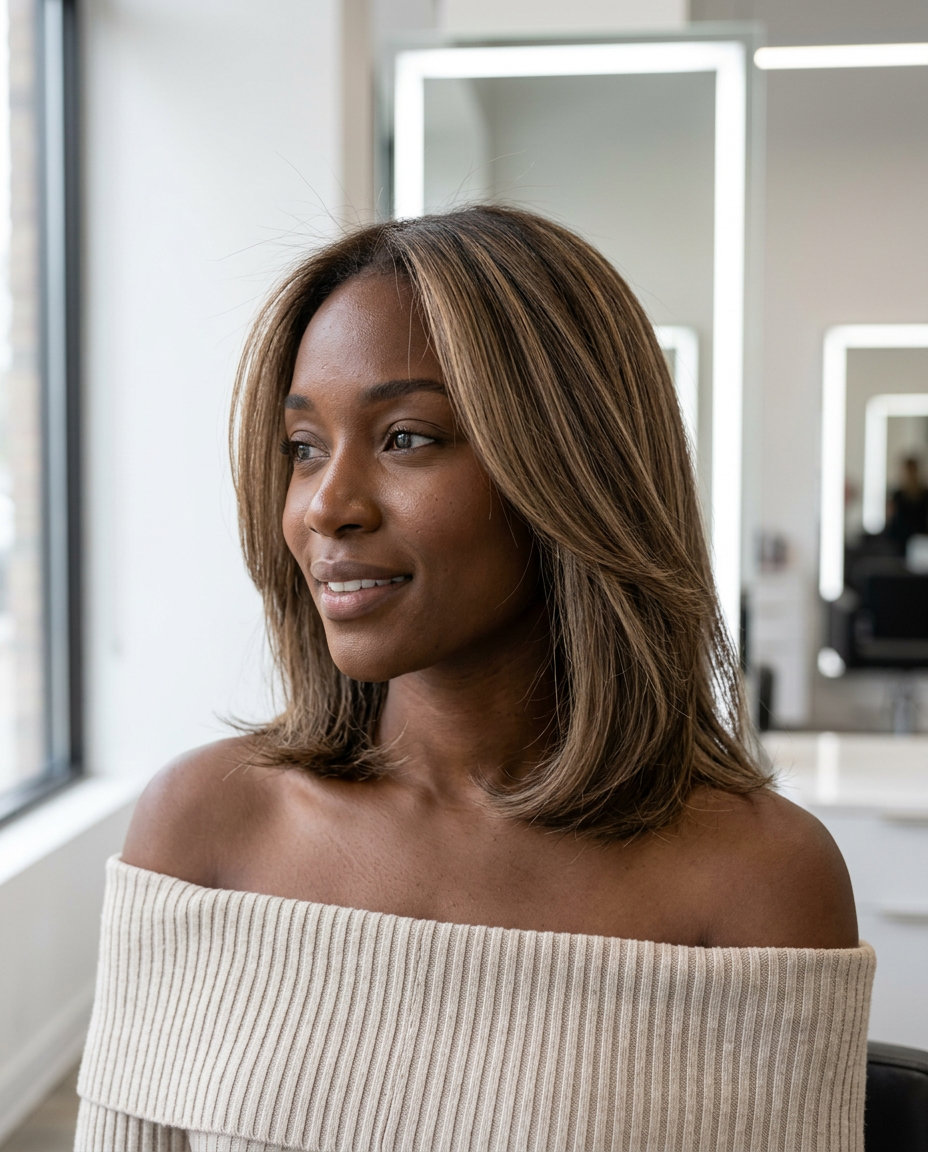
Tea-stained hair is what happens when you ask a colorist for the opposite of obvious: low-contrast highlights in three distinct shades that create a ‘tweed’ effect instead of stripes. Using three distinct highlight formulas creates a nuanced, low-contrast ‘tweed’ effect, avoiding harsh lines, and the whole thing looks less like highlights and more like your hair naturally caught some sun and then didn’t. The result is so understated that people have to stare directly at your head under florescent lighting to notice the dimension is intentional and not just… your hair. Low-contrast ‘tweed’ highlights grew out gracefully for ten weeks before needing a refresh, or maybe just a really good stylist who planned ahead for regrowth.
This technique demands a stylist who understands subtlety and won’t try to convince you that you need brighter contrast to make it worthwhile—that defeats the entire purpose. You’re committing to three separate sessions of processing, which adds time and cost, but the payoff is a color that reads as sophisticated and requires almost zero maintenance between appointments. Not for very dark hair—the low contrast might not show up well—but for medium to light brown bases this creates an understated richness that photographs beautifully without looking filtered. The cost lives somewhere in the middle of the highlight spectrum, and the grew-out timeline is genuinely long, which is the real victory here. Sophisticated blend.
Copper Highlights on Brown Curly Hair
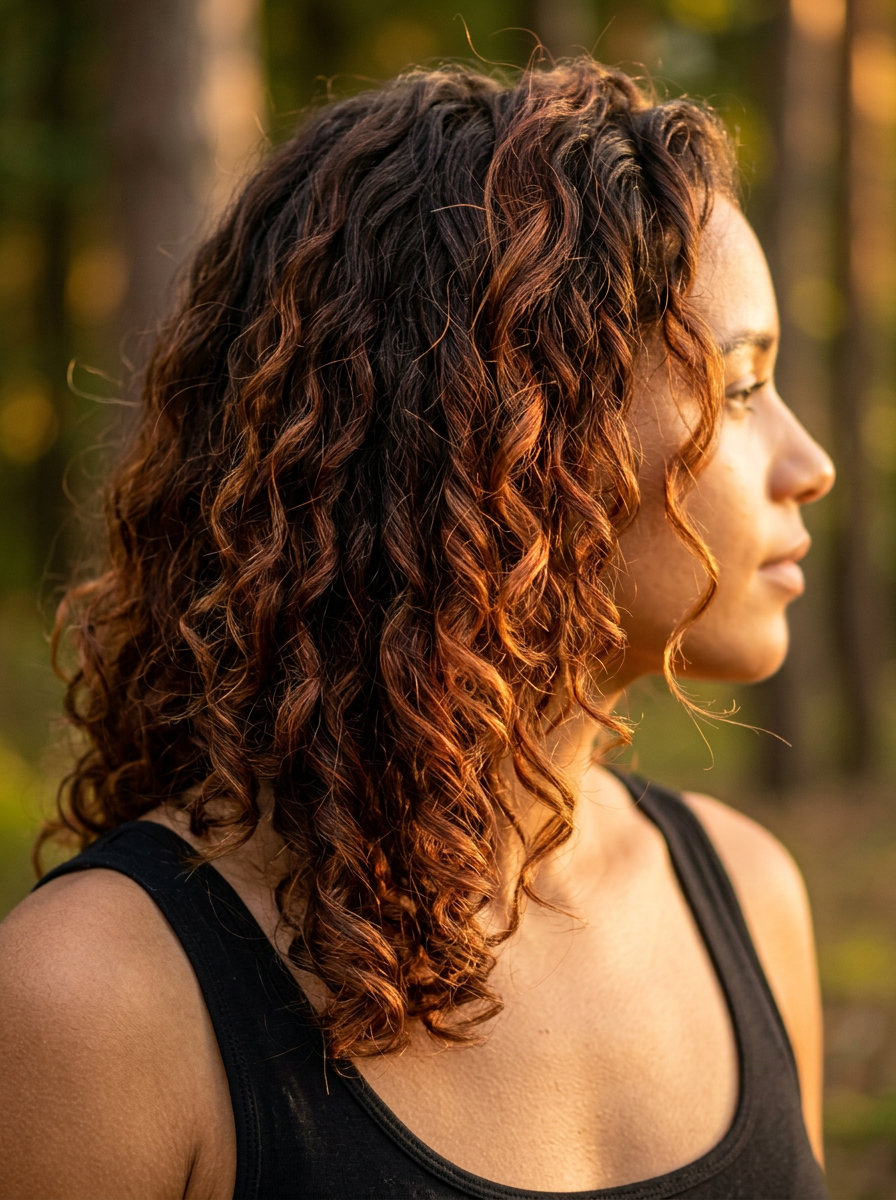
Copper is the warm-tone equivalent of a full commitment: hand-painted strokes through mid-lengths and ends that create a luminous, sun-drenched effect without harsh root lines. Hand-painting auburn and copper through mid-lengths creates a luminous, sun-drenched effect without harsh root lines, which is why this technique beats traditional balayage when you’re working with texture. The color sits on warm medium, olive, and deeper skin tones beautifully and enhances brown and hazel eyes in a way that feels almost unfair—like you just came back from a month in Italy and your hair naturally caught highlights. Copper highlights maintained luminosity for five weeks, needing only a color-depositing conditioner, which means the at-home routine is actually manageable and doesn’t require a cabinet full of specialty products.
The catch is that copper tones require consistent at-home color care to prevent rapid fading (my favorite for fall, even though we’re talking summer). On curly hair specifically, the dimension reads differently at every angle because of how light travels through texture, so the copper catch differently depending on whether you’re looking at a spiral or a wave. This is the look for people with naturally warm tones who don’t mind booking a refresh appointment every six to eight weeks, who understand that copper needs maintenance the way some plants need water, and who aren’t threatened by the fact that this color will probably show more than any other highlight family. Fiery depth.
Icy Blonde Money Piece
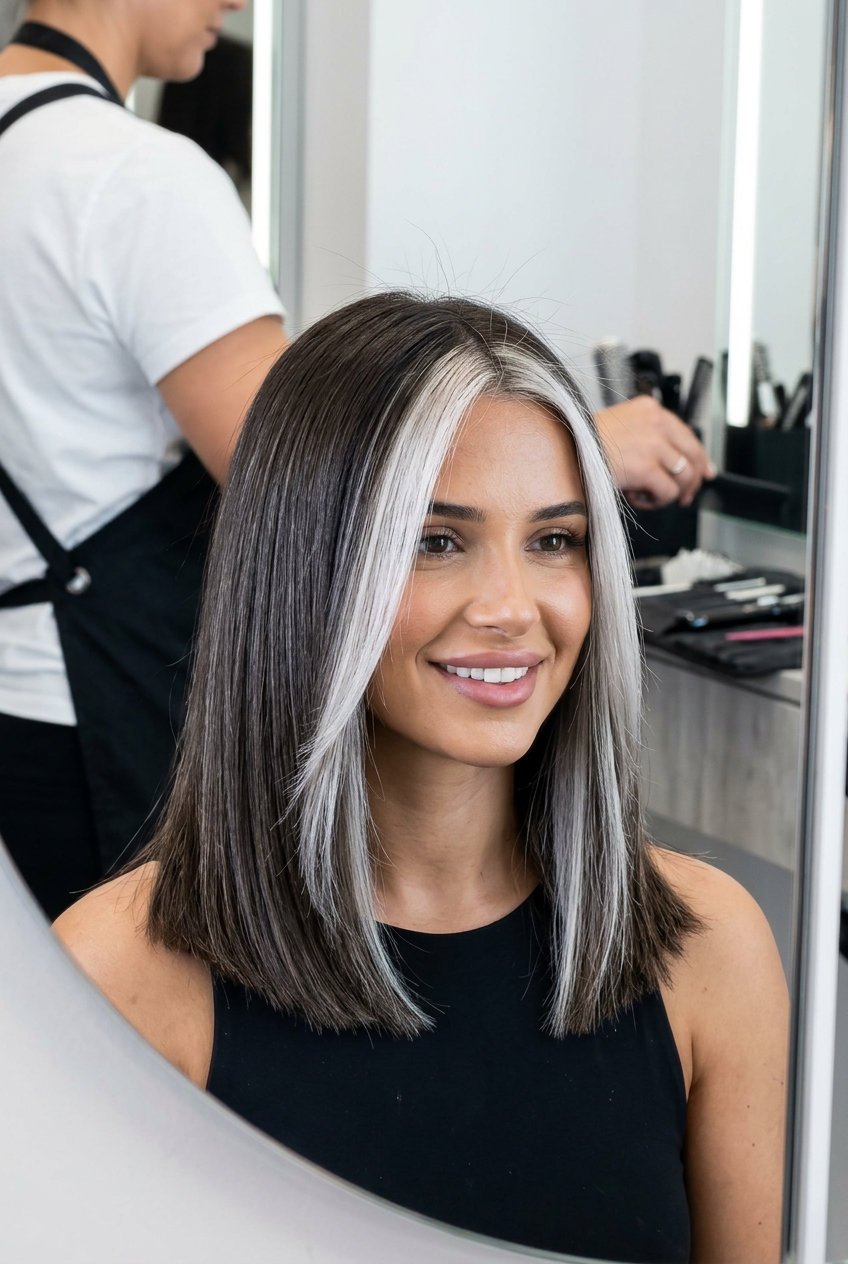
The money piece is back, and this time it’s coming in platinum. Face-framing highlights at Level 10 create dramatic contrast against a deep espresso base—the kind of statement that makes people ask what’s different about you before they even clock the hair. Targeted lighting to the face is the whole design here, which means this isn’t a full balayage situation. You’re committing to precision placement, not diffused blending. That said, icy blonde money piece on brown hair maintains vibrancy for 4 weeks with purple shampoo every other wash, so it’s not quite the maintenance beast platinum usually is.
The catch? Platinum requires $200+ monthly maintenance and can damage hair if not cared for—especially around the face where the density is thinnest. You’ll need a stylist who understands that targeted money piece lighting to Level 10 creates dramatic face-framing contrast against the deep espresso base; it’s not about going light everywhere, it’s about strategic placement. The friction moment here (the best $300 I’ve spent on my face, honestly) is that this look demands precision. There’s no hiding sloppy placement, no blending away mistakes. Which means you need someone who knows what they’re doing. The ultimate statement.
Toffee Balayage Brown Hair
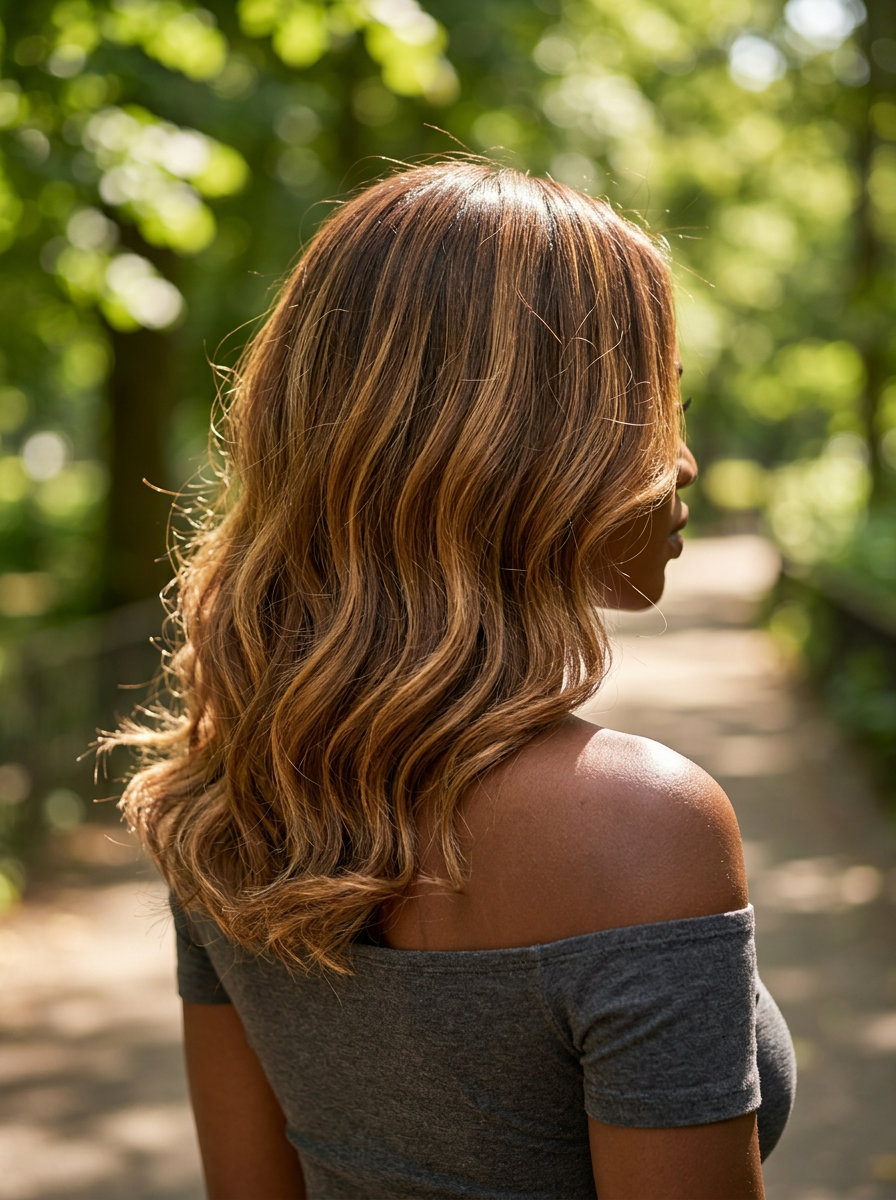
Toffee balayage is what happens when you want warm depth without looking like you’re trying too hard. Hand-painting highlights mid-lengths to ends creates a natural, sun-drenched look with softer grow-out—this is the technique that feels effortless because it actually is, at least in terms of upkeep. Placement is freehand, which means the color sits at different levels across the head, catching light unevenly and creating that diffused, lived-in effect. Toffee balayage grew out seamlessly for 10 weeks before needing a refresh, which is solid for warm highlights. The maintenance payoff is real here—you’re not chasing root coverage constantly.
The honest part: not ideal for cool skin tones, since the warm toffee can make you look sallow. If you’ve got olive or warm undertones, this is your lane. If you’re fair and cool, skip this one (which is all my fine hair can handle anyway, but that’s another story). The reason this works at all is the hand-painted placement—you’re mimicking natural sun lightening, creating subtle brightening around the face that blends into your natural base. Sun-kissed perfection.
Bronze Balayage Brown Hair
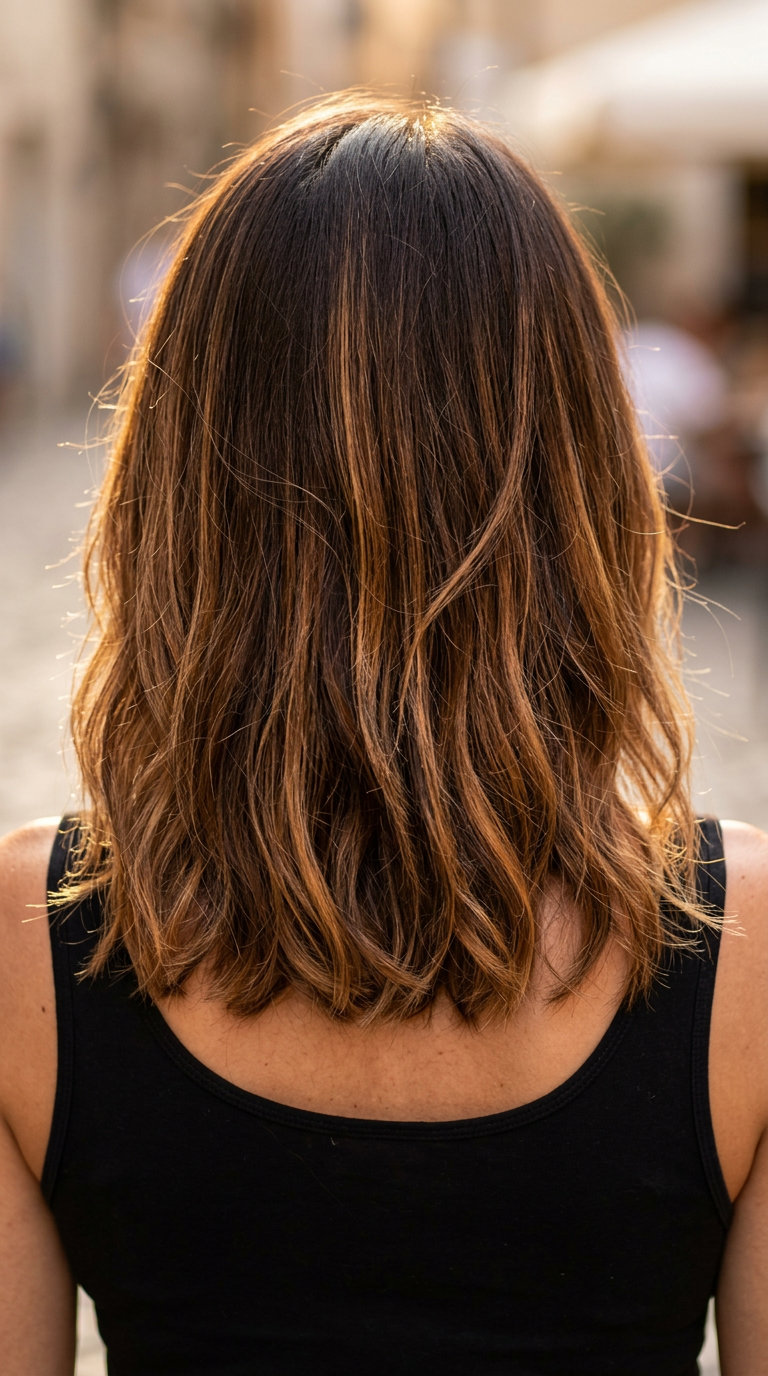
Bronze highlights blended perfectly for 8 weeks, mimicking natural sun lightening—and that’s the entire appeal of this technique. You’re not going for obvious dimension; you’re creating the illusion that your hair has been sitting in the sun all summer. Freehand painting mimics natural sun exposure, creating subtle, low-maintenance brightening around the face that doesn’t scream “color appointment.” Bronze sits warmer than toffee but cooler than caramel, which means it has more depth. The placement matters here because you want the warmth concentrated around the face and mid-lengths, fading into the base naturally.
This is where pricing becomes the story—bronze balayage costs roughly $180–$250 depending on your salon, and probably worth the consultation at least to see if the warm undertones read right on your specific base color. The technique itself is freehand, so you need someone comfortable without a color map, someone who can read hair and paint intuitively. Freehand painting mimics natural sun exposure, creating subtle, low-maintenance brightening around the face. Effortless, truly.
Pecan Sandie Highlights Brown Hair
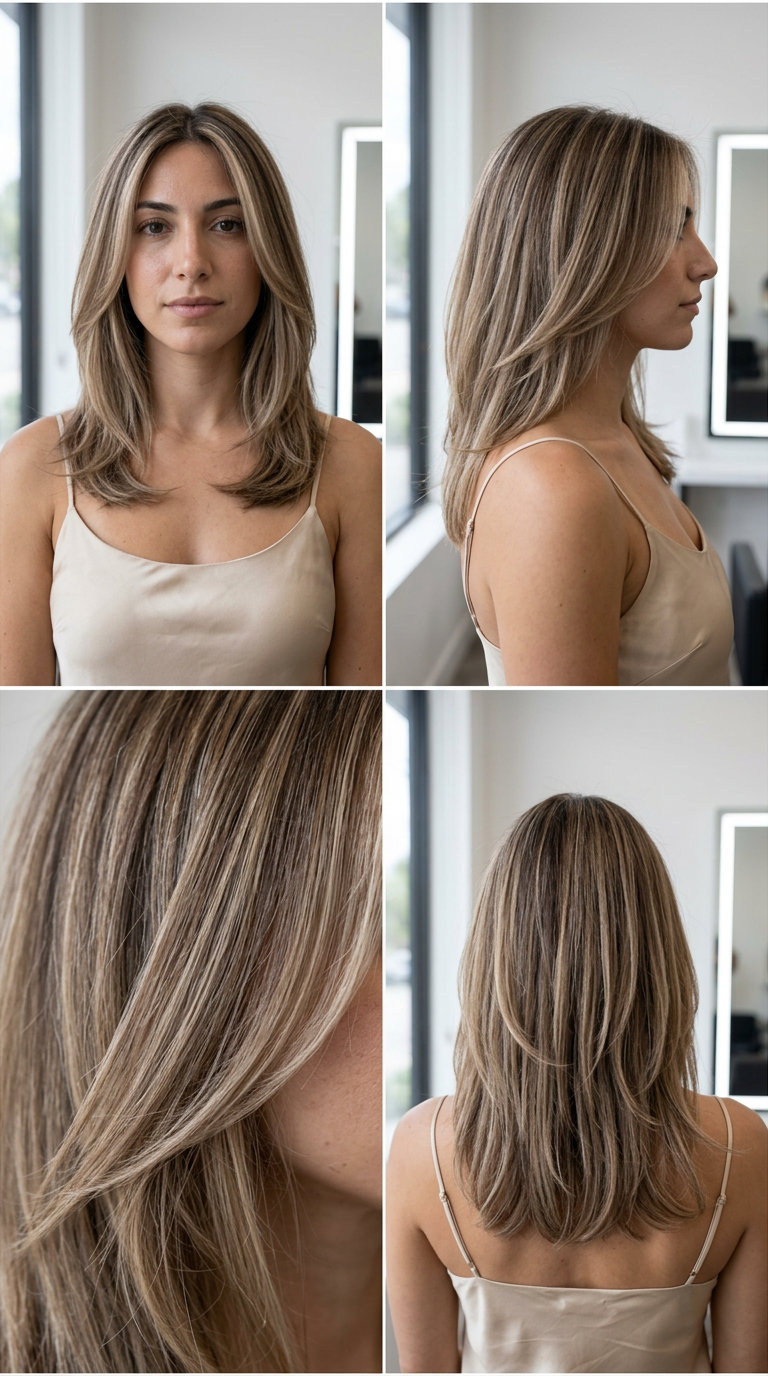
Pecan sandie highlights brown hair through finely woven placement that reads almost translucent. The price point is what makes this version worth noting—you’re looking at $140–$190 for placement that feels expensive but costs less than most balayage, which is the kind of value that makes sense. Finely woven highlights needed touch-up after 6 weeks to maintain the ‘undone’ effect, so the maintenance timeline is predictable. What you’re getting is softness: narrow, frequent ribbons of blonde that sit so diffused they blur into each other, creating a hazy, sun-kissed effect instead of distinct dimension.
The real consideration is tone maintenance. Maintaining neutral sandy-beige requires specific toning to avoid brassiness or ashiness—so you’ll need a toning shampoo in your routine, not just purple-based stuff. Finely woven highlights create a soft, diffused sandy-beige effect, perfect for a natural, ‘undone’ look that doesn’t demand constant root coverage or dramatic refresh appointments. It’s the quietest way to add light to brown hair while still reading as intentional color work. My everyday favorite.
Iced Coffee Hair Color
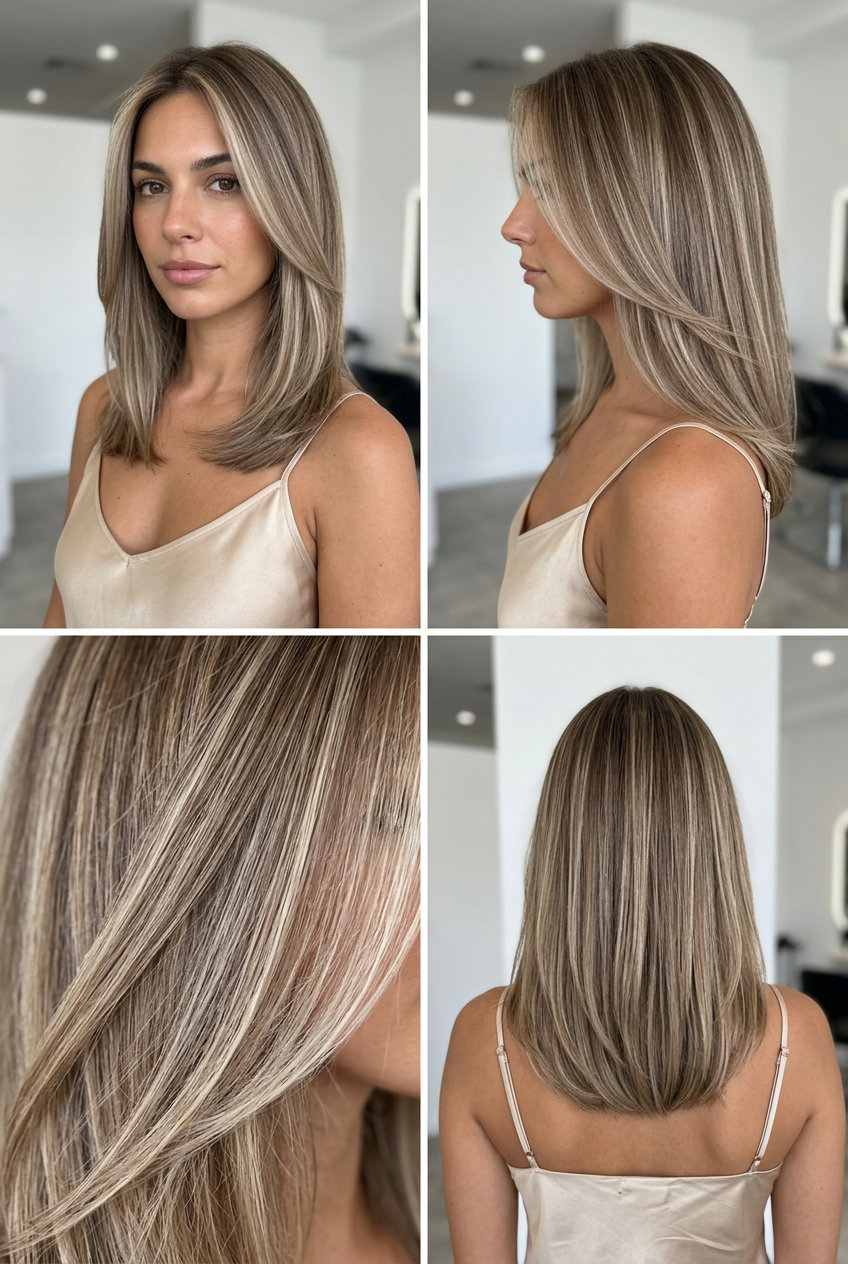
Iced coffee hair color is what happens when you want blonde without warmth—cool tones that sit somewhere between ash and beige, creating dimension that reads as intentional rather than sun-exposed. Babylights provided a soft, translucent blonde that lasted 8 weeks before needing a refresh, so the longevity is solid for a cool-toned placement. Meticulously placed babylights create a soft, translucent blonde effect, blending seamlessly with the natural base; this is the technique that requires skill because spacing matters. You’re creating the illusion of natural blonde highlights through micro-placements rather than broader painting, which takes steadier hands and more technical precision than freehand balayage.
The commitment here is tonal: pass if you can’t commit to cool-toned shampoos, because warmth will quickly appear and undermine the entire effect. This is the look for cool skin tones, fair complexions with blue or grey undertones, anyone who’s ever been told they look better in silver than gold. The color sits translucent and soft, which means it doesn’t feel heavy or overdone—it’s barely there until the light hits it, and then you see the whole architectural shift. So chic, so subtle.
Still Deciding? Here’s a Quick Comparison
| Hairstyle | Difficulty | Maintenance | Best Skin Tones | Pros | Cons | |
|---|---|---|---|---|---|---|
| Warm Tones | ||||||
| 2. Buttercream Blonde Highlights | Moderate | Medium — every 10-12 weeks | Fair to medium skin tones with warm or neutral undertones | Suits most face shapesWorks on multiple texturesSubtle sun-kissed effect | Not ideal for very curly hair |
| 6. Chocolate Truffle Highlights | Moderate | Medium — every 10-12 weeks | all skin tones, especially deep olive and warm medium complexions | Suits most face shapesWorks on multiple textures | Not ideal for very curly hair |
| 7. Auburn Spice Highlights | Moderate | High — every 6-8 weeks | warm fair, medium, and golden skin tones | Suits most face shapesWorks on multiple textures | Frequent salon visits needed |
| 8. Toasted Coconut Highlights | Moderate | Medium — every 10-12 weeks | warm medium, olive, or fair skin with golden undertones | Suits most face shapesWorks on multiple textures | Not ideal for very curly hair |
| 9. Cool Beige Shadow Root Highlights | Moderate | Low — every 12-16 weeks | cool fair, light, or medium skin tones | Low maintenanceSuits most face shapesWorks on multiple textures | Not ideal for very curly hair |
| 10. Golden Honey Ombré Highlights | Moderate | Low — every 16-20 weeks | warm fair, medium, and golden olive skin tones | Low maintenanceSuits most face shapesWorks on multiple textures | Not ideal for very curly hair |
| 12. Warm Amber Balayage Highlights | Moderate | Medium — every 10-14 weeks | warm medium, olive, or deep skin tones | Suits most face shapesWorks on multiple textures | Not ideal for fine hair |
| 14. Honey Glaze Highlights | Moderate | Low — every 8-10 weeks | tan, golden, and peachy skin tones | Low maintenanceSuits most face shapesWorks on multiple textures | Not ideal for very curly hair |
| 15. Riviera Gold Highlights | Moderate | Low — every 12-16 weeks | Warm and neutral skin tones, especially those with a natural tan | Low maintenanceSuits most face shapesWorks on multiple textures | Not ideal for very curly hair |
| 17. Espresso Pearl Highlights | Salon-only | Medium — every 4-6 weeks | Cool fair to deep dark skin tones | Suits most face shapesWorks on multiple textures | Requires professional styling |
| 19. Tea-Stained Beige Highlights | Moderate | Low — every 12-16 weeks | All skin tones, especially neutral and warm undertones | Low maintenanceSuits most face shapesWorks on multiple textures | Not ideal for very curly hair |
| 20. Copper Auburn Highlights | Moderate | High — every 8-10 weeks | Warm medium, olive, and deeper skin tones | Suits most face shapesWorks on multiple textures | Frequent salon visits needed |
| 22. Toffee Ribbon Balayage | Moderate | Low — every 8-10 weeks | warm medium, golden olive, and peachy skin tones | Low maintenanceSuits most face shapesWorks on multiple textures | Not ideal for very curly hair |
| 23. Bronze Sun-Kissed Balayage | Moderate | Low — every 10-12 weeks | warm fair, medium, olive, and deeper skin tones | Low maintenanceSuits most face shapesWorks on multiple textures | Not ideal for fine hair |
| 24. Pecan Sandie Highlights | Moderate | Medium — every 8-10 weeks | neutral, olive, and warm fair skin tones | Works on multiple textures | Not ideal for very curly hair |
| 25. Iced Coffee Neutral Babylights | Salon-only | Medium — every 6-8 weeks | cool fair, light olive, and neutral skin tones | Suits most face shapesWorks on multiple texturesSubtle sun-kissed effect | Requires professional styling |
| Cool Tones | ||||||
| 1. Platinum Blonde Money Piece Highlights | Salon-only | High — every 4-6 weeks | cool fair, medium, and deep skin tones | Suits most face shapesWorks on multiple textures | Requires professional styling |
| 3. Mushroom Beige Babylights | Salon-only | Medium — every 6-8 weeks | cool fair, olive, and deeper skin tones with neutral to cool undertones | Suits most face shapesWorks on multiple texturesSubtle sun-kissed effect | Requires professional styling |
| 5. Sandy Blonde Face-Framing Highlights | Moderate | Low — every 8-10 weeks | neutral to cool fair, medium, and olive skin tones | Low maintenanceSuits most face shapesWorks on multiple textures | Not ideal for very curly hair |
| 11. Smoked Walnut Ash Highlights | Salon-only | Medium — every 6-8 weeks | cool fair, olive, and deep dark skin tones | Suits most face shapesWorks on multiple textures | Requires professional styling |
| 13. Rich Espresso Reverse Balayage Highlights | Moderate | Medium — every 8-10 weeks | cool fair, olive, or deep skin tones | Suits most face shapesWorks on multiple textures | Not ideal for very curly hair |
| 18. Mahogany Red-Brown Highlights | Moderate | Medium — every 6-8 weeks | all skin tones, especially medium to deep complexions with neutral to cool undertones | Suits most face shapesWorks on multiple textures | Not ideal for fine hair |
| 21. Icy Platinum Money Piece Highlights | Salon-only | High — every 4-6 weeks | cool fair, olive, or deep skin tones | Suits most face shapesWorks on multiple textures | Requires professional styling |
Frequently Asked Questions
Can I really get a platinum look without bleach for a money piece?
Achieving true platinum requires lightening, but you can mimic the high-contrast effect of the Platinum Blonde Money Piece using temporary hair mascara, clip-in extensions, or even strategic styling with lighter-toned pieces. It’s about the visual illusion—the dramatic frame around your face—rather than permanent lift. For one-off events, this fakes the look convincingly.
How long do these temporary highlight styling methods last?
Temporary styling techniques vary wildly. A braid-out like the Caramel Swirl Highlights holds for 6-8 hours before loosening. Hair mascara for the Platinum Blonde Money Piece lasts through a single event. Even semi-permanent glosses like those used on the Buttercream Blonde Highlights fade within 4-6 weeks, depending on how often you wash and whether you’re spending time in chlorine or direct sun.
What’s the easiest highlight effect for beginners to try at home?
The Sandy Blonde Face-Framing Highlights is straightforward—it relies on curling your existing lighter strands to create dimension, no color required. The Buttercream Blonde Highlights also works for beginners because the soft, blended effect is forgiving; uneven placement actually reads as intentional texture rather than a mistake.
What products help temporary highlight styles look most natural and vibrant?
A Hair Gloss Treatment enhances shine on your base hair, making any styled highlights appear more dimensional—this is especially effective for the Buttercream Blonde Highlights. UV Protectant Spray is crucial if you have existing lighter pieces; it prevents brassiness and keeps cool tones (like the Mushroom Beige Babylights) from turning orange. A Bond Repair Treatment weekly keeps compromised hair from looking dull or straw-like, which ruins the whole effect.
Will these highlight techniques work on very dark brown hair?
Some will, some won’t. The Tea-Stained Tweed Highlights and Espresso Lowlights with Cool Beige are designed for darker bases and create subtle dimension without requiring extreme lift. The Platinum Blonde Money Piece and Icy Platinum variations demand significant lightening, so they’re not realistic for very dark hair without professional bleaching. Start with your stylist’s honest assessment of how much lift your hair can handle safely.
Final Thoughts
The thing about summer highlights for brown hair 2026 is that they’re not really about the highlights at all—they’re about what you’re willing to commit to. Platinum money pieces demand monthly upkeep. Caramel swirls fade into something softer, which is either devastating or perfect depending on your tolerance for change. Mushroom beige babylights are the introvert of the bunch: they whisper instead of shout, which means you’ll spend half the summer explaining to people that yes, you did something different.
Pick the one that matches your actual life, not your Instagram fantasies. The best highlight is the one you’ll actually maintain—or the one you won’t resent maintaining. Everything else is just hair.