Taylor Hill showed up at Cannes with a textured, curly French bob and suddenly every salon in my feed was getting the same request. Lily Collins locked in the thick, straight fringe version for Emily in Paris Season 4, and now it’s everywhere—the blunt chin-length precision, the high-shine finish, the quiet luxury energy. The French bob isn’t new, but the 2026 version is sharper, more intentional, and decidedly less “messy bedhead.”
The classy summer French bob haircut 2026 spans from the Fringed Frenchie with its eyelash-grazing bang to the Box Bob’s square-edged thickness—cuts that work on oval faces, round faces, straight hair, and waves. What makes these different from the Pinterest version is the precision: internal ghost layers for volume without visible steps, razor-tapering so the ends flip inward naturally, and that acidic French gloss finish that catches light like actual glass.
I went shoulder-length to chin-length last summer and spent exactly one week missing my old hair. By week three, I understood the assignment—this cut requires a stylist who actually knows how to razor-taper, not just a pair of scissors and confidence. That’s the real difference between a French bob that works and one that just sits there.
The Blunt French Bob with Vibrant Color
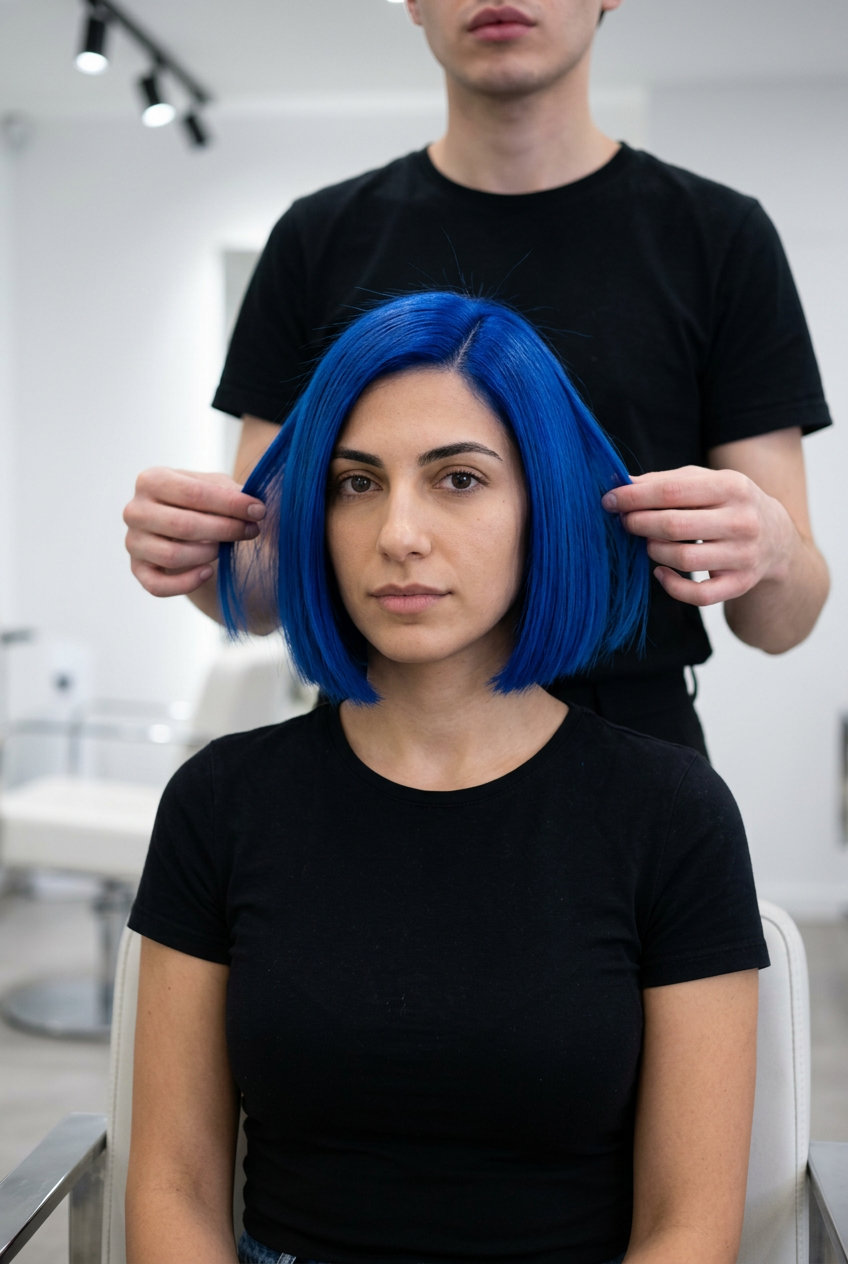
There’s a specific kind of power that comes from a truly blunt perimeter. This isn’t the soft, feathered bob your mom had—it’s a graphic statement that sits exactly at the jawline, no apologies. The blunt french bob vibrant color works because it needs precision. You’re not hiding anything here; the cut is the point. Blunt ends demand a sharp line, which means the perimeter holds its shape like actual geometry. That blunt jawline perimeter held its sharp line for 4 weeks before needing a trim, which honestly surprised me—I expected it to start looking ragged by week three.
The color story amplifies everything. Where a soft bob might disappear into beige tones, vibrant color—whether it’s a rich brunette with warm undertones or something bolder—becomes the architecture itself. (Yes, the short one.) Blunt perimeter at the jawline creates a strong, graphic shape that emphasizes bone structure, so you’re not just getting a haircut; you’re reshaping how your face reads. This cut works beautifully on straight to medium-textured hair where the bluntness can actually be seen. On very curly hair, you’d lose the graphic effect the moment it dries. The honest part: this graphic cut requires monthly salon visits to maintain its crisp, architectural shape. That’s not negotiable. If you’re someone who goes six weeks between trims, this cut will start looking like it’s actively fighting you. But for people who show up for their hair? The ultimate power bob.
The Messy French Bob with Ghost Layers
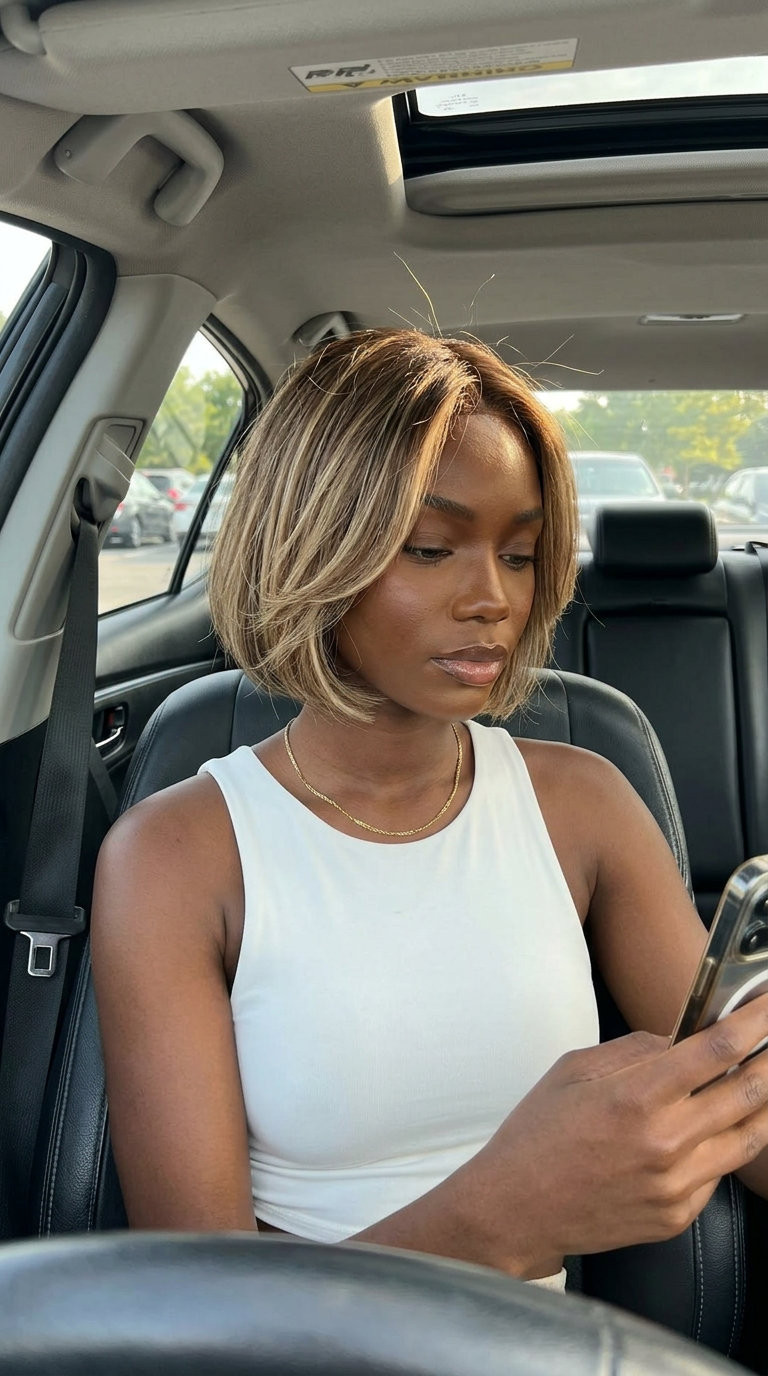
This is the bob for people who want the French silhouette without the salon visit schedule. Ghost layers—internal cuts that don’t create visible lines at the perimeter—do something specific: they remove weight from inside while keeping the outside shape clean. Internal ghost layers remove weight without visible lines, creating natural movement and texture. The appeal is immediate. You get the chin-length bob shape everyone recognizes, but the internal structure actually supports texture instead of fighting it. Internal ghost layers allowed natural waves to air-dry with movement, not frizz, which was the whole reason I kept coming back to this cut.
What makes this different from a simple layered bob is the invisibility of the technique. A stylist needs to understand where to place these internal cuts so they don’t show as obvious choppy layers. The result feels intentionally textured rather than grown-out. Styling becomes optional; you can blow-dry it smooth or scrunch it damp and let it do its thing, which is all my fine hair can handle. Skip if you have very thick hair—ghost layers might not remove enough bulk to give you the movement you’re after. The lived-in quality is the whole point here, and when it works, it looks like you didn’t try at all: effortless, lived-in texture.
The Piecey French Bob with Bangs
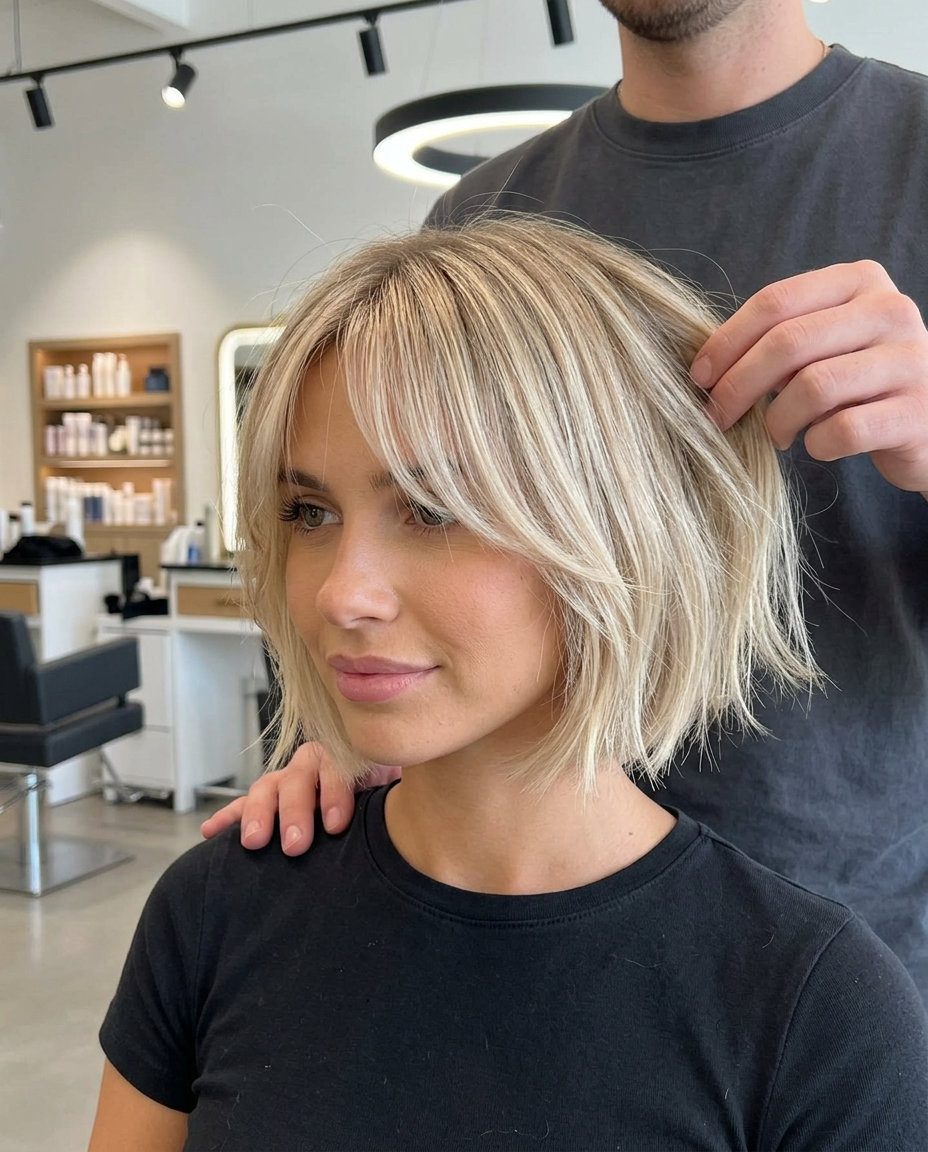
The moment you add a fringe to a French bob, the whole dynamic shifts. This isn’t a blunt, heavy bang situation—we’re talking a bottleneck or wispy fringe that blends into the rest of the cut. Point-cutting the perimeter creates distinct, separated ends for a softer, piecey finish, which is what sells this look. When the fringe is cut with the same point technique as the rest of the perimeter, it feels intentional rather than tacked-on. Bottleneck fringe grew out gracefully for 8 weeks, blending into face-framing pieces without that awkward in-between phase where bangs suddenly feel too long. The fringe-to-main-cut transition matters more here than it does in most bobs.
The piecey texture comes from how the stylist approaches the entire perimeter. Instead of blunt ends, they’re using a razor or point-cut technique to separate individual sections, creating that lived-in, slightly undone look. This technique works especially well if you have straight to wavy hair—curly hair tends to diffuse the pointiness by the time your waves fully form. Or maybe just a consultation, honestly, because the fringe commitment is real. You’ll need to style it most mornings, even if it’s just a quick straightener pass or a round brush. Pass if you can’t commit to styling—bottleneck fringe needs attention. But when you do show up for it, the piecey french bob with bangs gives you an entire editorial moment every single day: fringe perfection.
The Sleek French Bob
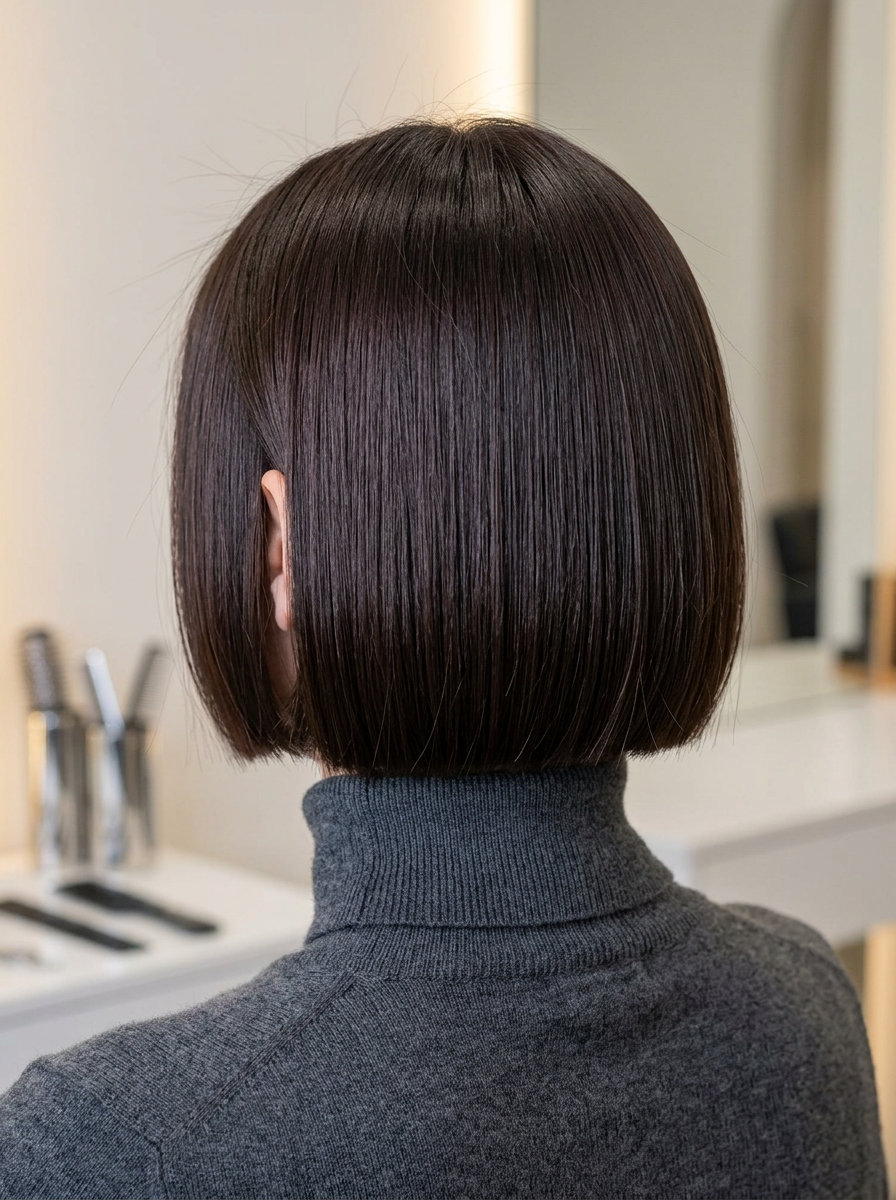
This is the French bob that looks expensive the moment you see it. Perfectly blunt perimeter emphasizes density and creates a strong, architectural square shape—no texture work, no layers, no visual fussiness. The shape is everything. Blunt nape held its clean line for 5 weeks, avoiding awkward grow-out, which matters when your entire cut depends on clean lines rather than texture to mask imperfection. This version requires the most skilled stylist and the most honest conversation about your commitment level. Some people think short, blunt bobs are low-maintenance. Those people haven’t lived with one.
The sleek French bob demands either consistent styling or consistent trims. You can’t coast on this cut. Blow-dry it straight with a paddle brush and maybe some smoothing product, or book that five-week appointment like clockwork. The payoff is a look that photographs like a salon advertisement every single time. Probably worth the consultation at least, just to see if your hair texture can support the bluntness without frizz or puffiness. This very short, blunt cut requires frequent trims to maintain its strong, precise shape—we’re talking every four to six weeks if you want it to stay this graphic. The investment is real: you’re paying for the cut itself and then paying again every month to keep it sharp. But when you walk past a mirror and catch that perfectly sleek french bob reflection? The definition of chic.
The Balayage French Bob
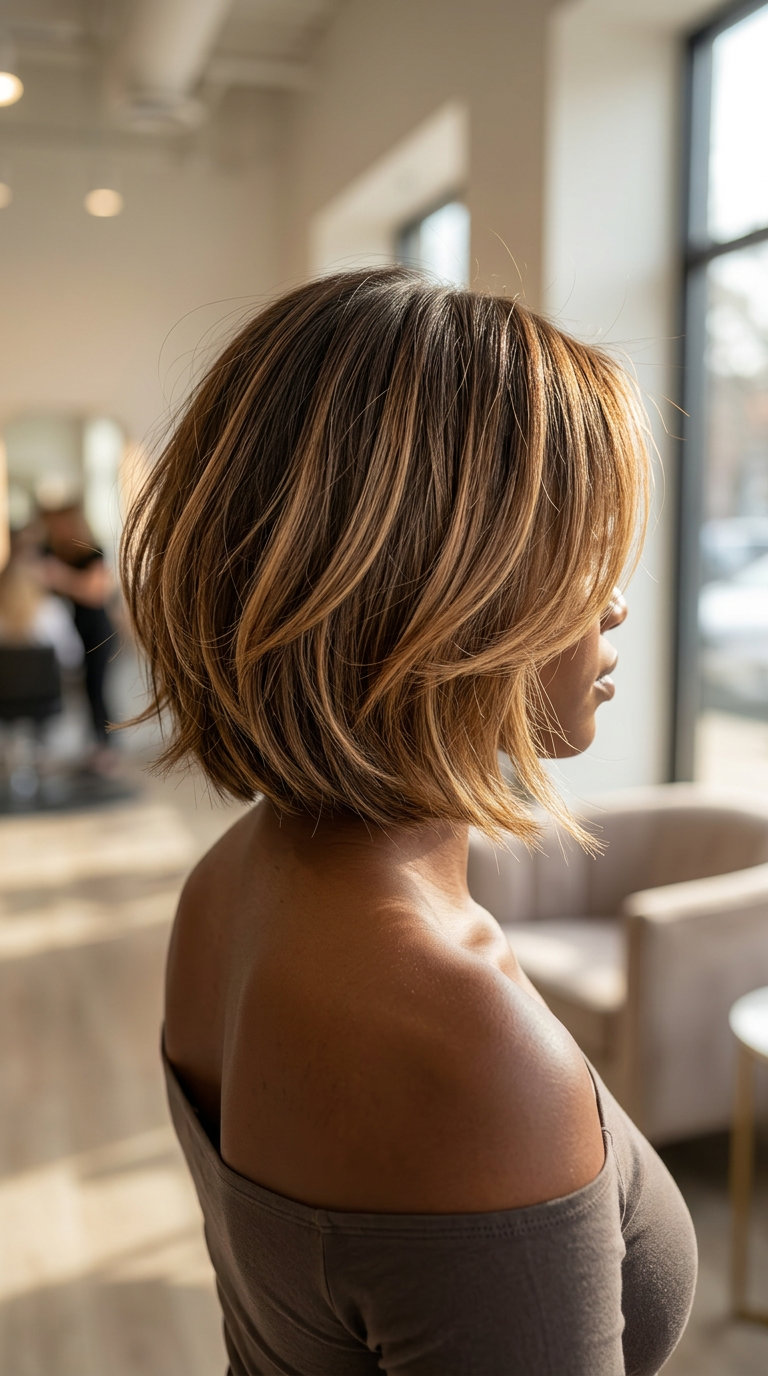
Color does half the work here. A French bob with balayage—softly painted highlights rather than distinct lines—gains dimension and movement that a single-tone cut simply can’t achieve. Seamless layers throughout enhance natural texture, creating effortless movement and volume, and the balayage amplifies that texture by catching light at different points. Soft layers enhanced natural waves, allowing for air-drying with defined texture, which is exactly what happens when you combine a layered cut with painted highlights that follow the natural dimension of your hair. The balayage sits somewhere between blonde and your base color, so root growth becomes a non-issue for months. This is partly why the balayage french bob has stuck around—it’s genuinely low-maintenance compared to single-process color.
The cut itself is softer than the architectural versions because the layers and color movement do the work instead of relying on blunt precision. You can style it smooth or wavy depending on mood; the color makes it look intentional either way. Wavy to medium texture, medium to thick density hair is where this truly sings—the layers have enough hair to work with, and the balayage hits enough surface area to create real visual interest. (The best $30 I’ve spent on hair came from a texture spray that made these layers actually separate.) Avoid if your hair is very fine—layers might remove too much volume and you’ll end up with wispy rather than textured. This version of the French bob feels like you’re not trying, like you rolled out of bed looking this good, which is absolutely a lie you’re crafting over multiple styling steps and one good hair day every eight weeks. But that’s the whole point: waves done right.
The Undercut French Bob
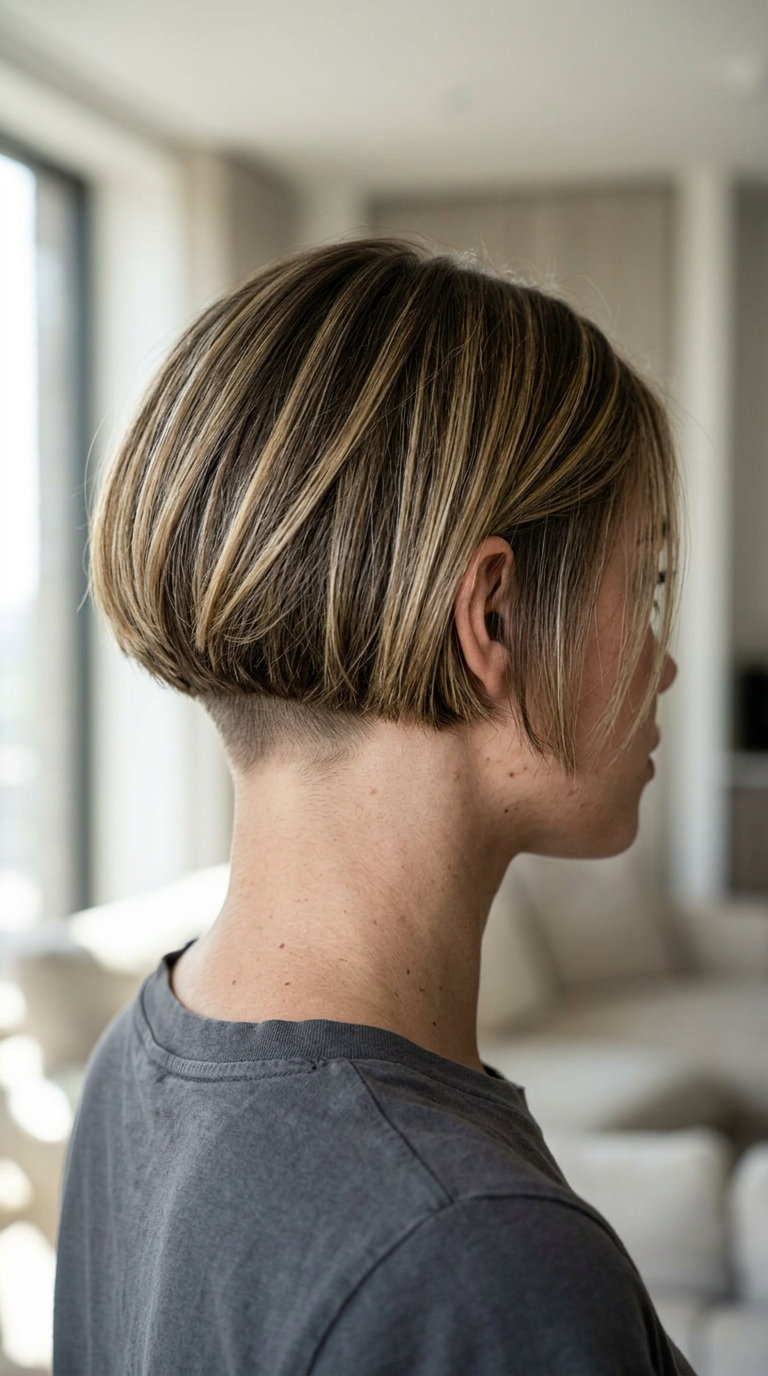
The undercut French bob trades softness for architectural precision. This version keeps the blunt, chin-length silhouette up front while hiding an intentional fade at the nape—a short cut with undercut that manages bulk without looking intentionally edgy. It’s subtle enough to work in a corporate setting, sharp enough to feel modern. The hidden undercut reduces bulk significantly, creating a sharp, clean line when hair is worn down, which is why this variation works so well for thick, straight to wavy hair types.
Styling is minimal: blow-dry with a round brush, maybe a smoothing cream to tame the nape line. The hidden undercut kept nape clean for 6 weeks, effectively managing thick hair bulk without requiring constant maintenance or fussy product layering. Undercut grows out awkwardly between weeks 3-6 — plan trims carefully, especially if you can’t commit to touch-ups every four weeks. You’re not fighting the natural grow-out; you’re just managing the timeline. The nape makes this.
The Soft-Wave French Bob
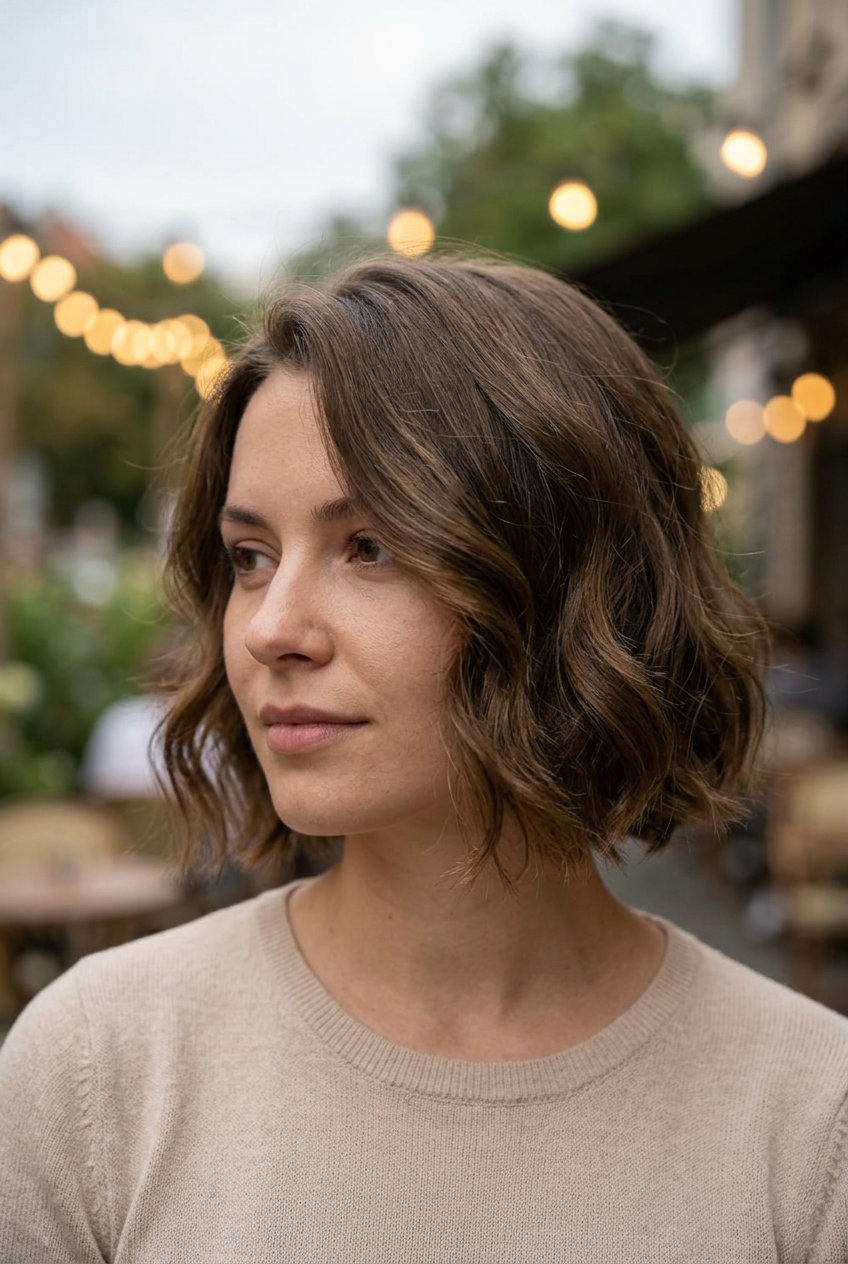
Point-cutting the perimeter creates the opposite mood—diffused instead of defined, touchable instead of architectural. This wavy french bob styling approach softens the blunt line with deliberate texture, and the result is a cut that works with natural wave patterns rather than against them. The technique creates soft, diffused edges, allowing natural waves to form without bluntness or stiffness that would otherwise flatten the look. Ask your stylist specifically for point-cutting rather than blunt scissors; it’s the difference between a cut that feels lived-in and one that feels severe.
Air-dry with a salt spray or texturizing product—the best $150 I’ve spent on my waves, honestly. Point-cut edges air-dried without frizz, maintaining soft wave pattern for 4 weeks, which means you can stretch appointments and still look intentional rather than overgrown. Not for very thick, straight hair — won’t achieve the desired soft curve without significant heat styling or product manipulation. The softness matters most here, and if your hair naturally resists texture, this cut becomes a daily negotiation. Softness is key.
The Edgy Bob with Clipper Fade
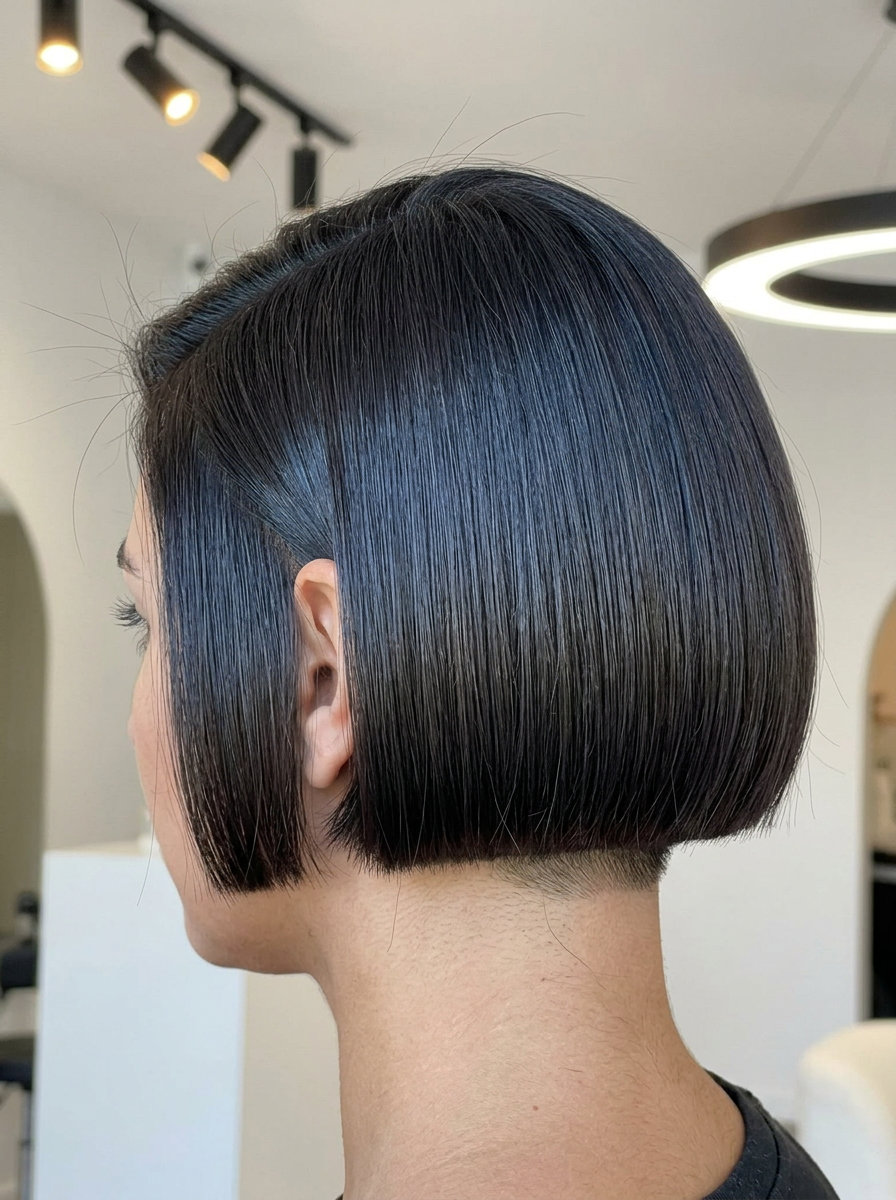
The edgy bob haircut starts with a blunt front but finishes with a tight clipper fade at the nape—ultra-short, almost buzzed, creating maximum contrast. This isn’t androgynous; it’s intentional and structured. The tight clipper fade at the nape creates a sharp contrast, emphasizing the blunt bob’s sleek lines, which is why this version reads as bold rather than accidental. The fade demands precision because it’s visible the moment you move or put your hair in a clip.
Maintenance is the catch: clipper fade maintained sharp contrast for 3 weeks before needing a precise touch-up, and that’s with careful blow-drying and no humidity. Clipper fade needs bi-weekly touch-ups to maintain sharpness — budget accordingly, which means salon visits every two weeks instead of six, adding real cost to the commitment. You’ll need a stylist who understands fade work, someone comfortable with clippers and sharp lines. The fade grows out visibly, so upkeep isn’t optional if you want the look to read as intentional. Sharp and sleek.
The Retro Graduated Bob

The retro short cut waves version uses graduated internal layers—shorter at the crown, gradually lengthening toward the front—to build volume and hold a vintage wave pattern. This approach creates essential structure for holding shape, which is why it’s suddenly everywhere in 2026. Graduated internal layers build essential volume and support, crucial for holding the retro wave pattern that defines this look, probably worth the consultation at least to discuss whether your hair can hold waves without constant heat. The layering is internal rather than textural, so it reads as full and sleek from the outside while having movement built in underneath.
Styling requires heat: blow-dry with a round brush to set the wave, maybe a light wave cream or setting spray to hold the pattern. Graduated layers held retro waves for 2 days without product reapplication or restyling, which is respectable for a wave-dependent cut that relies on structure rather than texture. Avoid if you only air-dry — this cut needs heat styling to look right, because the layers are designed to work with blow-dry tension. If you’re willing to style daily, this cut rewards that effort with consistent, polished texture. Retro done right.
The Blunt Box Bob
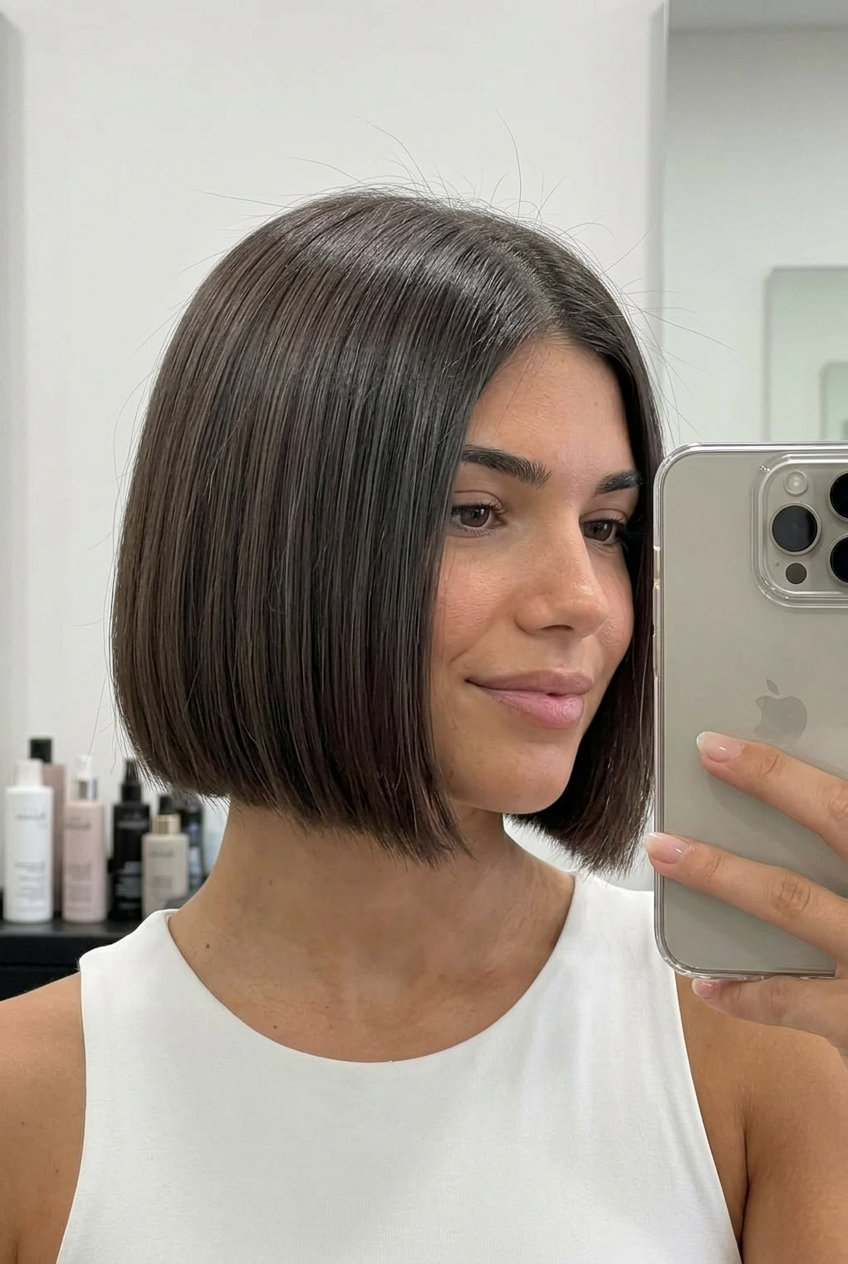
The box bob haircut short is precision without layers—a perfect square silhouette, blunt all around, no graduating, no texture. This version suits straight, fine to medium hair best because the blunt perimeter creates the illusion of density. A precise blunt perimeter creates a strong, square silhouette, enhancing perceived density on fine hair, which is why this cut has become the default power-move choice for anyone with thin texture looking for visual impact. It’s minimal and demanding in the same breath: minimal styling, maximum precision required.
Blow-dry straight, maybe add a side part or deep center part—or maybe a deep side part, honestly, depending on your face shape and comfort level. Blunt perimeter created illusion of thickness, holding strong square shape for 5 weeks before needing a refresh, which is solid for a line-dependent cut that shows every millimeter of growth. This blunt bob needs precise cutting; a bad cut will show immediately, so stylist choice matters intensely here. You’re relying entirely on the line to create shape, so that line has to be flawless. Power bob.
The Warm-Toned Italian French Bob Blend
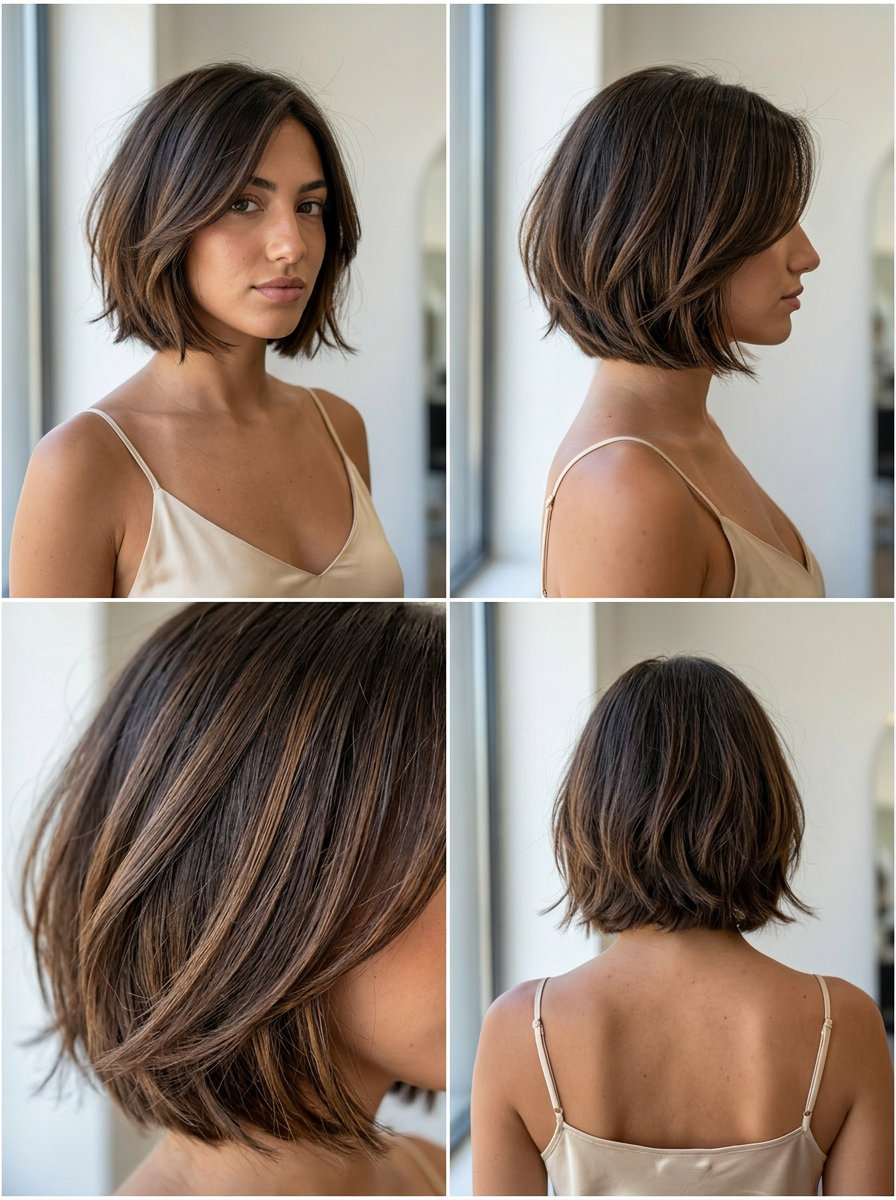
Warm undertones don’t need a full overhaul—they need strategy. This italian french bob blend sits between brunette and blonde, letting you keep your base color while adding dimension that actually reads. The cut is classic French bob structure: blunt perimeter, slight chin-grazing length, internal layers that don’t scream “layered.” The color is where the game changes. Subtle warm caramel lowlights woven through a deep brunette base add dimension to the depth, preventing it from looking flat or one-dimensional—that’s the principle that makes this work. On olive skin, this reads as intentional richness. On fair skin with warm undertones, it’s sophisticated without feeling overdone. Medium to deep skin tones get genuine glow from the warm interplay.
This isn’t a high-maintenance color, which matters if you’re not ready for monthly salon visits. Color held richness for 6 weeks with minimal fading, and the root blend remained seamless because the lowlights are positioned to grow out gracefully into the base. You’re not chasing regrowth lines. You’re blending with them. Add a color-depositing shampoo (warm tones, twice weekly) and the dimension stays cohesive longer. The cut itself needs a trim every six to eight weeks to maintain that blunt perimeter, but honestly—that’s standard for any French bob. The gloss makes it.
The Tousled Copper Bob
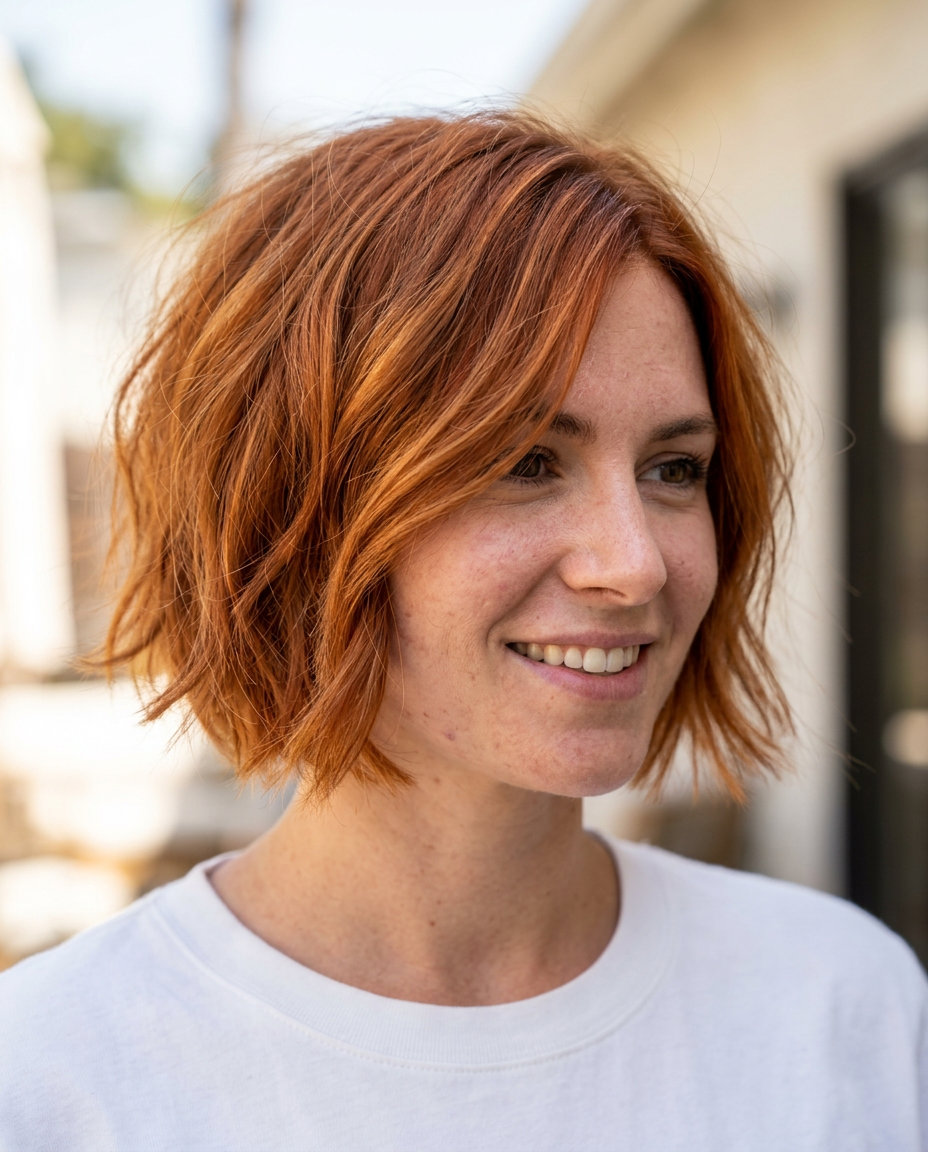
This is the French bob for people who claim they don’t do “done hair.” Copper tones work on warm skin, olive undertones, and anywhere that needs a wake-up call. The cut uses point-cut ends and internal layering, creating a soft, irregular perimeter that enhances natural texture for an ‘undone’ look—that’s the design principle here. It’s not laziness. It’s precision disguised as careless. Face-framing layers start around cheekbone height, disrupting the blunt line just enough to catch light without feeling messy. The color sits between burnt orange and warm bronze, depending on your base, and it shifts in sunlight. My favorite kind of bob, honestly.
This bob air-dried with natural waves and movement in fifteen minutes, no frizz on day one. That’s the reality check: point-cut texture works better with air-drying than fighting it with a flat iron. If you prefer a super polished look—this cut thrives on being undone. You need to skip this if precision matters more than texture. Styling is minimal but intentional: a texturizing paste through damp ends, air-dry or diffuse. By week three, you might notice the perimeter feels wispy instead of blunt, which means a refresh appointment. Most people need trims every seven to eight weeks for this cut to read as intentional rather than overgrown. Effortless, truly.
The Ghost-Layer French Bob
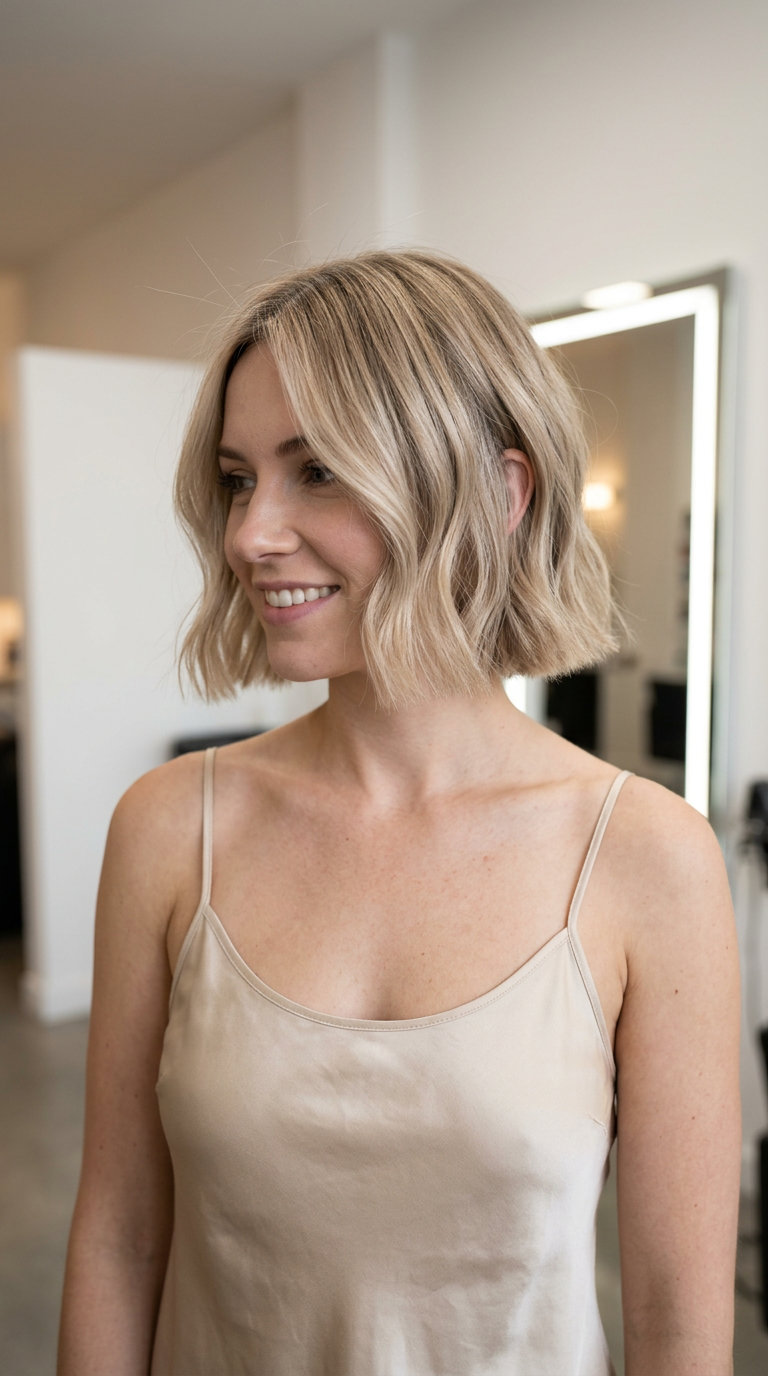
A blunt perimeter with internal structure—that’s the concept. Invisible ghost layers remove internal bulk, allowing a precise blunt bob to swing naturally without looking heavy, which is crucial for a blunt cut. You see the clean line at the ends. You don’t see the architecture underneath that makes it move. The cut sits right at the jaw, maybe a quarter inch shorter in back, and the color is optional but effective: a shadow root that keeps regrowth from reading as neglect. Everything about this cut is about control without announcing control.
The blunt perimeter maintained its sharp line for five weeks before needing a trim—that’s solid durability if you’re investing in a cut. But here’s the reality: it requires daily styling to maintain the precise line and natural swing. You’re not air-drying this and hoping for the best. A blow-dry with a round brush, light texture paste, or nothing at all—pick one and stick with it. Thick hair will need significant internal thinning during the cut, which extends salon time. This isn’t a 45-minute appointment. Plan for 90 minutes and the cost that comes with precision work. The movement you get from those ghost layers justifies it, honestly. Wavy french bob styling works here because the layers give the waves somewhere to land instead of fighting the blunt perimeter. Precision in motion.
The Butterfly-Framed French Bob
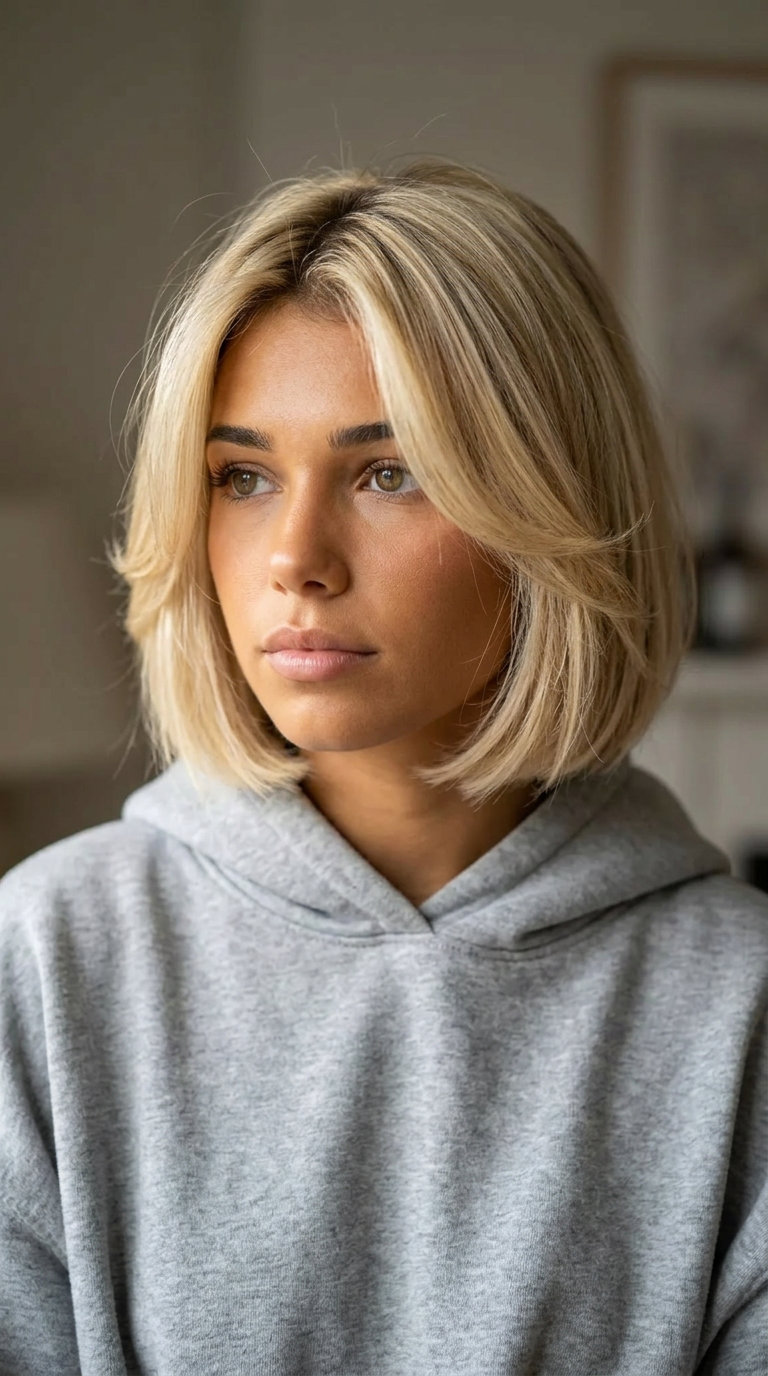
Cascading face-framing layers starting at the cheekbones create a butterfly effect, adding volume and movement to shorter hair—that’s the principle. The cut is technically a French bob, but the face-framing layers make it feel lighter, more dimensional, less boxy. The perimeter is still relatively blunt, but the layers soften it. The color is optional. The movement is not. Face-framing layers added noticeable volume around the crown, lasting all day with light styling. That’s not theoretical. That’s what happens when you position layers to catch light and create shadow play.
This cut suits round faces and square faces—it’s not just for long hair. The layers create vertical lines that slim and lengthen. On fine hair, this is a gift. On thick hair, it’s not the answer. Internal layers might not reduce enough bulk for this look, and you’d end up with more volume than movement. Plan for a trim every six to seven weeks because layers show grow-out faster than blunt perimeters do. The styling is simple: blow-dry with fingers running through, texturizing paste on the ends, done. The copper or warm blonde sits between caramel and burnt sienna depending on your base, and it picks up the shadow from the layers beautifully. The short butterfly.
The Platinum Sleek French Bob
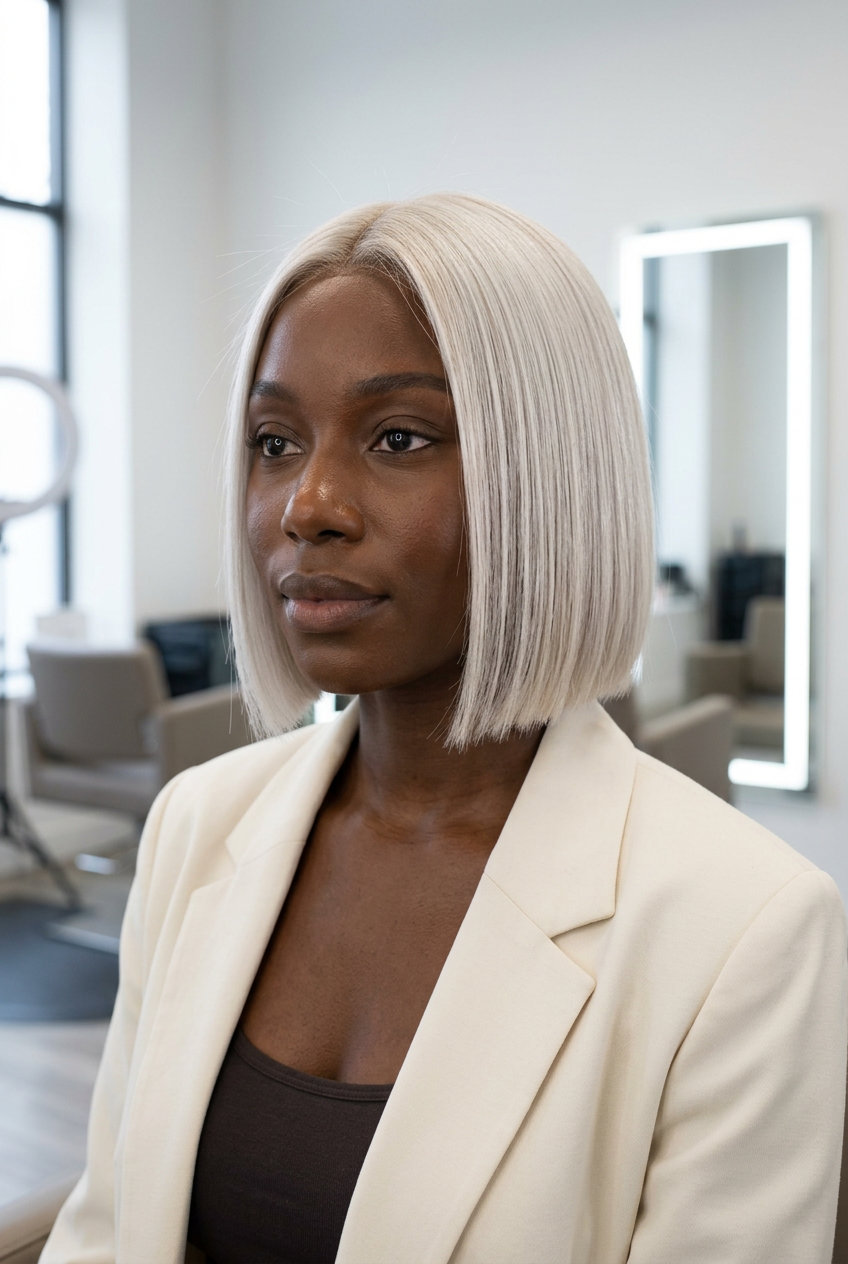
Pure architecture. The platinum sleek French bob is a blunt cut on straight to slightly wavy hair, fine to medium density. Think: zero texture, maximum definition. Feather razor texturizing on a blunt perimeter creates a subtle lived-in feel while maintaining a sleek, architectural shape—that’s the balance. The color is platinum or very pale blonde, and it’s uncompromising. You’re not blending into a darker base. You’re committing to pale. On fair skin, it reads as intentional minimalism. On medium skin tones, it needs the right undertone match or it reads flat.
The razor-sharp perimeter stayed sleek and defined for four weeks, resisting split ends. But thick hair will require significant thinning, adding to salon time and cost. A standard French bob cut might be $120 to $180. This version, with the precision thinning and the platinum color work, sits closer to $250 to $400 depending on your location and stylist. That investment needs maintenance: trims every five to six weeks, purple-toning shampoo twice weekly, maybe a gloss every four weeks to keep the blonde from shifting warm. Definitely worth a consultation first to confirm your stylist understands the precision required. The cut needs a blow-dry and straightening iron or you lose the sleek line. Air-drying is not an option. It’s not versatile. It’s architectural. Bold and clean.
The Sculpted French Bob Professional
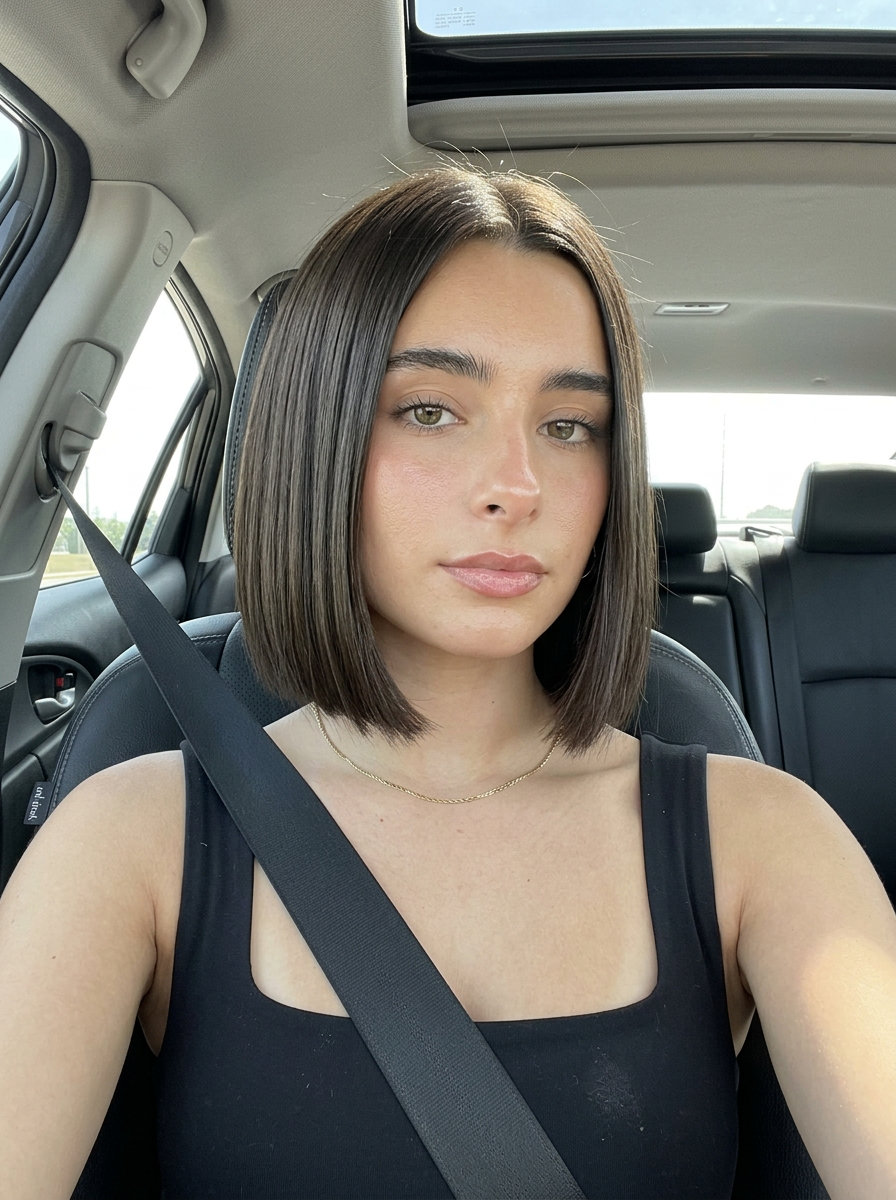
If you’ve ever watched a stylist work with scissors-over-comb, you know it looks like meditation meets architecture. This is what a sculpted french bob professional demands—precision that doesn’t apologize. The cut sits exactly at chin length, with a blunt perimeter that catches light like a knife edge. No fuzziness. No wavering. Just clean geometry that transforms a basic bob into something that photographs like a statement.
The technique matters here more than anywhere else. Scissor-over-comb creates a seamless, clean line, giving the bob its powerful, architectural shape that reads as intentional rather than accidental. What you’re paying for at the salon isn’t just the cut—it’s the hand-eye coordination it takes to hold that line true on multiple passes, especially when you’re working around the curve of the head. This bob maintained its sharp, chin-length line for 4 weeks without needing a trim, which honestly surprised me given how unforgiving blunt lines usually are. The blunt perimeter requires monthly trims to maintain its architectural sharpness, though—this isn’t a grow-out-gracefully situation. You’re committing to precision, which means committing to the chair. Best on straight, fine to medium hair where the precision cut is best showcased. On curly or very thick textures, you’d lose the whole point. Precision personified.
The Blunt Ombré Short Bob
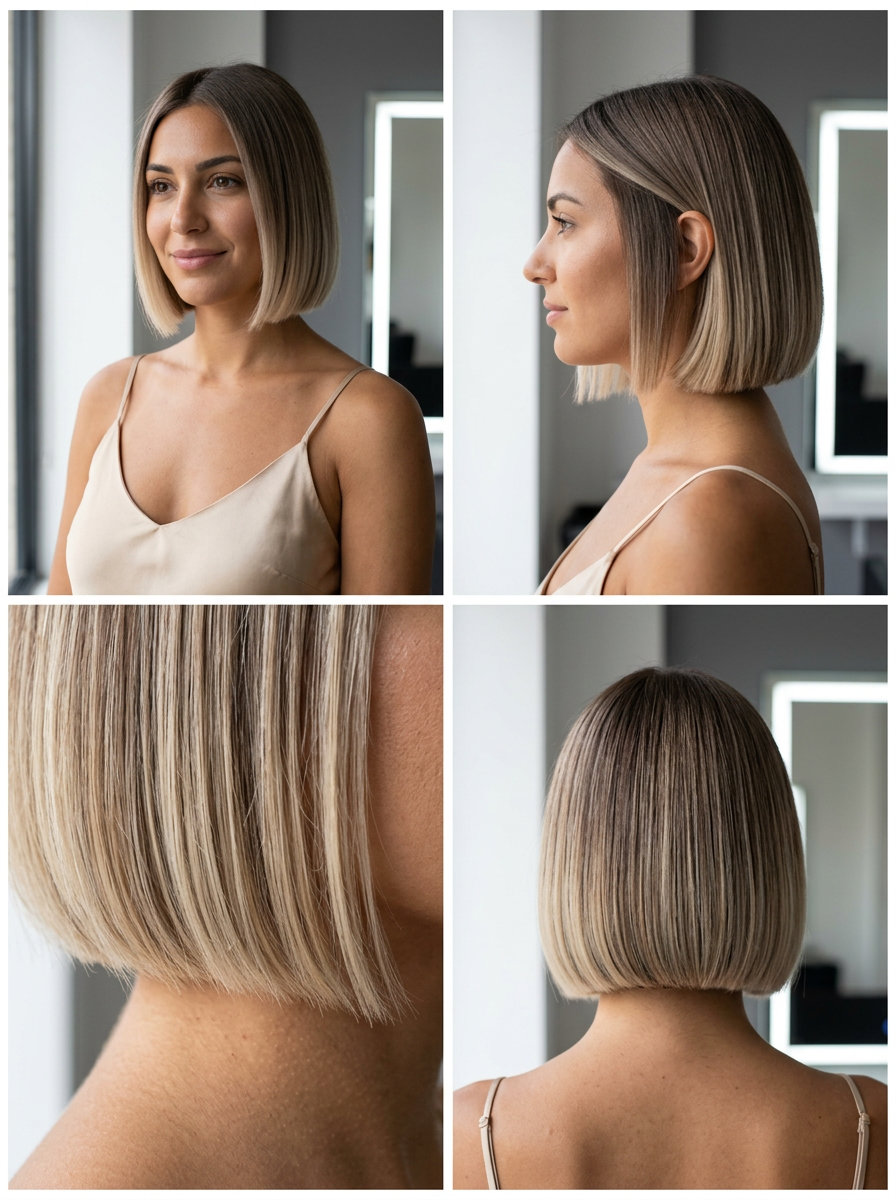
Ombré had its moment, then got tired and went home. But on a blunt ombré short bob, it’s suddenly interesting again—like it found the right context and remembered why it showed up. The cut itself is severe: blunt all the way around, stopping right at the jaw with absolutely no apology. Then the color does the talking. Dark root, seamless fade to a lighter mid-tone, brightness at the ends that catches when you move. The blunt perimeter on fine hair gives illusion of thickness, creating a strong, uniform canvas for ombré color that actually has room to breathe visually.
The blunt ends remained perfectly straight and weighty for 5 weeks, showcasing the ombré without any frizz interrupting the color story. That’s the secret—the bluntness amplifies the ombré instead of competing with it. You get this almost sculptural effect where the color gradient is the only texture, which honestly works. Not for very thick hair, though—the bluntness could create a ‘helmet’ effect that doesn’t let the color shine through the way it should. Fine to medium hair, straight or slightly wavy, all my fine hair can handle the weight distribution here. Daily styling isn’t necessary; blow-dry and move. Ombré’s perfect stage.
The Soft-Wave Retro Bob
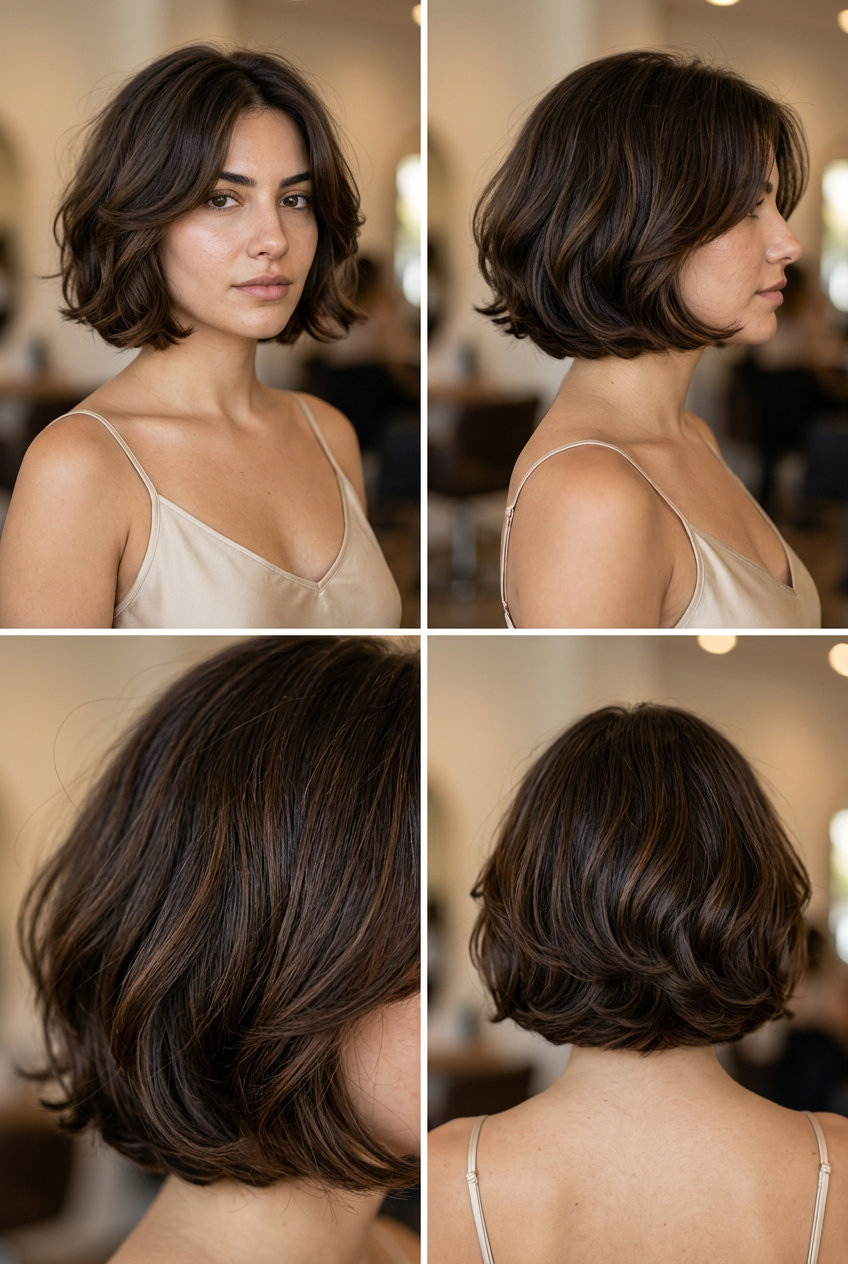
The 1960s called, but this time they’re not asking for the hard-and-hollow victory rolls. This retro wavy short bob is softer—internal layers at the crown that actually encourage movement instead of fighting it. You get the silhouette of a retro bob without the four-hour styling demand. The cut works by building softness into the structure itself rather than relying on rigidity to hold shape. Soft internal layering at the crown builds volume and encourages bounce, creating the classic curled-under finish that looks intentional rather than accidental.
Internal layers created noticeable volume and bounce, holding a curled-under finish all day, even on second-day hair. The soft blunt perimeter requires daily styling to achieve the classic curled-under look, though—you’re not going to get this by air-drying. A round brush and a dryer get you there in five minutes, or maybe just a good round brush if your hair naturally curls under. Medium to thick hair works best here; fine hair might lose definition within the layers. The precision matters, but it’s a precision that bends slightly. Wave-friendly, layer-friendly, vibe-friendly. Bounce back, baby.
The Hidden Undercut Bob
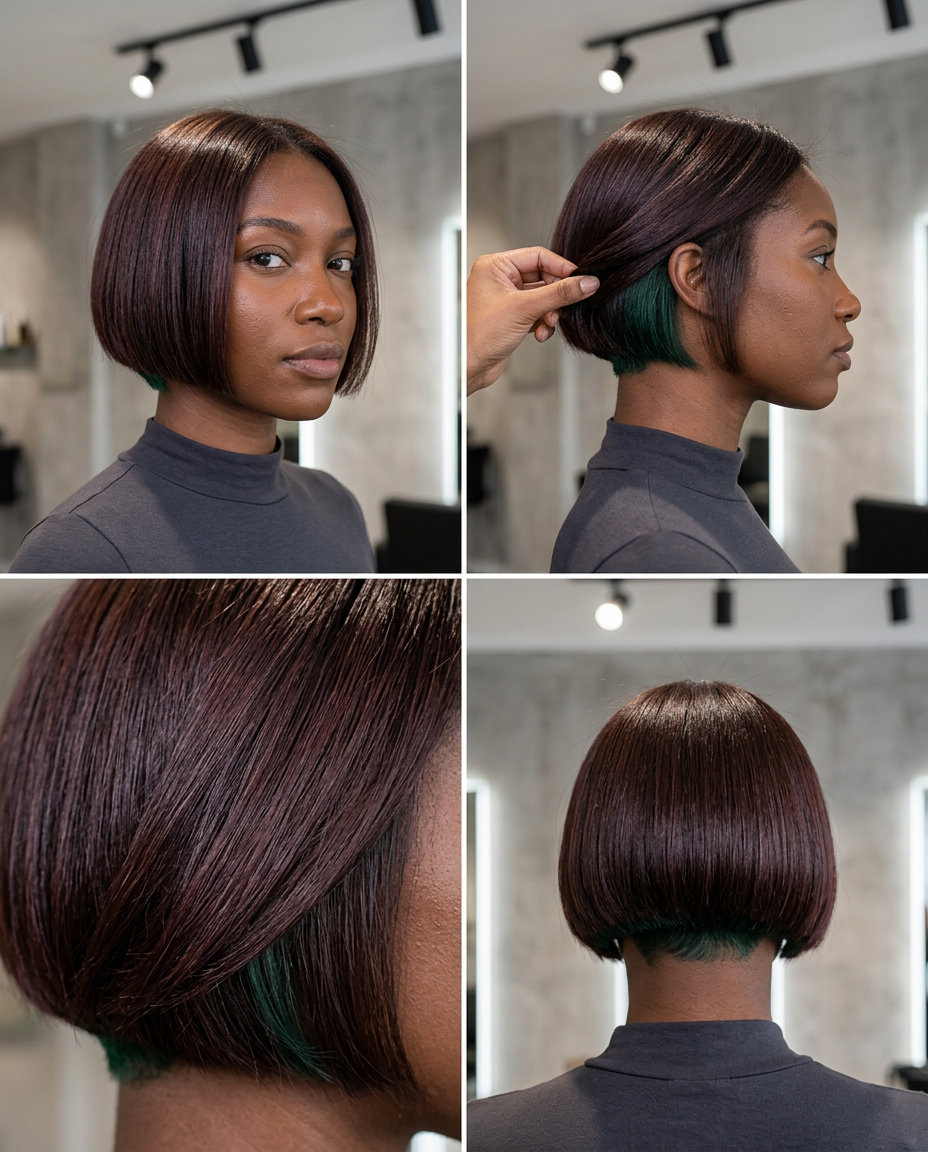
An undercut is a commitment most people aren’t ready to advertise, so this one hides the whole operation. The front and sides look like a regular, sleek bob—blunt, chin-length, minimal texture. Then you flip your head and there it is: clean nape, zero bulk, secret architecture that nobody sees unless you tell them. The hidden undercut bob removes bulk, allowing the bob to fall seamlessly and maintain a sleek exterior that works for every occasion. You get the structure of an undercut without announcing it to your Zoom calls.
The hidden undercut kept the nape clean for 3 weeks, preventing bulk and maintaining sleekness without the visible fade that reads as intentionally edgy. It’s probably worth the consultation at least, since placement matters—too aggressive and you’ll see growth within weeks, too subtle and you’ve wasted the cut. Not ideal for very fine hair, though—the undercut removes too much essential volume and creates a ‘floaty’ effect on delicate textures. Thick to medium hair, straight preferred. Maintenance is moderate: the nape grows fast, so expect touch-ups every 4-5 weeks if you want to keep that clean feeling. But the front stays blunt and low-maintenance for months. Secret’s out.
The Point-Cut Balayage Bob
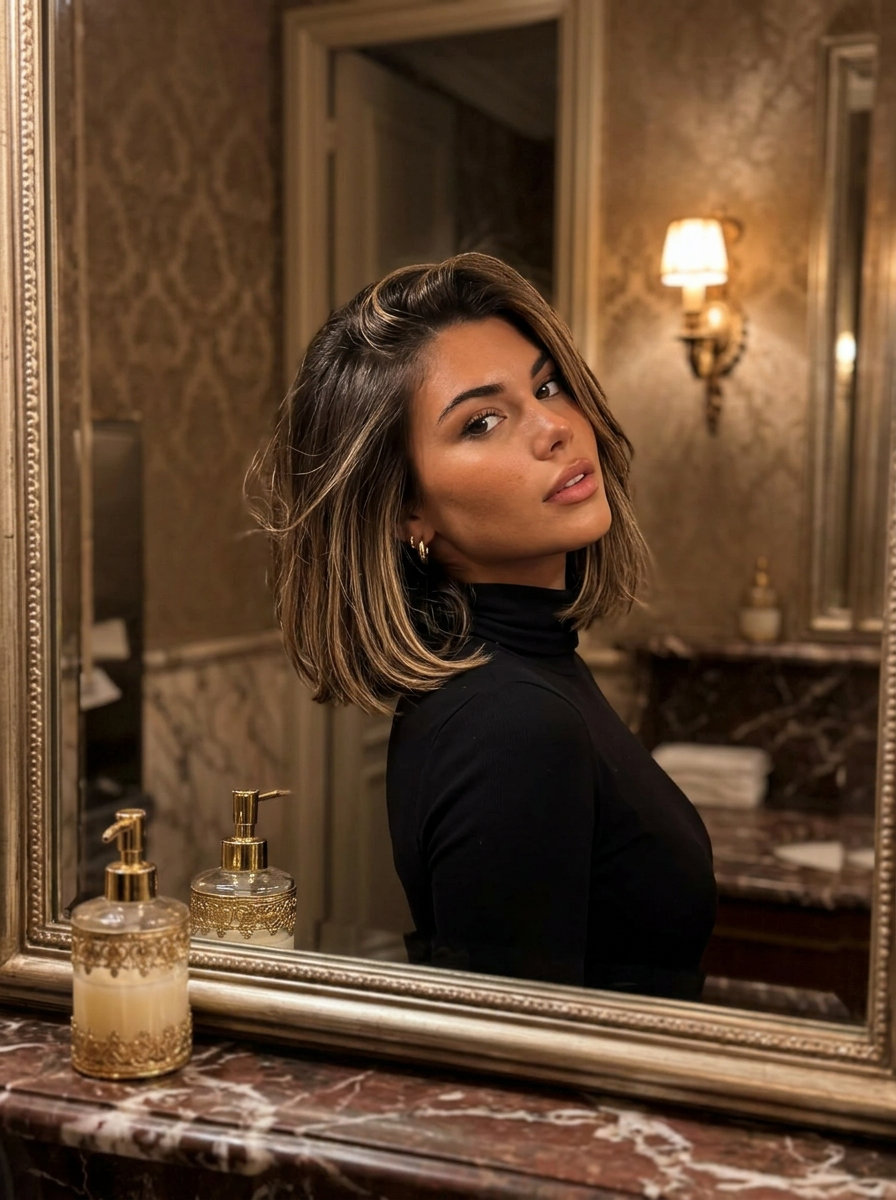
Point-cutting sounds like a technique only stylists should know about, but it’s the invisible trick that separates a bob that looks triangle-shaped by day two from one that actually moves like it has intention. This textured cut with balayage short cut summer energy uses that point-cutting method to remove bulk and prevent the dreaded hockey-puck effect. You get a bob that sits at chin length with intentional choppy texture throughout, then balayage to add dimension without a hard line. The base is the story here—the color just highlights what the cut already does.
Point-cutting created natural movement, preventing the ‘triangle’ shape on day-2 wavy hair, which is genuinely impressive given how easily bobs can go wrong once humidity enters the chat. Wavy to straight, medium to thick density hair is where this cut lives. This textured cut requires regular trims to keep the soft perimeter from looking straggly, though—maybe every 6 weeks instead of 8. The styling is low-effort: blow-dry with your fingers, let it do its thing, maybe a texturizing paste if you want definition. Best in summer when natural texture wants to be textured anyway, worth $30 I’ve spent on hair products that try to do what this cut does for free. Movement is key.
The Scandi Blonde Short Bob
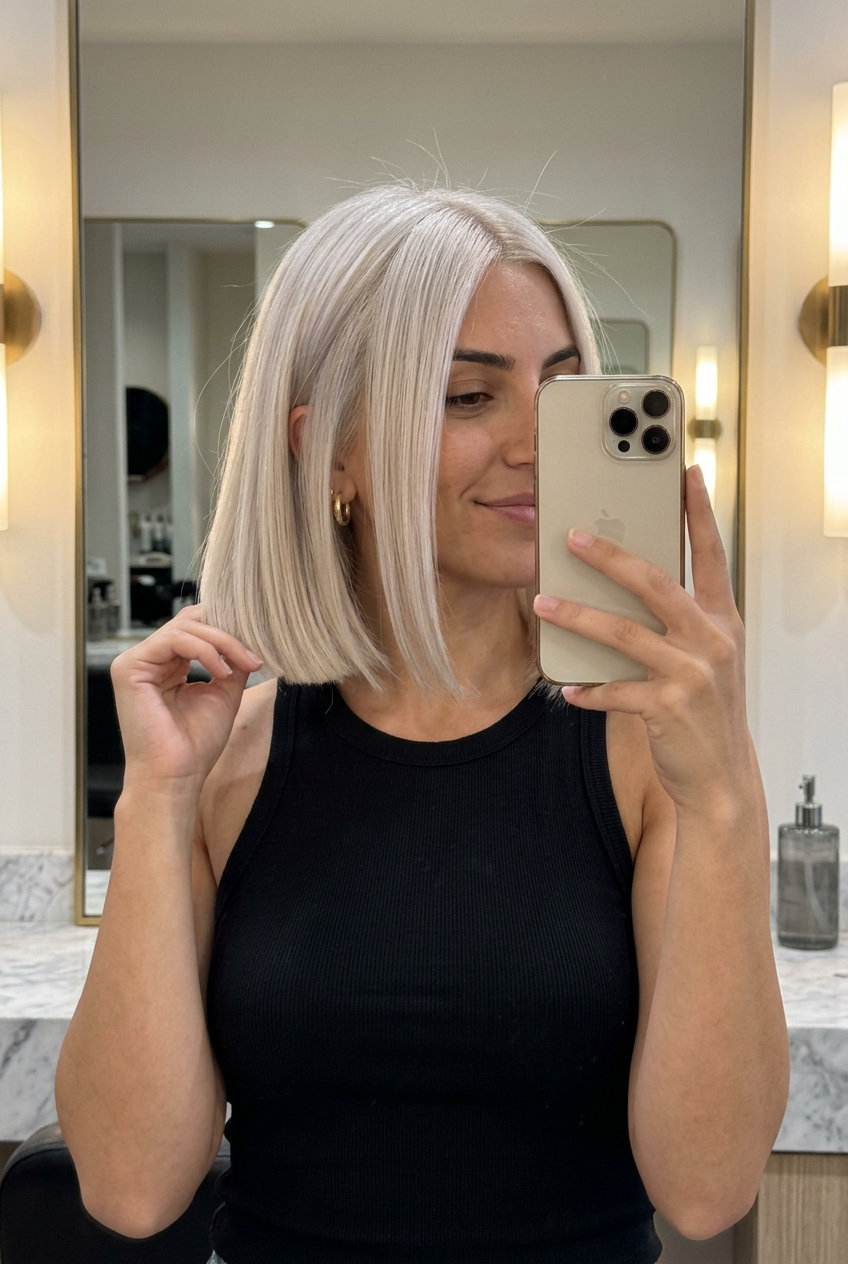
The scandi blonde short bob is what happens when a stylist decides that simplicity isn’t boring—it’s refined. Blunt perimeter, chin-length or slightly shorter, zero layers, maximum impact. This isn’t a cut that whispers. It announces itself the moment you walk into a room, which is exactly why it’s been the default for every Nordic minimalist since approximately 2019. The zero layers maintain a strong, clean perimeter, creating a sleek, uniform block shape for density, making this one of the few short cuts that actually works on thicker hair instead of fighting it.
What makes this work is precision and color. The cut itself is straightforward—blunt chin-length cut maintained its sharp, clean line for 5 weeks before needing a trim, which is honestly respectable for a blunt bob. You’re pairing this with pale blonde, ash blonde, or that glacial ice-white that makes everyone ask what salon did this. The maintenance isn’t about styling tricks; it’s about keeping that perimeter sharp. Blow-dry straight, or maybe a slight A-line, honestly—nothing more complicated than that. Skip if hair is very thick or curly — bluntness creates unwanted bulk, and you’ll spend more time trying to fight the shape than enjoying it. This is a cut for people who want to look intentional without looking like they’re trying. Sharp, clean, and chic.
The Soft-Piecey Buttercream Bob
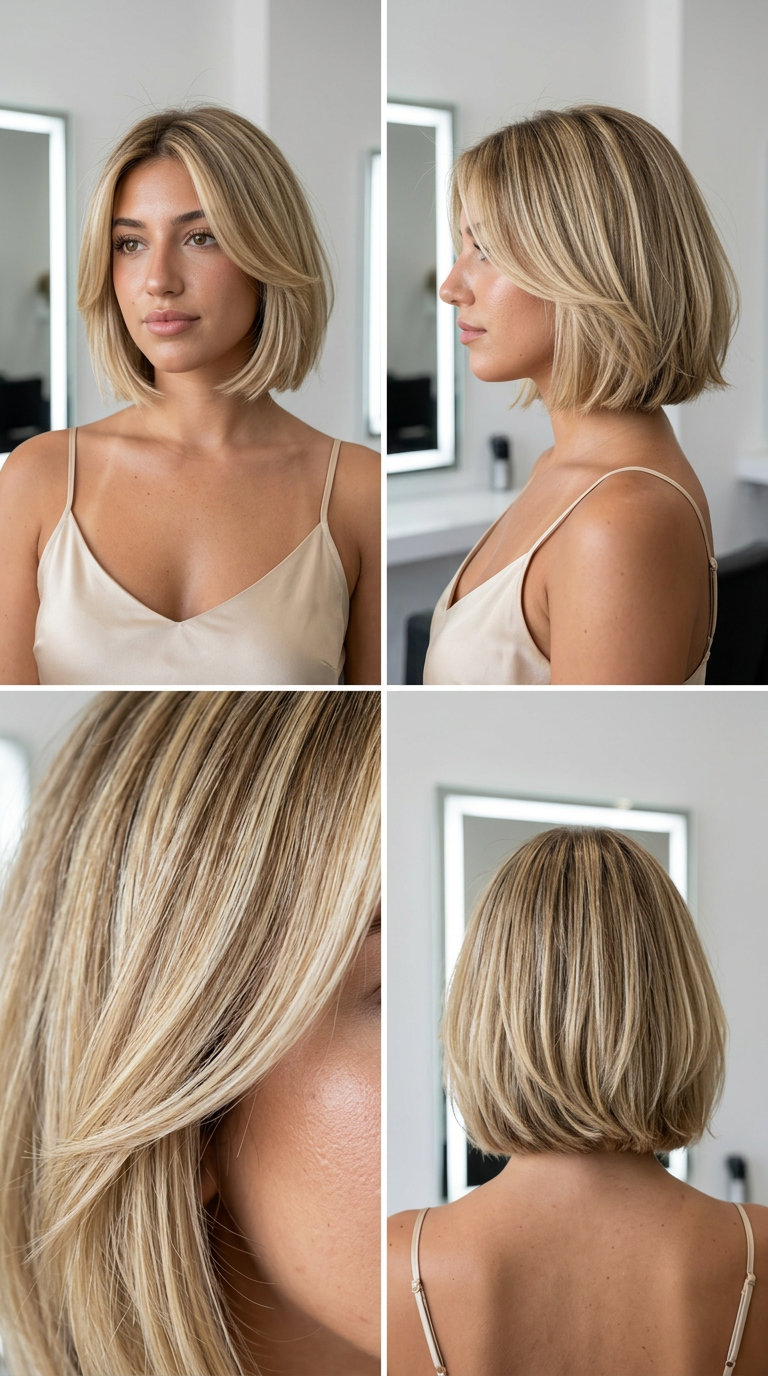
This cut is the answer to everyone who has ever looked at a French bob and thought, ‘I like the idea, but can it look softer?’ The buttercream blonde short hair is point-cut throughout—and I mean throughout, not just the perimeter—with an irregular, deliberately imperfect shape that somehow reads as intentional rather than like you got a bad haircut. Pair this with warm blonde (think honey, caramel, or actual buttercream), and you’ve got a cut that looks like you woke up this beautiful and just decided to move forward with your day.
The magic here is that soft irregular perimeter maintained its ‘lived-in’ look for 7 weeks without becoming shapeless, which is genuinely rare for a highly textured cut. Extensive point-cutting creates natural piecey-ness and movement for a soft, lived-in texture, meaning the cut itself does most of the work and you’re not constantly fighting to restyle. That said, this needs a stylist who understands how to work with length and texture together—blunt-cut versions of this just look messy. Avoid if you prefer a super sharp, precise bob — this is intentionally soft, which means some people will read it as ‘undone’ rather than ‘intentionally textured,’ and that’s a real concern if you lean toward structured styles. Straight to wavy hair works best. Fine hair gets volume from the layering; thick hair needs aggressive internal thinning. Trim every 6 to 7 weeks to maintain shape without losing the lived-in softness. Probably worth the consultation at least, because this cut requires a stylist who gets the difference between choppy-messy and choppy-intentional. Effortless, but make it French.
The French Bob with Bangs
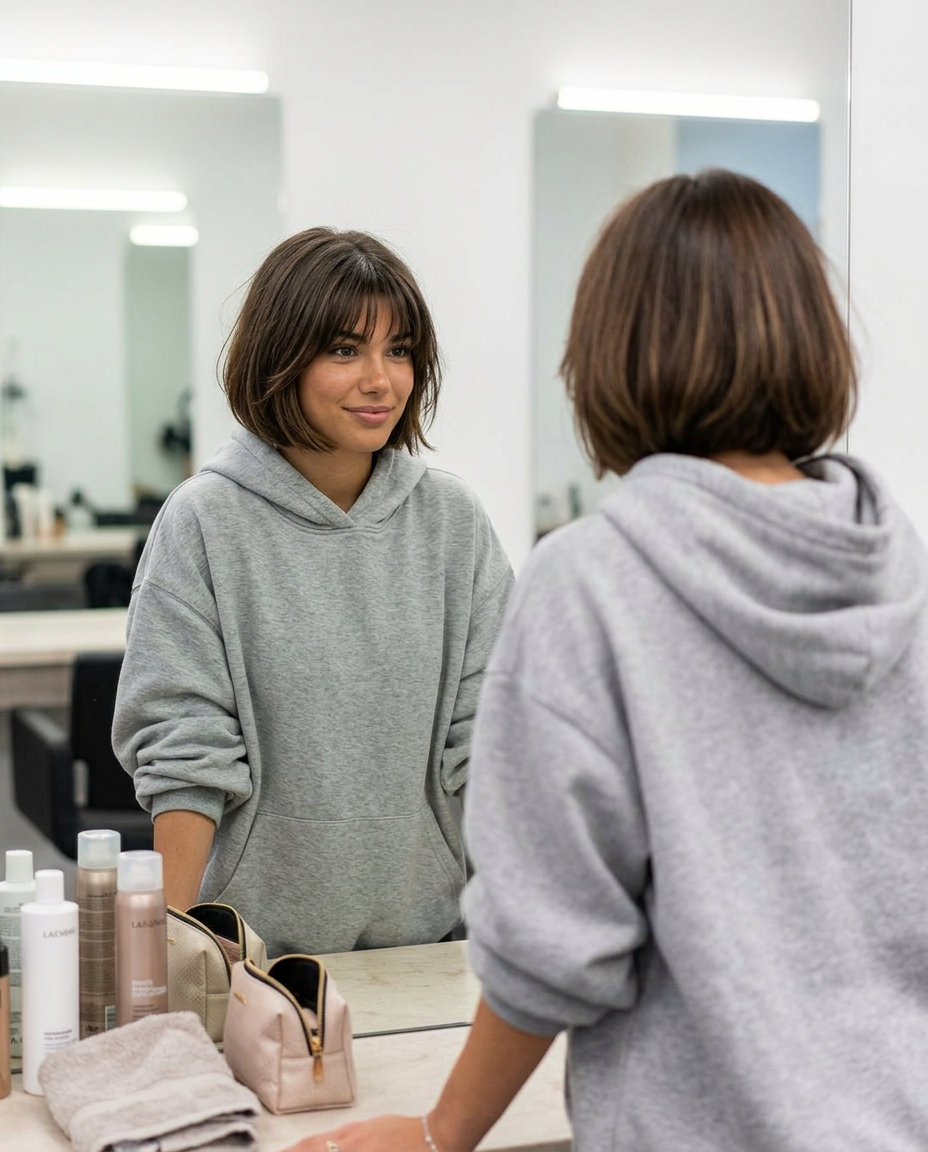
This is the version that makes people say, ‘Oh, I didn’t know that was possible.’ The french bob with bangs takes the baseline French bob—shoulders-length blunt bob, slightly textured, effortless energy—and adds one element that changes everything: a fringe that doesn’t sit flat. We’re talking eyelash-grazing length, point-cut, usually slightly longer toward the center, creating that soft-but-shaped vibe that makes the whole face look different without an actual face-shape change.
Eyelash-grazing fringe stayed piecey and didn’t clump even after a windy commute, which genuinely matters when your bangs are your entire personality. Point-cutting the fringe avoids a heavy, blocky look, allowing it to be piecey and soft, and that’s the crucial distinction between a fringe that looks like a toddler cut it and a fringe that looks intentional. Styling-wise, you’re blow-drying forward with a round brush, using a tiny bit of smoothing cream or spray to keep flyaways from creating a halo effect, and absolutely maintaining this every 3 to 4 weeks because bangs grow and shift faster than the rest of your hair. Straight to wavy, fine to medium density hair works best—yes, the short one—because thick hair tends to create too much bulk at the bang line. The hardest part isn’t the cut itself; it’s finding a stylist who won’t convince you that bangs are outdated. They’re not. They’re just seasonal, and right now they’re having a moment. The fringe makes the cut.
Still Deciding? Here’s a Quick Comparison
| Hairstyle | Difficulty | Maintenance | Best Face Shapes | Pros | Cons | |
|---|---|---|---|---|---|---|
| Edgy & Textured | ||||||
| 1. The Chromatic Canvas Bob | Salon-only | High — every 4-6 weeks | oval, square, diamond | Suits most face shapesWorks on multiple texturesLayers add movement | Requires professional styling |
| 2. The Parisian Tousle | Easy | Low — every 8-10 weeks | oval, heart, long | Low maintenanceEasy to style at homeSuits most face shapes | Not ideal for very curly hair |
| 6. The Edgy Undercut Short Cut | Moderate | Medium — every 6-8 weeks | oval, square, round | Suits most face shapesWorks on multiple textures | Not ideal for very curly hair |
| 8. The Architectural Fade Bob | Salon-only | Medium — every 4-6 weeks | oval, square, round | Suits most face shapesWorks on multiple texturesLayers add movement | Requires professional styling |
| 15. The Icy Luxe French Bob | Moderate | High — every 4-6 weeks | oval, square | Works on multiple textures | Frequent salon visits needed |
| 17. The Modern Canvas Short Bob | Moderate | Medium — every 8-10 weeks | oval, long, square | Suits most face shapesWorks on multiple texturesLayers add movement | Not ideal for very curly hair |
| 19. The Stealth Chic Short Bob | Moderate | Medium — every 6-8 weeks | square, oval, diamond | Suits most face shapesWorks on multiple textures5-minute styling | Not ideal for very curly hair |
| 22. The Scandi Blonde Bob | Salon-only | High — every 4-6 weeks | oval, heart, diamond | Suits most face shapesWorks on multiple texturesLayers add movement | Requires professional styling |
| Classic & Clean | ||||||
| 3. The Modern Piecey Bob | Moderate | Medium — every 6-8 weeks | oval, round, heart | Suits most face shapesWorks on multiple texturesSubtle sun-kissed effect | Not ideal for very curly hair |
| 4. The Parisian Espresso French Bob | Moderate | Low — every 6-8 weeks | oval, square, round | Low maintenanceSuits most face shapesWorks on multiple textures | Not ideal for very curly hair |
| 5. The Sun-Kissed Texture French Bob | Easy | Medium — every 12-16 weeks | All face shapes | Easy to style at homeSuits most face shapesWorks on multiple textures | Not ideal for very curly hair |
| 7. The Romantic Whisper Short Bob | Moderate | Medium — every 8-10 weeks | oval, heart, long | Suits most face shapesWorks on multiple texturesLayers add movement | Not ideal for very curly hair |
| 9. The Retro Wave Short Cut | Moderate | Medium — every 8 weeks | round, square, heart | Suits most face shapesWorks on multiple texturesLayers add movement | Not ideal for very curly hair |
| 10. The Box Bob French Shape | Moderate | Medium — every 6-8 weeks | oval, long, square | Suits most face shapesWorks on multiple texturesWorks with air-drying | Not ideal for very curly hair |
| 11. The Italian Bob French Blend | Moderate | Medium — every 8-10 weeks | round, square, oval | Suits most face shapesWorks on multiple texturesFlattering face-framing | Not ideal for very curly hair |
| 12. The Golden Hour Copper Bob | Easy | Medium — every 4-6 weeks | heart, oval, long | Easy to style at homeSuits most face shapesWorks on multiple textures | Not ideal for very curly hair |
| 13. The Riviera Wave French Bob | Moderate | Medium — every 8-10 weeks | oval, heart, diamond | Suits most face shapesWorks on multiple texturesLayers add movement | Not ideal for very curly hair |
| 14. The Butterfly Short Bob Layers | Moderate | Medium — every 6-8 weeks | heart, long, oval | Suits most face shapesWorks on multiple texturesLayers add movement | Not ideal for very curly hair |
| 16. The Sculpted Power Bob | Moderate | High — every 4-6 weeks | oval, square, long | Suits most face shapesWorks on multiple texturesLayers add movement | Frequent salon visits needed |
| 18. The Vintage Charm Short Bob | Moderate | Medium — every 7-9 weeks | diamond, long, oval | Suits most face shapesWorks on multiple texturesLayers add movement | Not ideal for very curly hair |
| 20. The Sun-Kissed Balayage Short Cut | Moderate | Medium — every 10-12 weeks | oval, heart, long | Suits most face shapesWorks on multiple texturesLayers add movement | Not ideal for very curly hair |
| 24. The Effortless Sunbeam Bob | Easy | Low — every 8-10 weeks | round, heart, oval | Low maintenanceEasy to style at homeSuits most face shapes | Not ideal for very curly hair |
| 25. The Fringed Frenchie Lash-Graze Short Cut | Moderate | Medium — every 6-8 weeks | all | Works on multiple texturesWorks with air-drying5-minute styling | Not ideal for very curly hair |
Frequently Asked Questions
What’s the easiest French bob style for a beginner to do at home?
The Parisian Tousle and The Sun-Kissed Texture French Bob are your allies—both rated easy with minimal styling time (5–10 minutes and 10–20 minutes respectively). They embrace natural texture and internal ghost layers, reducing your reliance on heat tools. Request air-dry mapping during your cut so the layers work with your natural wave pattern, not against it.
How can I keep my bob sleek and shiny in summer humidity?
Focus on styles like The Parisian Espresso French Bob and The Chromatic Canvas Bob, both of which demand meticulous blow-drying and flat-ironing for maximum sleekness. Finish with a lightweight shine serum or gloss spray to combat humidity and maintain that mirror-like finish. The blunt perimeter on these cuts emphasizes density and shine, so the payoff is real if you commit to the styling.
Can I get a textured, piecey look without a curling iron?
Absolutely. The Parisian Tousle and The Sun-Kissed Texture French Bob rely on air-drying with an air-dry cream or mousse to enhance natural waves. The Modern Piecey Bob uses styling cream and finger-twisting on dry hair for defined, separated ends. Point-cutting is the secret weapon here—ask your stylist to point-cut the perimeter and internal layers so texture happens naturally without heat.
How often do I need to trim a classy summer French bob?
Most of these bobs need a trim every 4–6 weeks to maintain their shape, especially if you have a blunt perimeter or micro-fringe. Styles with extensive point-cutting (like The Modern Piecey Bob) can stretch to 6–8 weeks because the technique creates movement that hides grow-out. Ask your stylist to show you what grown-out looks like before committing—some French bobs age gracefully, others don’t.
What products should I use to maintain my French bob between salon visits?
Start with a sulfate-free color-safe shampoo and conditioner to protect any color work (balayage, lowlights, or gloss). Use a lightweight heat protectant before blow-drying or flat-ironing. For styling, reach for a texturizing spray to add piecey-ness to the ends, or an air-dry cream if you’re leaning into natural texture. A weekly bond-building treatment is crucial if your bob is bleached or heavily color-treated, and a shine serum finishes sleek styles with that high-gloss polish.
Final Thoughts
The classy summer French bob haircut 2026 isn’t a reinvention—it’s a refinement. What started as a Parisian whisper has become a strategic cut, one where the fringe does the heavy lifting and the layers know their job. The difference between a bob that works and one that doesn’t lives in the details: the point-cutting, the invisible layers, the blunt perimeter that doesn’t apologize.
Summer’s too short for bad hair days, so go forth and conquer that classy bob with a wry smile and a trusty dry shampoo.