A viral TikTok from @coolgirlclipping hit 3.4 million views, Jenna Ortega showed up with a shaggier silhouette, and suddenly every salon is fielding the same request: the wolf cut, but make it summer. Not the aggressive mullet your older sibling had in 2022—we’re talking feathered layers, internal texture, and cuts that actually work when humidity exists. The butterfly wolf, the wispy wolf, the curly shullet—they’re all variations on the same theme: choppy, voluminous, and somehow easier to style than they look.
The summer wolf cut 2026 ranges from the barely-there micro-wolf with baby bangs to the blunt-fringe wolf with heavy curtain layers—cuts built for oval faces and square faces, wavy hair and thick hair, people who actually blow-dry and people who’d rather air-dry and call it a day. What makes these different from the Pinterest wolf cut is the precision: stylists are using internal channeling, the air-cut technique, and ghost layers to add movement without the choppy, dated vibe.
I went wolf in 2024 expecting to hate the grow-out phase. Turns out, that’s the whole point—these cuts are designed to look better shaggy, which means you’re not panicking between appointments.
The Disconnected Jaw-Scraper
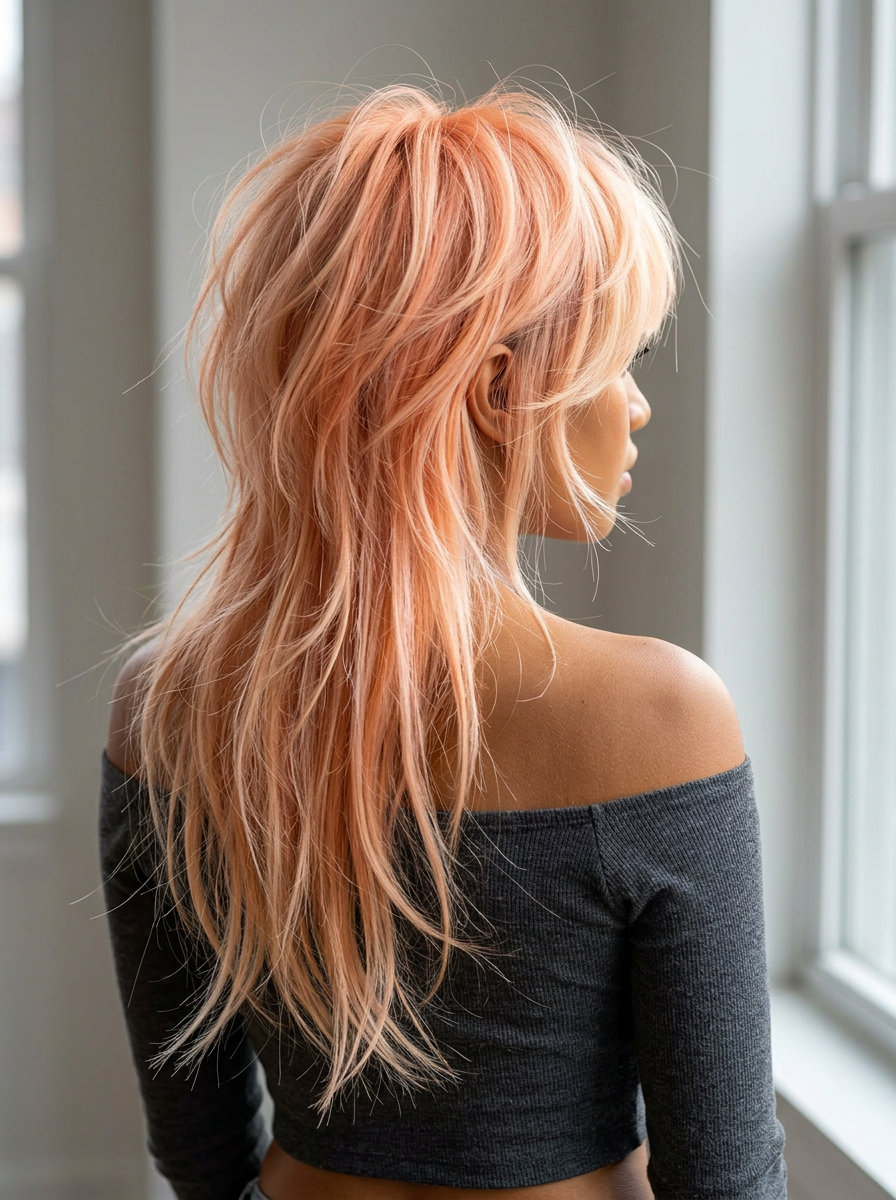
Choppy texture at jawline lasted a full day with minimal styling, needing only finger-combing—and that’s the whole appeal here. Disconnected layers at jawline emphasize choppy texture, adding volume and effortless style to fine hair, which means this cut isn’t trying to blend smoothly into longer lengths. Instead, you get deliberate separation, almost rebellion, right where your face meets the rest of your hair (or maybe just my hair type). The shorter front pieces sit maybe 1-2 inches above your collarbone, while the back extends another 3-4 inches longer, creating that distinctive wolf silhouette but with actual attitude.
The mushroom bronde wolf cut approach works beautifully with this choppy structure because the color breaks up the texture visually—darker roots ground the choppiness while lighter mid-lengths and ends emphasize each disconnected piece. Not for very curly hair—this cut fights natural texture, requiring heavy heat styling. You’ll need texturizing paste or a dry finish spray to enhance those choppy edges; without product, the layers can look stringy rather than intentional. Maintenance matters here: trims every 6 weeks keep the jawline sharp and the choppiness deliberate. Choppy, not messy.
The Wavy Chaos Crown
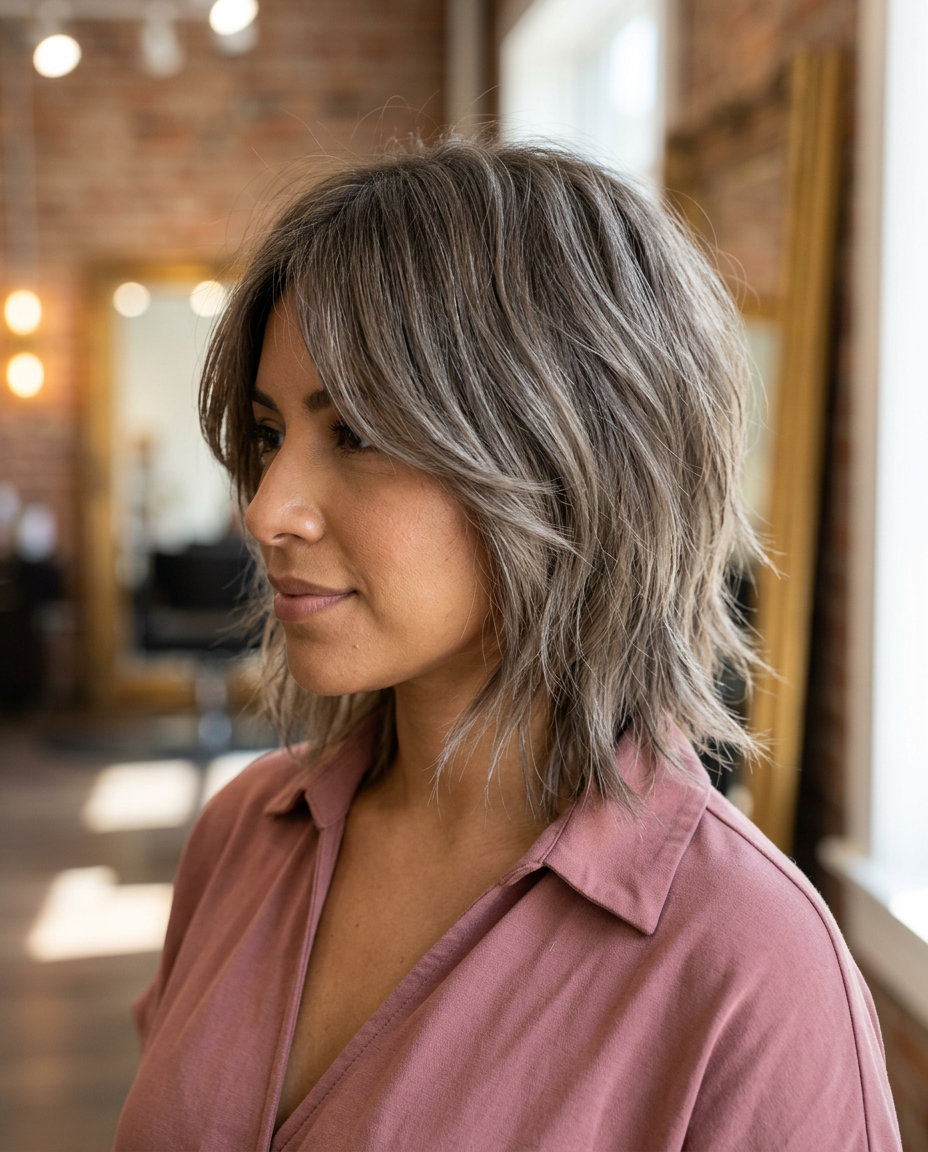
Dramatic crown volume lasted 3 days between washes, enhanced by natural waves and curls—this is what happens when a wolf cut meets hair that already knows how to do half the work. Heavy, choppy crown layers (5-7 inches of disconnected texture) create dramatic volume, working with natural wavy-curly texture instead of fighting it. Your waves do the movement; the cut just gives them permission to be unruly. The front stays shorter (around chin-length), but the back builds into actual substance, which means you’re not constantly fighting flyaways or wondering if you have enough hair back there.
Color-wise, mocha brown wolf cut vibes mean you can lean into dimension without the maintenance of pure highlights or balayage. A rich brown base with subtle caramel or warm-toned pieces catches the texture without screaming for constant root touch-ups. Styling this variation is genuinely simple: shower, spray damp hair with a sea salt texture spray, and let your waves take over. On day two or three, you might scrunch in a texturizing paste to refresh definition, but the layers themselves are doing the heavy lifting. Your natural texture combined with choppy internal structure means this cut actually improves with time between washes—the more texture you have, the better the cut looks. Wild, yet refined.
The Bulk-Busting Channeled Wolf
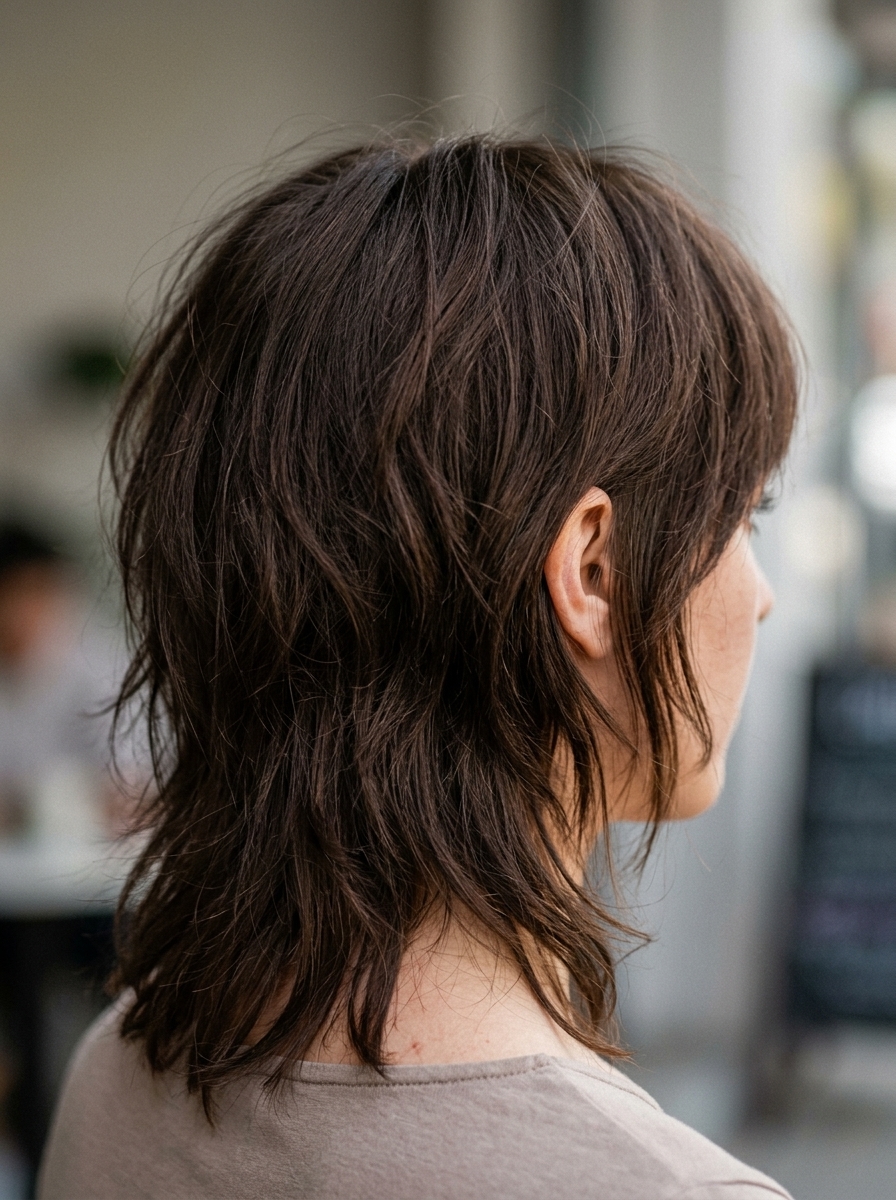
Internal channeling reduced bulk significantly, allowing thick hair to air-dry without excessive puffiness—a technical detail that matters more than most people realize. Internal channeling removes bulk from thick hair, ensuring maximum movement and texture without weight. Your stylist creates thin vertical cuts inside the hair (rather than just along the perimeter), removing density from the core without sacrificing length. For thick, straight hair, this changes everything: you finally get a wolf cut that doesn’t sit like a triangle or require blow-dry discipline just to look intentional. The front layers land around ear-length, the back extends to bra-strap or longer, and the internal structure ensures movement instead of bulk.
The color story here leans into richness: copper wolf cut ideas work beautifully with channeled structure because warm tones (especially copper or burnt orange undertones mixed with a deeper root) create dimension that highlights the texture rather than flattening it. Your stylist channels the hair, and the color work makes those channels visible. This cut requires regular trims every 6-8 weeks to maintain the collarbone length and layered shape (probably worth the investment). You’re also looking at styling products that add texture rather than weight—a dry shampoo, texturizing paste, or lightweight mousse applied to damp roots before blow-drying. The payoff is a wolf cut that actually sits well on thick hair, moves like it’s supposed to, and grows out without looking shapeless after week four. Channeling magic.
The Ghost Layer Wolf
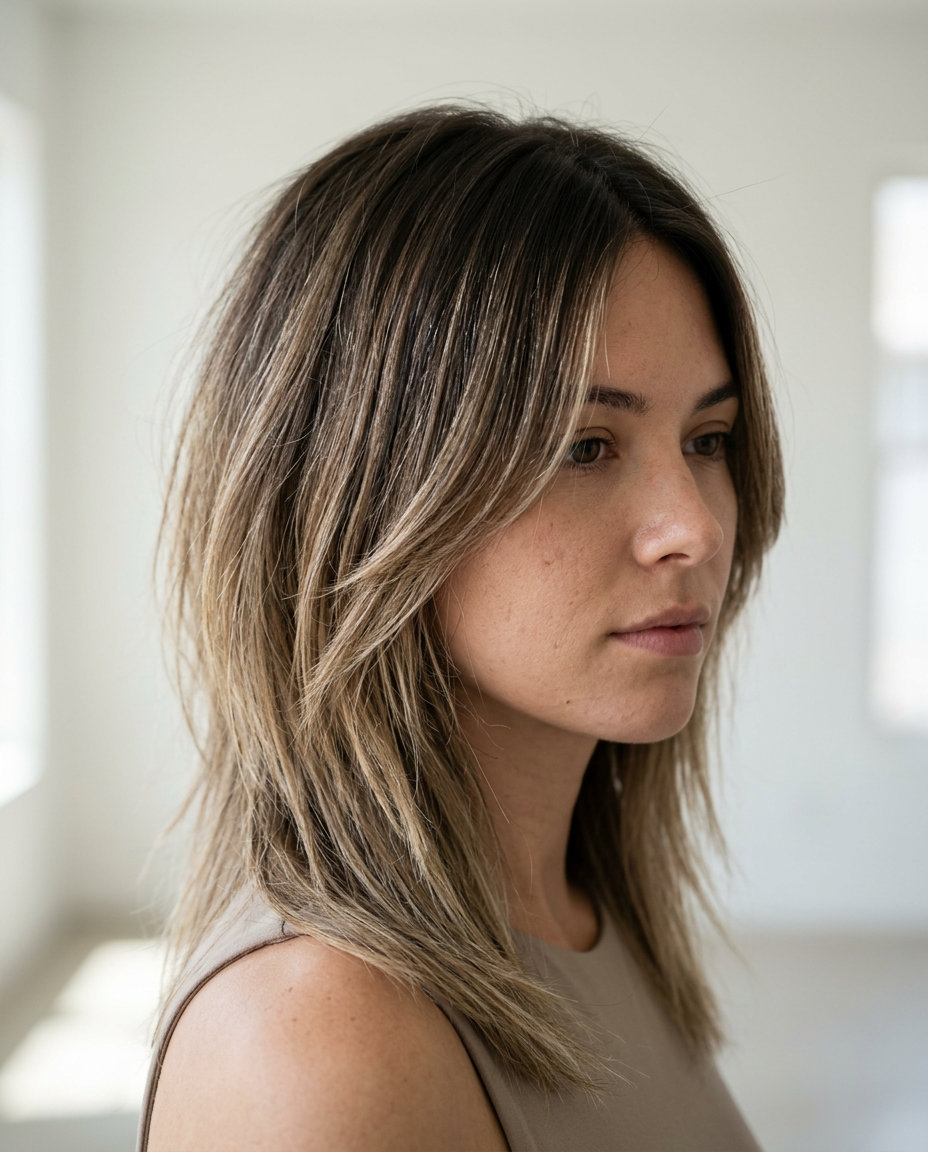
Ghost layers are the quiet overachievers of the wolf cut family. They sit inside the cut, blending seamlessly with the perimeter, which means you get movement and dimension without the dramatic chop. The subtle point-cutting and internal layering create ‘ghost layers’ that blend and grow out gracefully—no harsh lines, no weird in-between phase where you’re wondering if you made a mistake. (my favorite low-maintenance trick) This approach works best on fine to medium hair with straight to wavy textures, where every millimeter of weight matters.
What sold me was the timeline. Ghost layers grew out seamlessly for 3 months, requiring no awkward in-between trims or styling. You’re not fighting the cut as it gets longer; the subtlety of the design means the shadow root wolf cut actually improves with a few weeks of growth. Avoid if you want extreme, dramatic layers—these are designed to be subtle and blended. The payoff is a cut that looks intentional at week one and effortless at week twelve. Ghost layers win.
The Spiky Crown Wolf
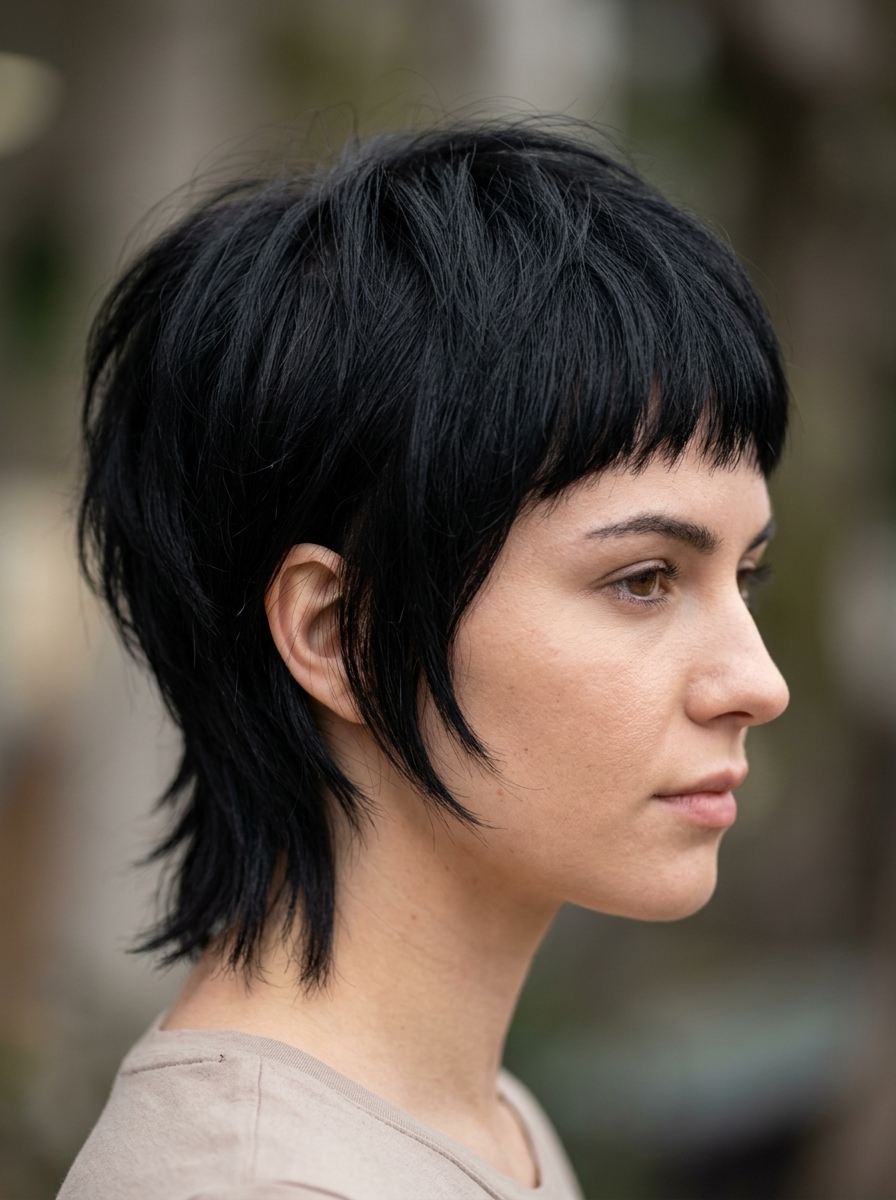
Short wolf cuts on dark hair hit different—especially when you’re going for maximum crown volume. This one trades the jaw-scraper length for aggressive layering at the top, which means you’re actually getting texture, not just a blunt crop. Heavy layering and texturization at the crown create extreme volume, giving the signature spiky effect that makes this cut read less “pixie” and more “intentional mess.” The perimeter stays relatively short, but those interior layers are doing all the work. Best on straight to wavy, fine to medium hair. The short length and aggressive layering make it adapt well to different face shapes without looking dated.
Crown layers maintained spiky volume for 3 days with minimal product application, which is genuinely useful if you’re someone who doesn’t want to fuss every morning. You’ll need a texturizing product—something with hold but not crunch, yes, the short one—to emphasize those layers and keep them from collapsing by day two. Skip if you have very coarse hair—the aggressive layers will frizz. The cut grows out reasonably fast (trim every 4-5 weeks), but that’s actually a feature if you hate commitment. Your stylist should point-cut the layers rather than razor-cut them, which means asking specifically for that technique. This isn’t a wash-and-go situation, but it’s definitely not high-maintenance either. Finally, a pixie that moves.
The Soft Blonde Wolf
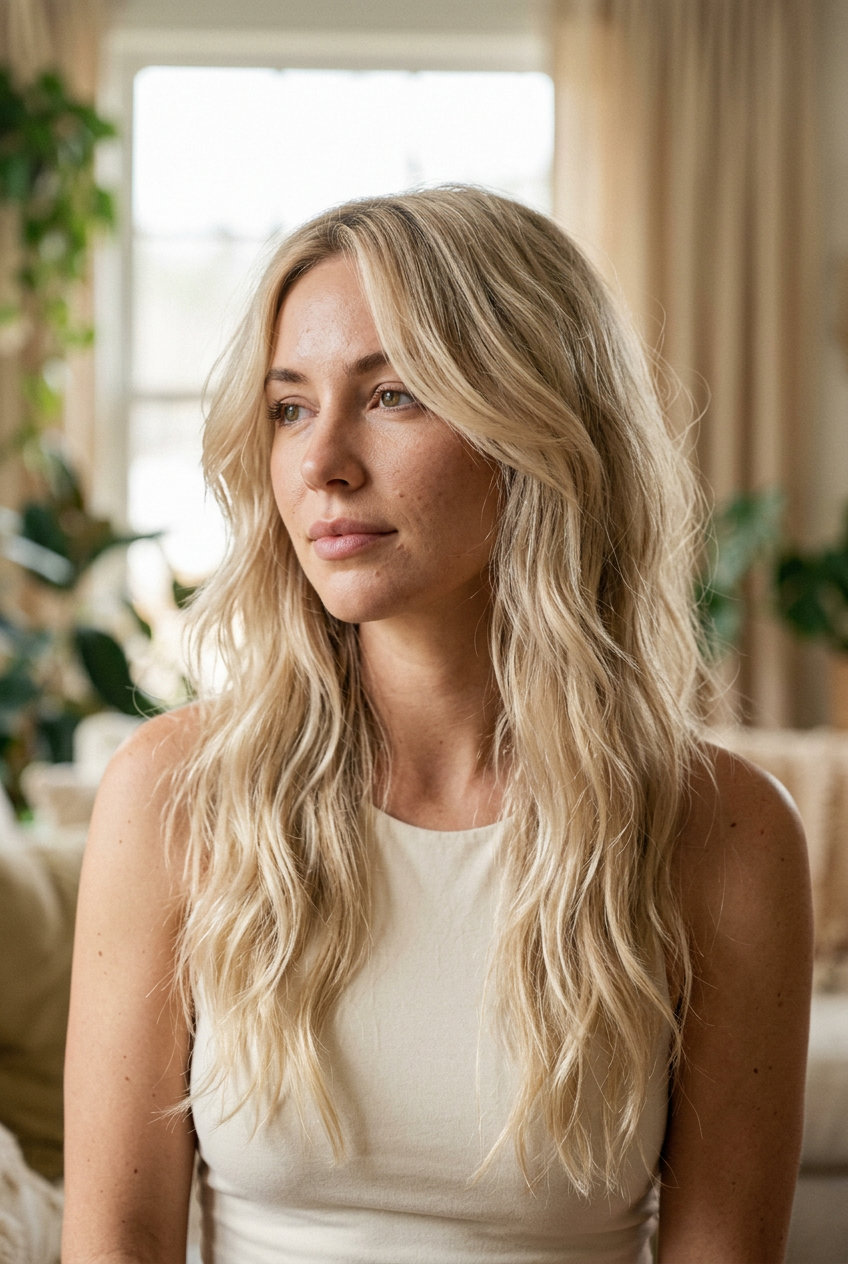
Okay, this is the wolf cut for people who see the trend and immediately think “but make it wearable.” The difference here is that instead of disconnected layers creating that wolf-shag texture, you’re getting soft, diffused internal layers that blend into the perimeter. Soft, diffused internal layers create airy volume around the crown without harsh lines, enhancing natural movement. The color is buttercream blonde—not platinum, not golden, but that in-between shade that feels expensive even when it’s not. It photographs like heaven in natural light and somehow works with most skin tones, which is why you’re seeing it everywhere right now, all my fine hair can handle.
Soft diffused layers provided airy volume for 2 months without sharp disconnects, so you’re not constantly feeling like your hair is literally in two separate pieces. This one needs a blow-dryer and some intention—air-drying gives you flatter texture around the roots—but it’s the kind of cut that rewards styling instead of punishing you for trying. The maintenance schedule is real though: root touch-ups every 4-5 weeks if you want that buttercream to stay creamy, not brassy. Not for very thick hair—layers might disappear or add too much bulk. Ask your stylist to use point-cutting techniques specifically for softness. Effortless movement perfected.
The Lilac Whisper Wolf
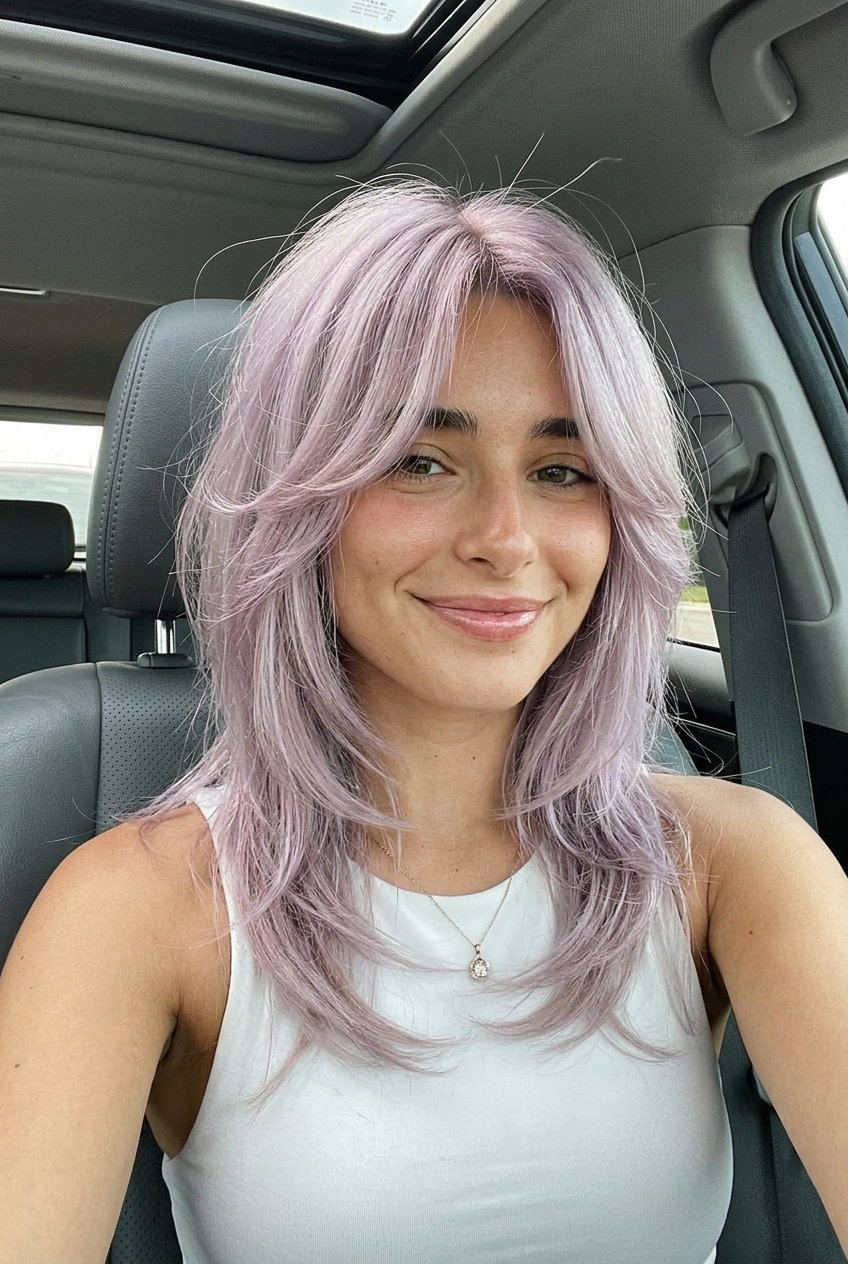
This is the wolf cut that looks like it came from a fever dream—in a good way. Imagine: lilac base color (not purple, lilac), extremely fine layering throughout, and an almost Victorian-level of delicate texture. Deep point-cutting and internal slicing create exceptionally soft, wispy layers for delicate, airy volume. The color is the obvious star here, but the cut is what makes it work instead of just sitting there pretty. Every layer is feathered at the ends, which means they catch light and seem to float rather than sit flat. This is the wolf cut for people who treat their hair like an art project.
Finely feathered layers air-dried with delicate volume, lasting 4 days between washes—so it’s not a wash-every-other-day situation. But here’s the reality: maintaining the ethereal ends requires daily heat styling or specific air-dry techniques, probably worth the consultation at least. The lilac color itself is semi-permanent or demi-permanent dye, which means it’ll fade to a silvery-violet over 8-10 weeks, and honestly that phase is beautiful too. You’re looking at a full-color service first (if starting from a lighter base), then possibly a toner refresh every 6-8 weeks. Trim every 5-6 weeks to keep those wispy ends from getting stringy. The cut demands a stylist who understands point-cutting and feathering—not a salon that just chases trends. Ethereal ends, perfect flow.
The Sleek Espresso Wolf
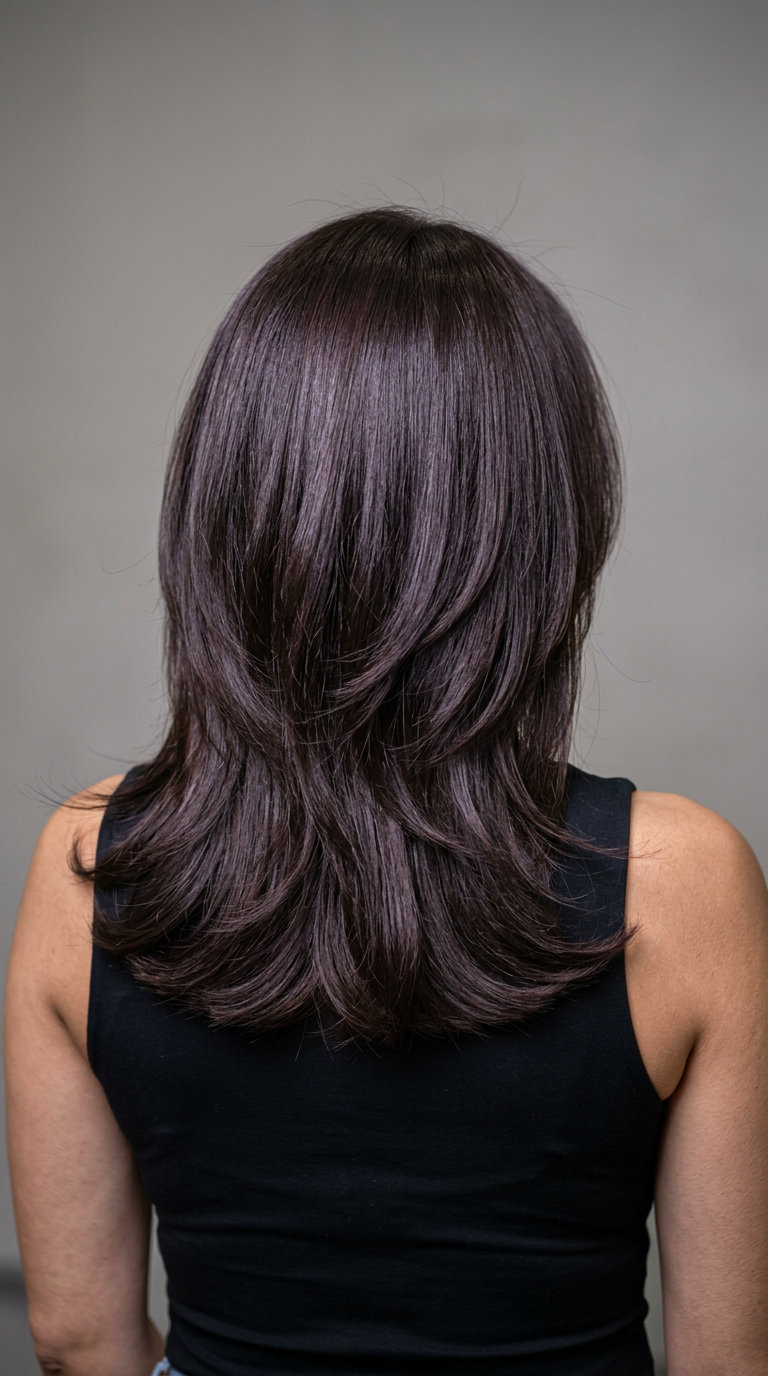
This wolf cut goes the opposite direction from everything feathery and ethereal—sharp internal layers, blunt perimeter, and styling that’s basically architectural. The color is espresso roast (that deep, almost-black brown with red undertones), which means the layers actually read as texture instead of getting lost in a pale base. Round brushing lifts roots for volume and bevels ends, while flat ironing on low heat seals cuticles for high shine. The whole vibe is “I woke up and decided to look intentional,” which requires actual blow-drying and some precision tool work. The best 20 minutes spent, if you’re into that kind of hair routine.
Smoothing serum and round brush achieved mirror-like shine and frizz-free finish for 12 hours—so if you’re going out, you’re covered all day and into the evening. The layers here need to be cut blunt (not feathered), which means asking your stylist for razor-sharp internal layers instead of soft ones. This cut looks best on straight to slightly wavy hair; very curly hair will read frizzy instead of intentional. Avoid if you only air-dry—this needs blow-drying to look right. The espresso color is permanent or demi-permanent, and it actually holds well because the depth camouflages root regrowth. Trim every 6 weeks to maintain that sharp perimeter. Sleek, not shaggy.
The Curly Wolf Cut
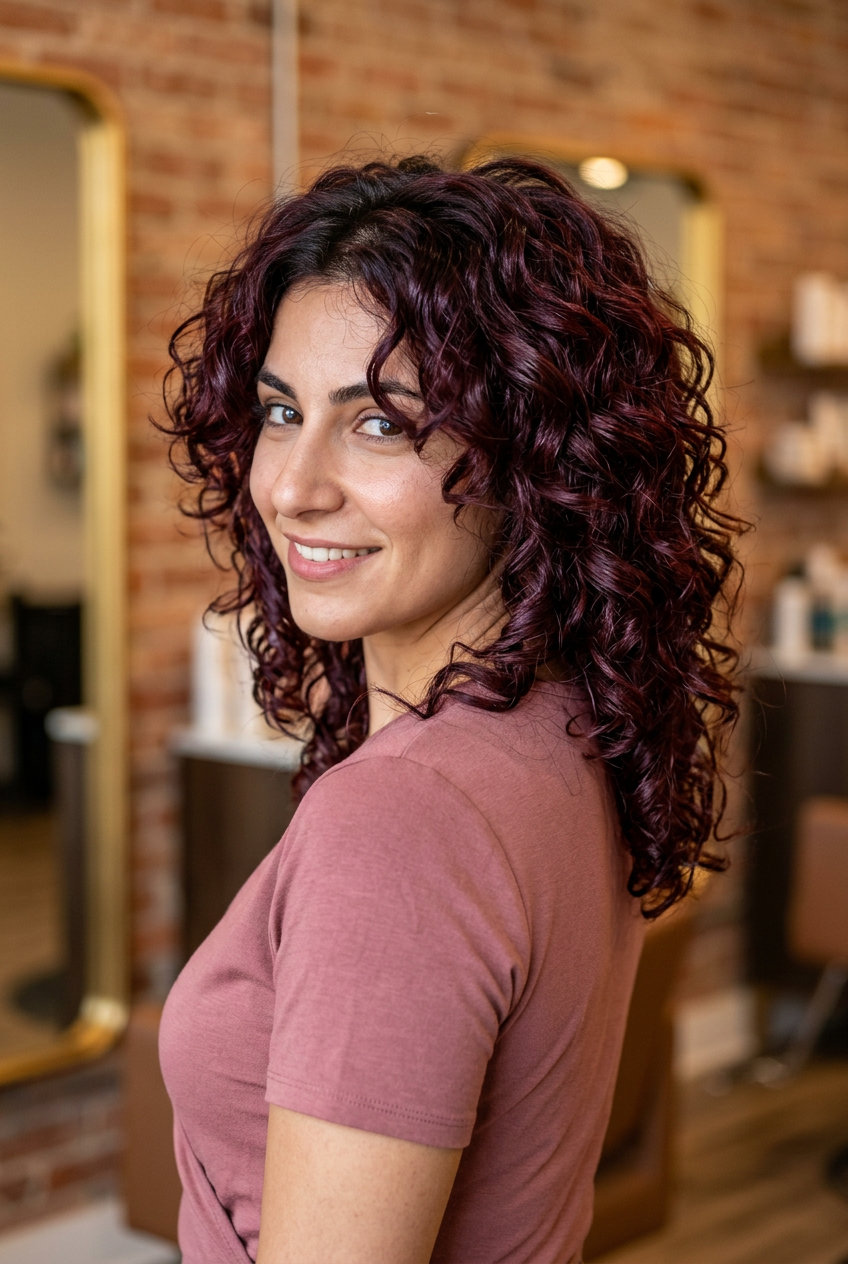
Curly hair and wolf cuts have a complicated relationship. You’ve got the disconnected layers that want to create volume, but your curls are already doing that job independently—sometimes too well. The solution isn’t to fight your texture; it’s to recruit it. Point-cutting changes everything here. Instead of blunt scissors that catch frizz and bulk, a stylist uses point-cutting on curly hair to reduce density while encouraging your natural curl pattern to define itself. The result is a wolf silhouette that actually respects what your hair wants to do, worth the curl specialist consultation.
Here’s what actually happens: Point-cut layers enhanced curl definition for 8 weeks without excessive frizz or bulk when the cut targets the right density zones. You’re not trying to make your curls sleek; you’re making them readable—each curl has room to live without the weight that normally suffocates definition from underneath. Crown volume comes from internal point-cutting that removes bulk, not length. The sides taper slightly to frame your face without creating those awkward triangle-shapes that happen when curly hair gets layered wrong. The perimeter stays longer than a typical wolf, sitting somewhere between shoulder and collar, so you’re not fighting grow-out as hard. Finally, a wolf cut for curls.
Maintenance here is non-negotiable. Requires specific curl products and air-drying to maintain definition and reduce frizz—you’ll need a styling cream or gel that actually works with your curl type, not against it. Blow-drying straight defeats the entire purpose. Your refresh window is about 8–10 weeks before the layers start looking less intentional and more chaotic. A cherry cola hair color curly finish (think deep burgundy on darker bases) adds richness without requiring the platinum upkeep that other wolf cuts demand.
The Wild Wavy Wolf
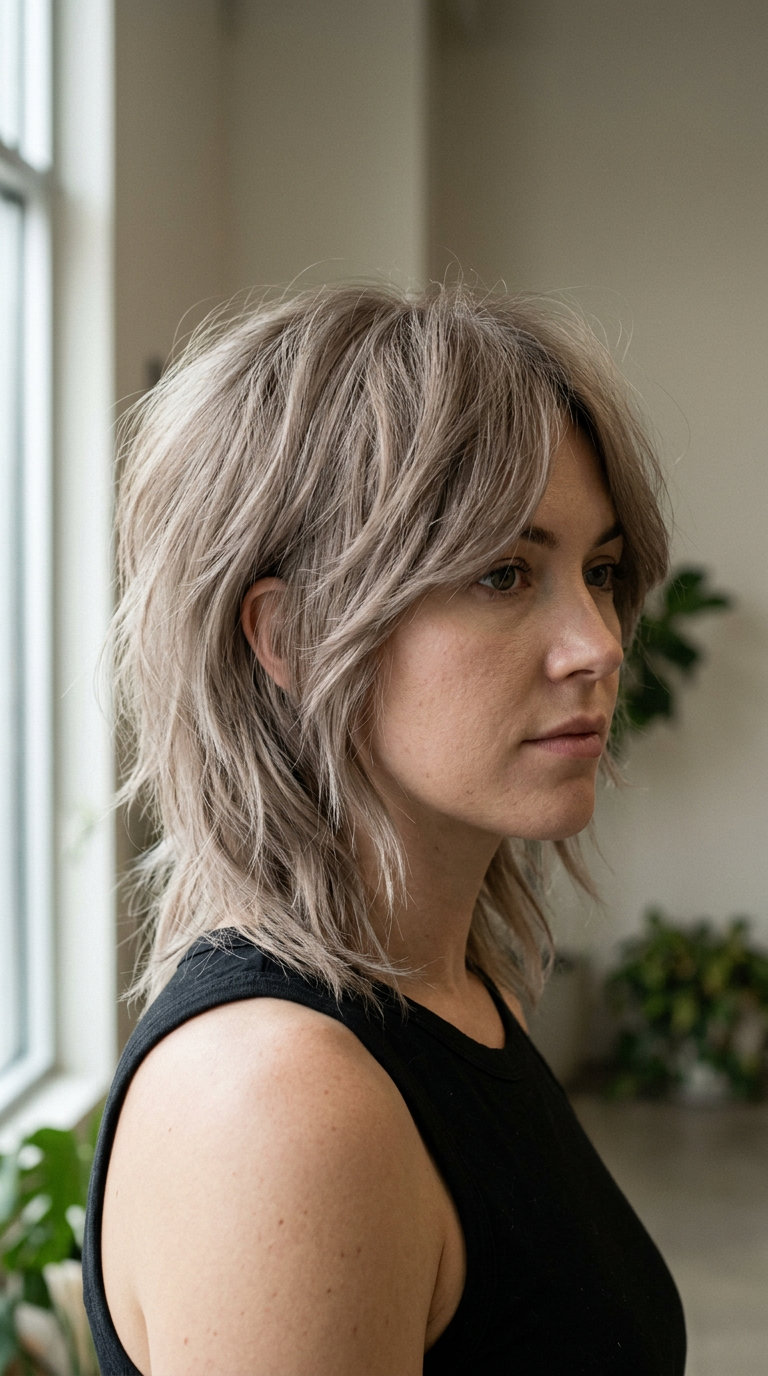
Wavy hair sits in this strange middle ground where you want movement but also, occasionally, control. A wolf cut for wavy hair leans hard into the chaos—and I mean that as a compliment. Heavy, razored internal layers create significant crown volume and a wild, disconnected silhouette on wavy hair, which means daily texturizing paste becomes your best friend. The cut works because the razoring isn’t trying to blend or diffuse; it’s creating intentional texture breaks that interact with your natural wave pattern. You’re not aiming for soft; you’re aiming for visibly alive.
Crown volume from razored layers held for 4 weeks with minimal daily styling effort, which is genuinely surprising for a cut this aggressive-looking. The layers are positioned to work with your wave, not against it—they catch and enhance the movement you already have. The perimeter gets a slight taper so it doesn’t flare out awkwardly when you move. Sides stay textured but defined, framing without weighing down. The smoky ash blonde wolf cut color formula (cool-toned, shadowy roots with lighter mid-lengths) adds dimension while hiding root grow-out beautifully.
This cut demands texture product daily—think of a texturizing spray or sea salt paste that enhances wave definition without making everything look greasy or stiff. Your refresh happens around week 5–6 before the disconnection starts looking less intentional and more like you haven’t seen a stylist in months. The trade-off: you’re giving up the option to wear your hair polished or pristine. Embrace the wild.
The Soft Wave Wolf
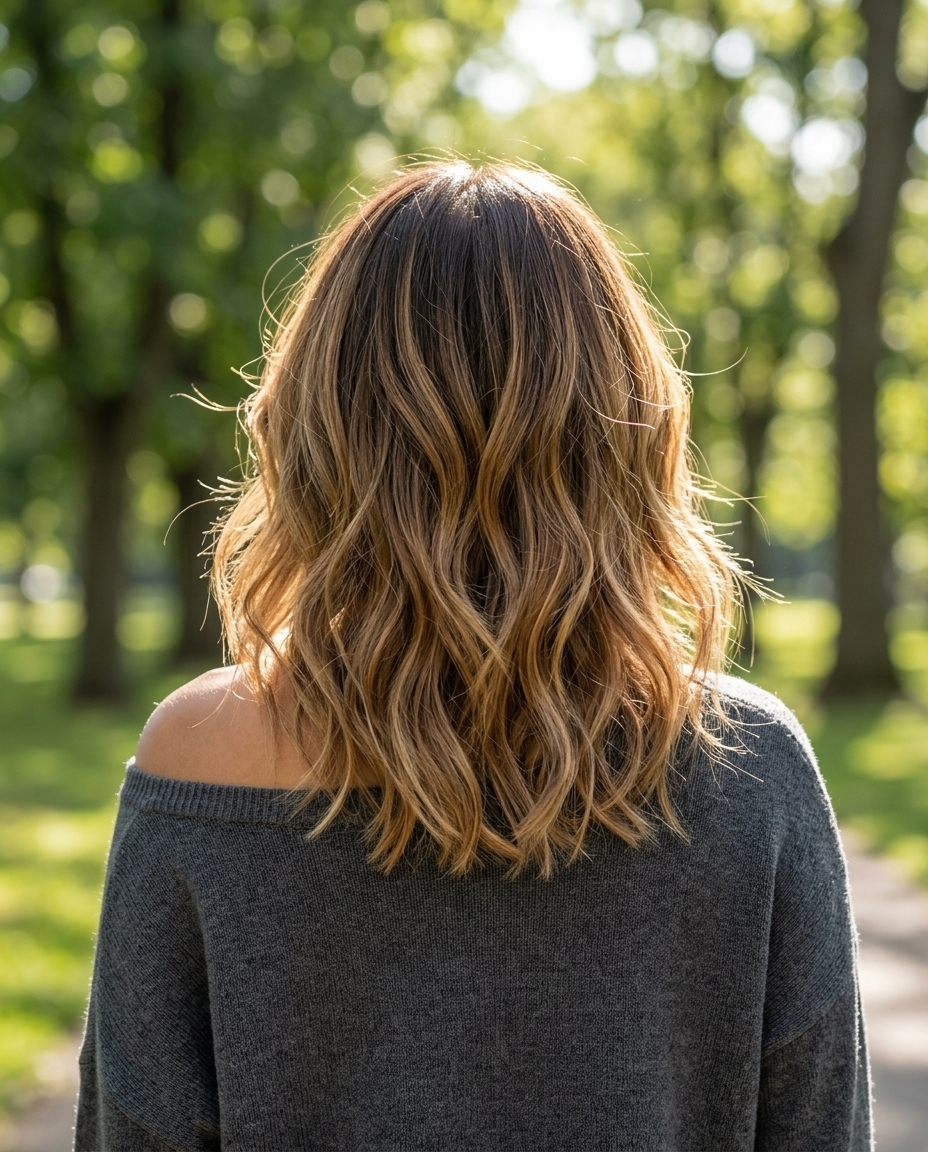
Not every wolf cut has to announce itself loudly. This version whispers instead. Point-cut ends and diffused layers create a softer, ‘rippled’ texture, enhancing natural wave and maintaining fullness without the aggressive disconnection of heavier cuts. You still get the crown volume, the movement, the modern silhouette—just with an approach that feels less deliberately jagged. The layering works because it’s distributed throughout rather than concentrated in one shock zone. It’s wolf in structure; it’s considerate in execution.
Natural wave enhanced for 6 weeks, growing out softly without harsh lines or bulk when you’re working with an actual wave pattern and not fighting it. The key difference: this cut uses point-cutting and diffused internal layers rather than heavy razoring. Perimeter stays relatively blunt for shape, but the inside layers are feathered so they don’t create that obvious weight-line disconnect you see in more dramatic wolves. This works perfectly if your hair holds wave naturally, and the honey balayage wolf cut color (warm-toned, diffused highlights) adds softness to what could otherwise feel sharp.
Styling is gentler here—a light texturizing cream or wave-enhancing spray works, though you could also air-dry and get results. Your refresh window stretches to 8–10 weeks because the softer layering doesn’t show grow-out as obviously. You’re maintaining softness, which means your product routine stays minimal, your daily commitment stays low, and your hair still reads as intentional and modern. Effortless wave perfection.
The Spiky Micro-Bang Wolf
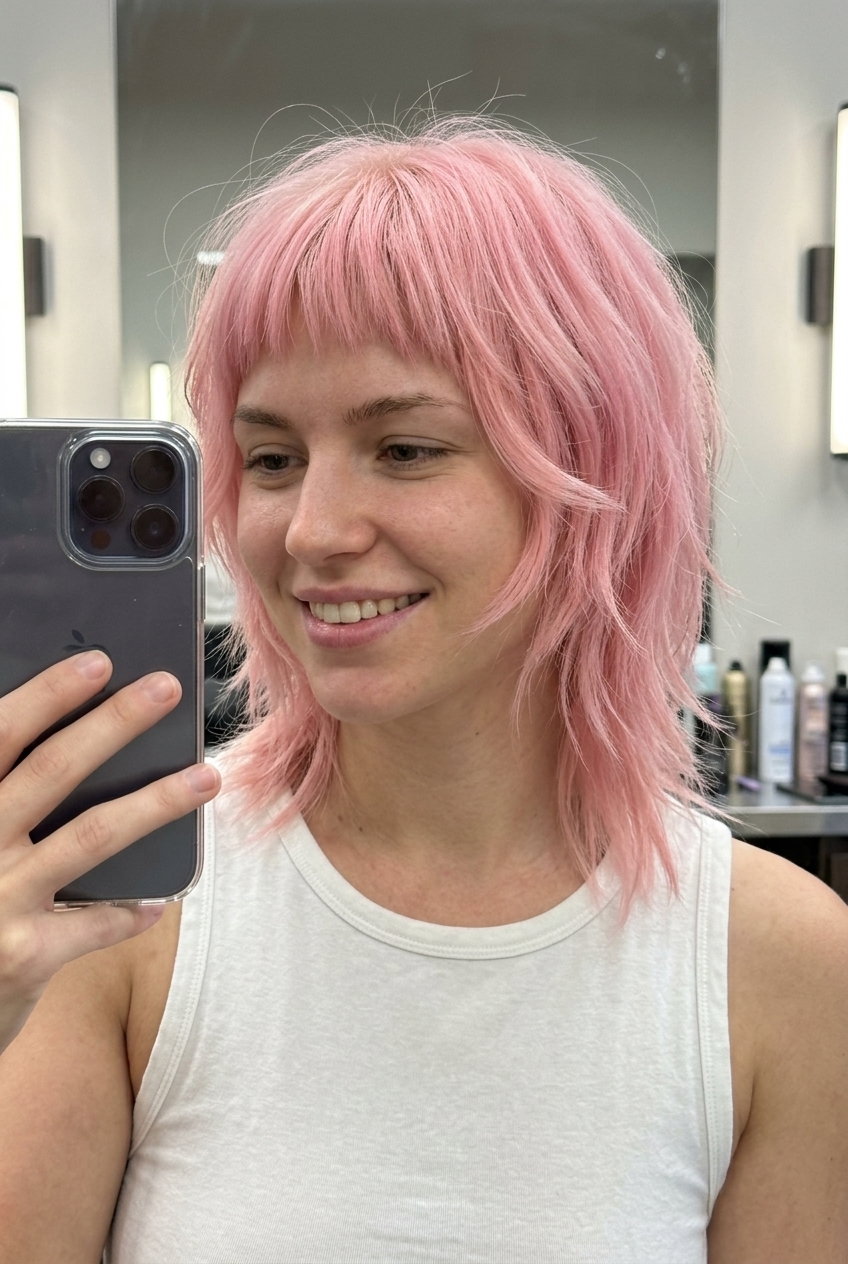
If you’re going to commit to a wolf cut, why not go all in with micro-bangs. This version combines choppy internal layers with a short, choppy fringe that sits just above your brows, creating a playful, deliberately chaotic silhouette. The micro-bangs aren’t subtle; they’re a statement. Choppy internal layers and point-cut micro-bangs add significant body and playful texture to fine hair, which means this cut is specifically designed for people who want their hair to do something rather than hang there politely. Crown volume is built in from the cutting, not dependent on styling.
Micro-bangs held their shape for 3 weeks before needing a quick trim, and yes, that’s a real maintenance cost you should know about. This is where the price story matters: you’re looking at regular bang trims (every 3–4 weeks at roughly $25–40 each) on top of your full wolf refresh every 6–8 weeks. The cotton candy pink wolf cut (a pale, mauve-leaning pink on light bases) absolutely complements the playful energy this cut creates. Micro-bangs pair beautifully with a semi-permanent color because they age out more gracefully than a super-saturated permanent dye.
Micro-bangs need daily styling and frequent trims to maintain their sharp, playful look, which is the real commitment here. You’re blow-drying them straight or texturized depending on your mood, and they’ll grow noticeably every week. If you’re someone who forgets about maintenance or prefers a lower-touch routine, skip this version. But if you love having a reason to visit your stylist regularly and you want a cut that genuinely surprises people, this is your moment. Playful, edgy, perfect.
The Precision-Cut Cyberpunk Wolf
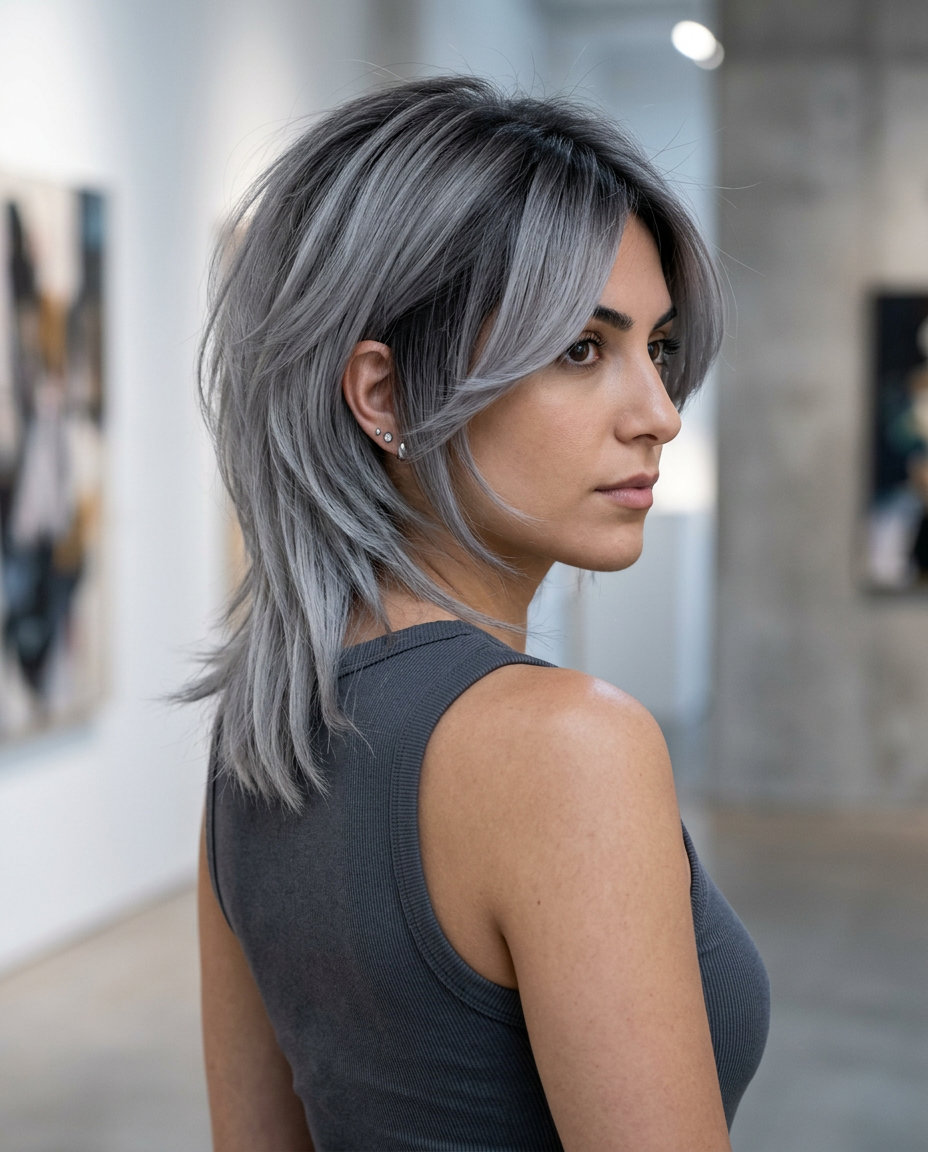
This is the wolf cut for people who want their hair to look intentionally disconnected—like you walked out of a dystopian film festival and somehow made it work for brunch. Sculpted, feathered layers maintained their architectural shape for 3 days with minimal product refresh, which is worth the extra 10 minutes styling each morning. The precision point-cutting and razored face-framing create a distinct, architectural silhouette with edgy disconnection that reads as deliberately chaotic, not accidentally messy.
The cyberpunk hair aesthetic demands commitment. Highly sculpted cuts require daily styling effort and specific products for best results, so this isn’t the move if you’re hoping for wash-and-go texture. You’re looking at 8–10 minutes minimum with a texturizing paste or dry paste, working the layers to emphasize their independence from one another. But if you’re someone who enjoys the ritual of styling—the moment of control before the day happens—this cut rewards that attention. Cyber-punk perfection.
The Ash Blonde Wolf with Statement Fringe
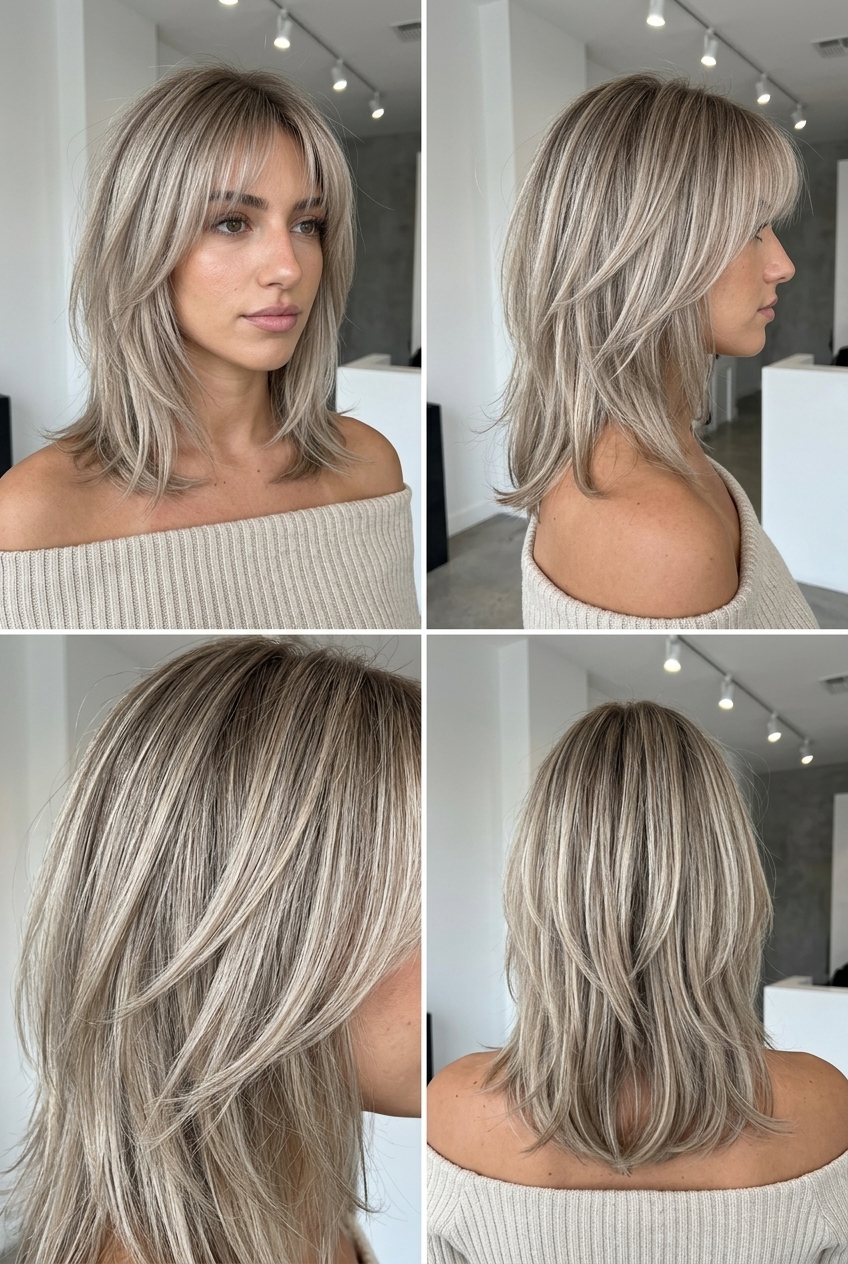
Wispy, eyebrow-grazing fringe grew out softly for 4 weeks before needing a quick trim, which actually makes this one of the more forgiving bang situations. The fringe becomes the entire visual anchor here—precise point-cutting throughout ensures definition and texture, allowing layers to move without bulk. An ash blonde wolf cut professional stylist will tell you this combo is easier than it looks, or maybe just a quick blow-dry for the fringe to get the shape right. Either way, the fringe is doing most of the heavy lifting visually.
Skip if you prefer low-maintenance bangs—this fringe needs daily attention to look intentional rather than just overgrown. But if you’re willing to style it, the payoff is immediate. The fringe softens the wolf’s natural edginess and makes the whole cut feel less aggressive on round or heart-shaped faces. Ash blonde itself fades gradually, so plan for purple-toning shampoo every other wash to keep the cool undertones from shifting warm by week three. The fringe makes it.
The Ghost Layer Wolf in Bronde
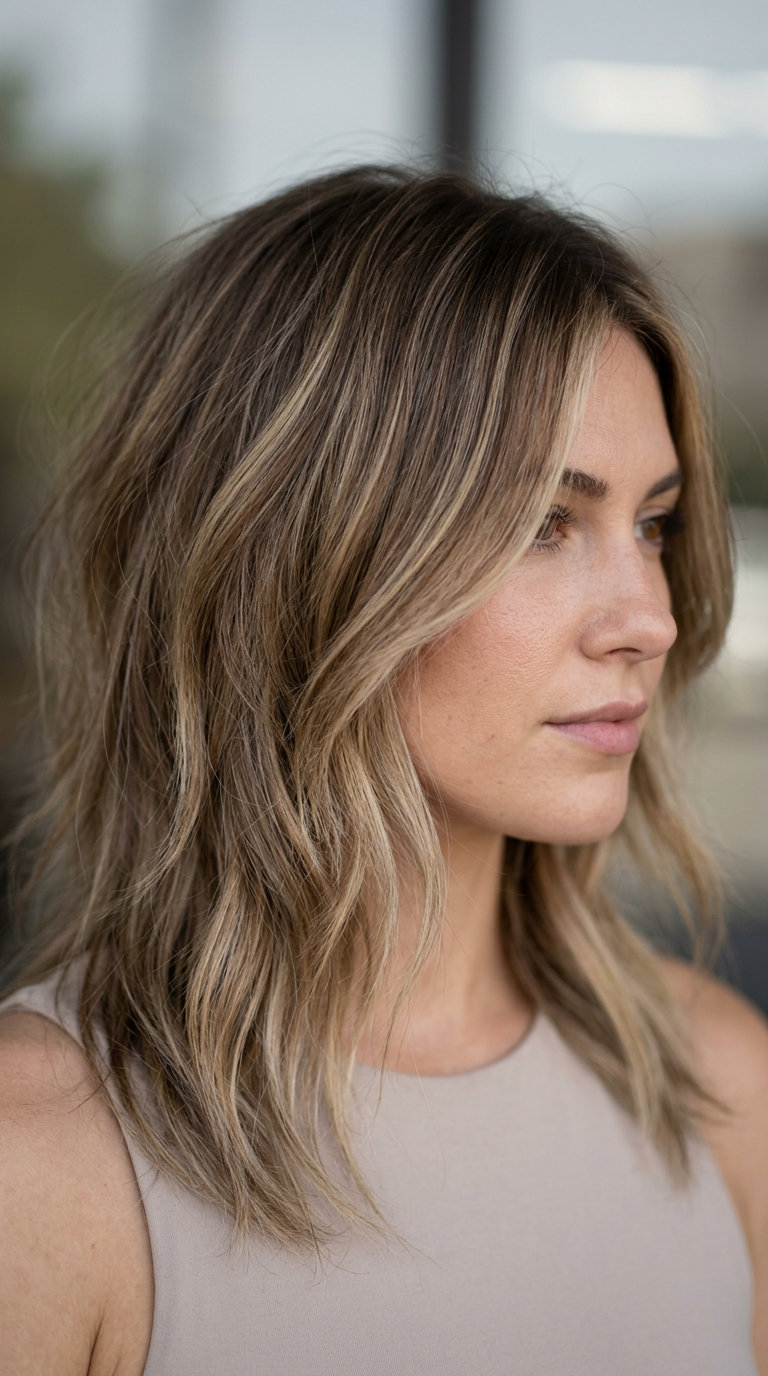
Internal ghost layers added visible volume to fine hair without sacrificing overall length or density—the kind of invisible architecture that makes people ask if you’ve just gotten a cut or if something’s different about you. Soft, internal ghost layers provide volume and movement, creating a sophisticated feel without obvious steps that read as “layered.” This approach works because it keeps the perimeter weight intact while the interior does the lifting work. Fine hair especially benefits from this strategy since you’re not removing length from the ends, which is where fine hair needs density most.
Achieving subtle ghost layers requires a highly skilled stylist, increasing salon cost, so expect to invest in someone who understands the difference between razoring for texture and razoring for chaos. The lived in bronde balayage color takes this from strict wolf territory into something warmer and less dramatic—which is all my fine hair can handle, honestly. Root shadow helps extend the color story for 6–8 weeks without root melt, and the lived-in vibe means slight color variations actually read as intentional rather than grown-out. Sophisticated movement.
The Textured Wave Wolf for Curly Hair

Heavy, disconnected layers enhanced natural waves, requiring only air-drying for defined texture—which is the entire appeal if your hair already does something interesting on its own. Strong, razored face-framing layers and choppy texture maximize natural wave and movement, turning what could be frizz into intentional shape. Not for straight hair—the layers won’t hold the intended choppy texture without daily heat styling and product work. But if you have wave or curl already living in your hair, this cut stops fighting you and starts amplifying what’s naturally there.
This version of the wolf actually costs less in maintenance since you’re skipping the daily blow-dry and paste routine. Air-dry paste or sea salt spray and you’re done, probably worth the consultation at least to show your stylist your hair’s natural pattern before they start cutting. The disconnected layers mean individual curls can move independently, so even if your wave is loose, you get visible texture and shape without looking stringy. Embrace the wave.
The Diffused Ghost Wolf
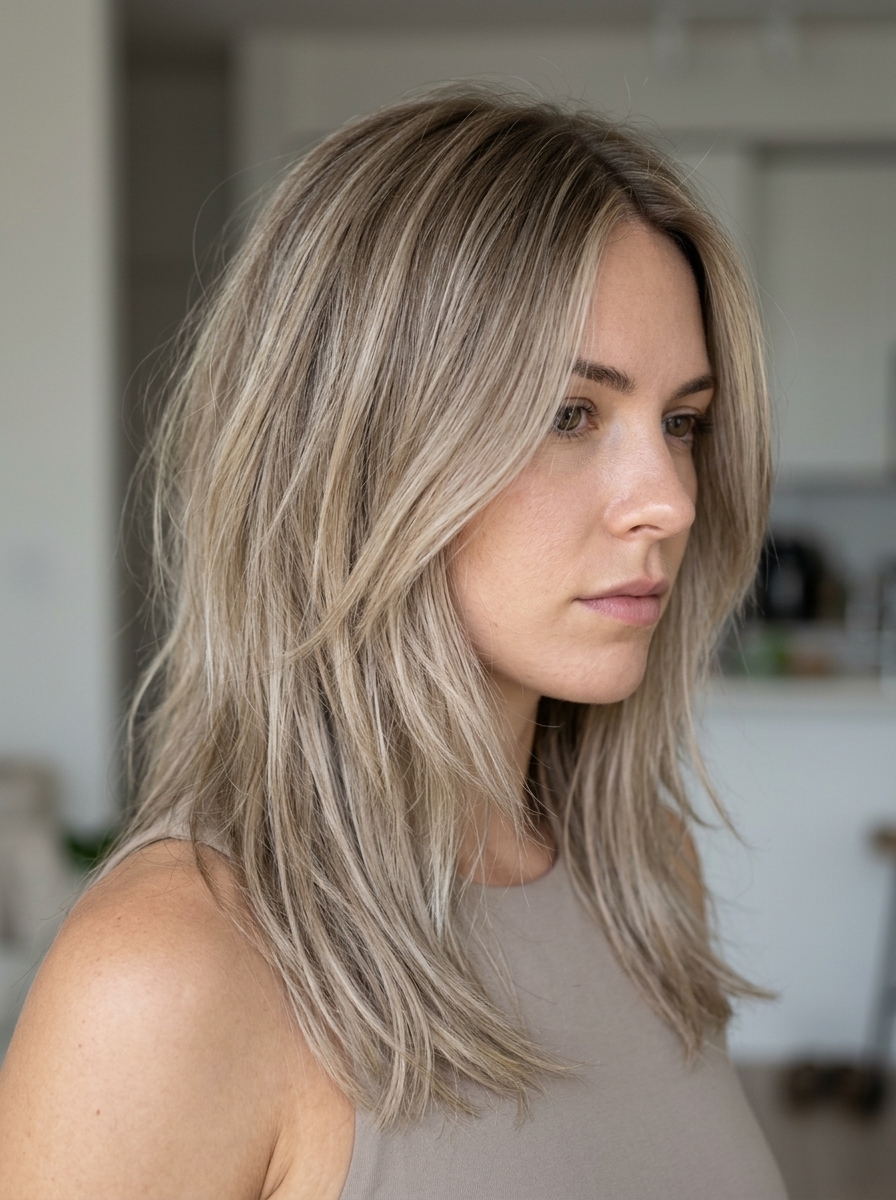
Subtle, diffused internal layering maintained fullness while adding gentle movement for 8 weeks—proof that wolf cuts don’t have to look aggressive to be effective. Diffused internal layering creates a seamless ‘ghost wolf’ effect, adding subtle lift without harsh steps, which is perfect for a less aggressive look that still reads as intentional. This version keeps the perimeter length intact so it actually grows out like a normal haircut instead of transforming into a shag disaster by week six. The layering is so internal that most people won’t immediately see the cut structure, but they’ll notice how much lighter and moveable your hair feels.
This is the wolf cut for people who want the concept without the attitude—wolf mechanics applied to something closer to a modern, textured bob. The lived-in layered haircut aesthetic means you’re not chasing a specific shape daily; the layers do their job and then life happens. One texturizing product on damp hair before blow-drying, or nothing at all if you’re air-drying, and you’ve got soft, movement-forward texture. The ‘grown-out’ chic.
The Extreme Texture Wolf
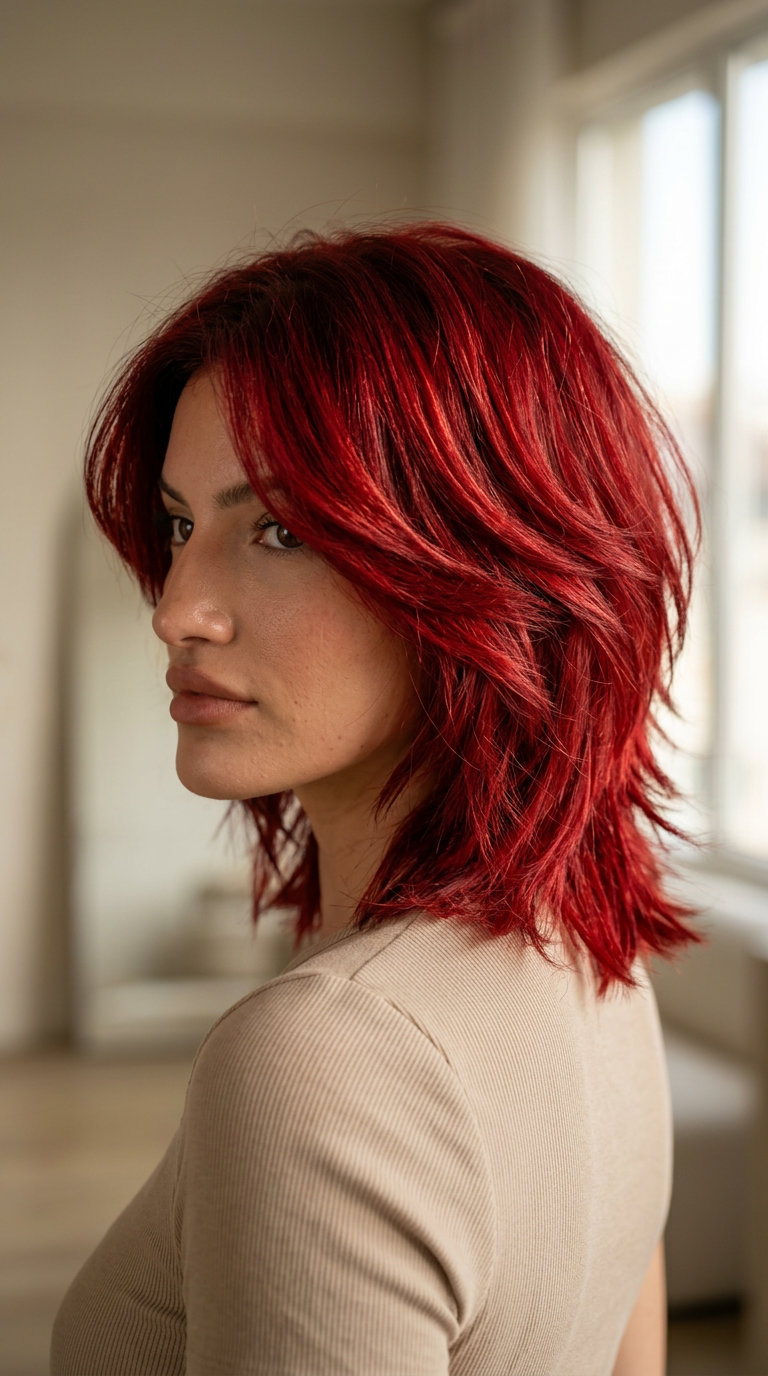
This one leans into the chaos. Razor-cut crown, aggressive point-cutting through the mid-lengths, and an intentionally choppy perimeter that says, “I know what I’m doing.” The sharp layering needs density to hold it, which is why this cut thrives on medium to thick hair with natural wave or texture. Razor-cutting the crown creates maximum volume and a deliberately choppy effect, enhancing texture—it’s the opposite of blending, it’s celebrating the mess (worth the daily styling). You’re not hiding texture here; you’re weaponizing it.
The crown maintained volume for 4 weeks with daily styling commitment, which is honest marketing: this extreme layering requires daily styling commitment to look its best. Without the texturizing paste and the blow-dry, you’re left with something that reads more “didn’t brush my hair” than “meant to look this way.” But if you’re willing to put in the work, the crimson red wolf cut with this technique becomes a statement. So much texture.
The Long Rose Gold Wolf
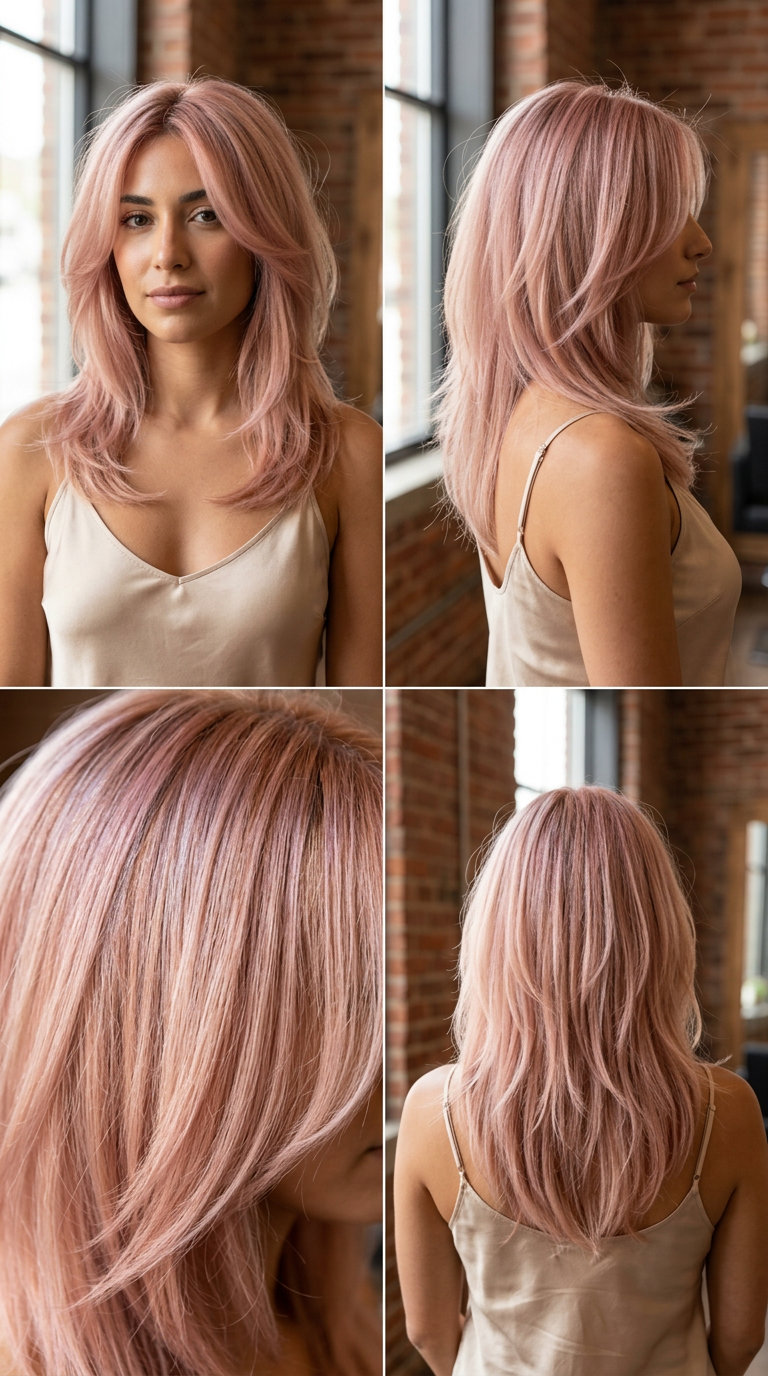
Soft layers here mean something specific: point-cut and feathered ends that create a delicate, wispy effect, enhancing natural movement and softness. This is the wolf cut for people who want dimension but not drama, who want their natural waves to do most of the work (which is all my fine hair can handle). The cascading layers through the mid-lengths don’t remove bulk aggressively; they work with your hair’s natural density instead of fighting it. Soft layers enhanced natural waves for 8 weeks before needing a trim, which tells you the design is genuinely low-maintenance.
The long rose gold wolf cut in this silhouette feels less about edge and more about movement. Skip if very thick hair—soft layers might not remove enough bulk. But for fine to medium textures, especially with any natural wave at all, this cut becomes almost effortless to style. A texturizing paste on damp ends, a loose wave cream, and you’re done. Ethereal movement.
The Deep Auburn Wolf
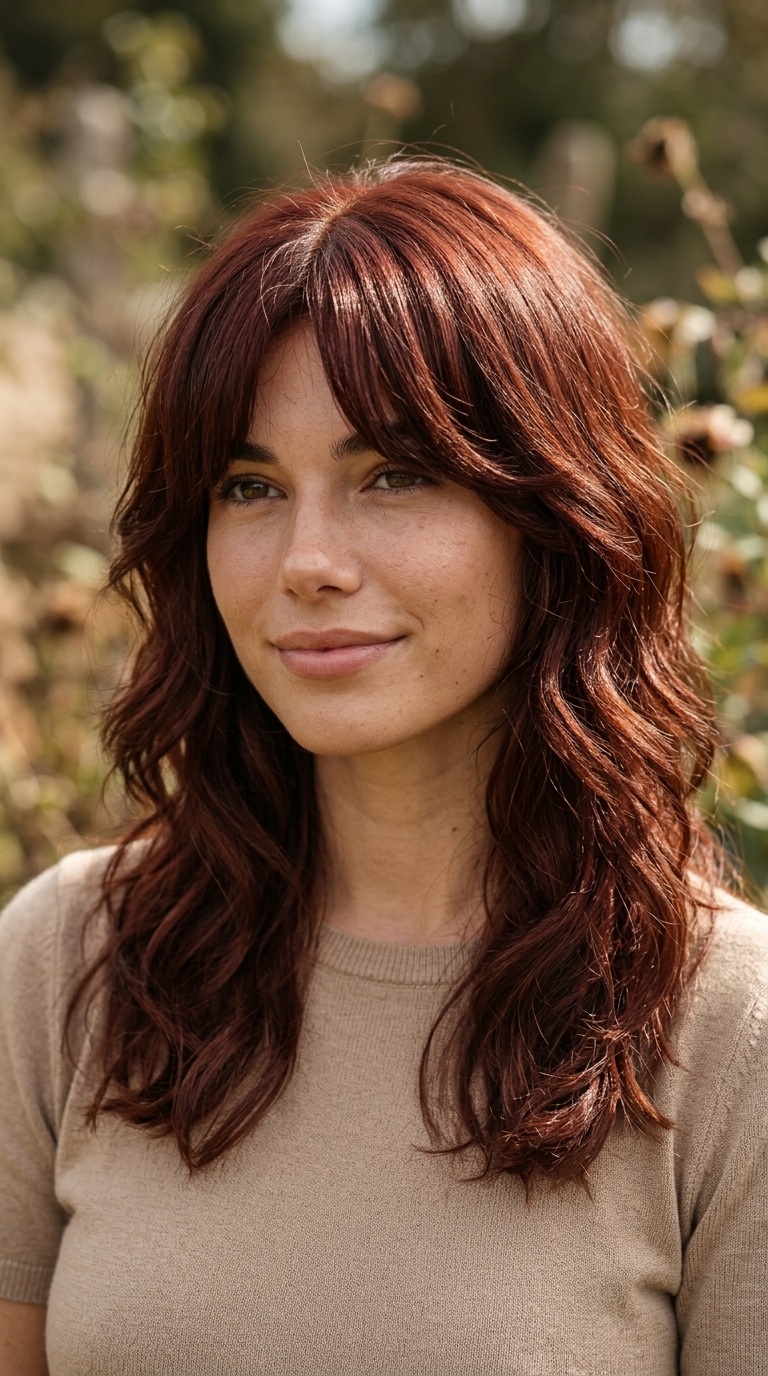
Gentle crown layers here provide lift at the roots without creating bulk through the mids and ends—a tricky balance that matters when you’re working with wavy or curly texture. Longer, cascading layers through the mid-lengths and ends prevent excessive bulk on wavy/curly hair, so you get shape without the weight. The cut works because it respects your hair’s natural movement pattern instead of fighting it with too many short layers. Gentle crown layers provided lift without bulk for 10 weeks, which is the kind of longevity that makes a cut worth the salon investment.
This is where the grow-out plan actually sold me. Your stylist should walk you through exactly how this cut transitions as it gets longer—which layers will frame your face at six weeks, where the perimeter lands at twelve weeks. Avoid if you prefer super straight hair—this cut thrives on natural waves. The deep auburn wolf cut becomes better with a few weeks of growth, when your natural texture has room to breathe. The grow-out plan sold me.
The Cherry Cola Wolf
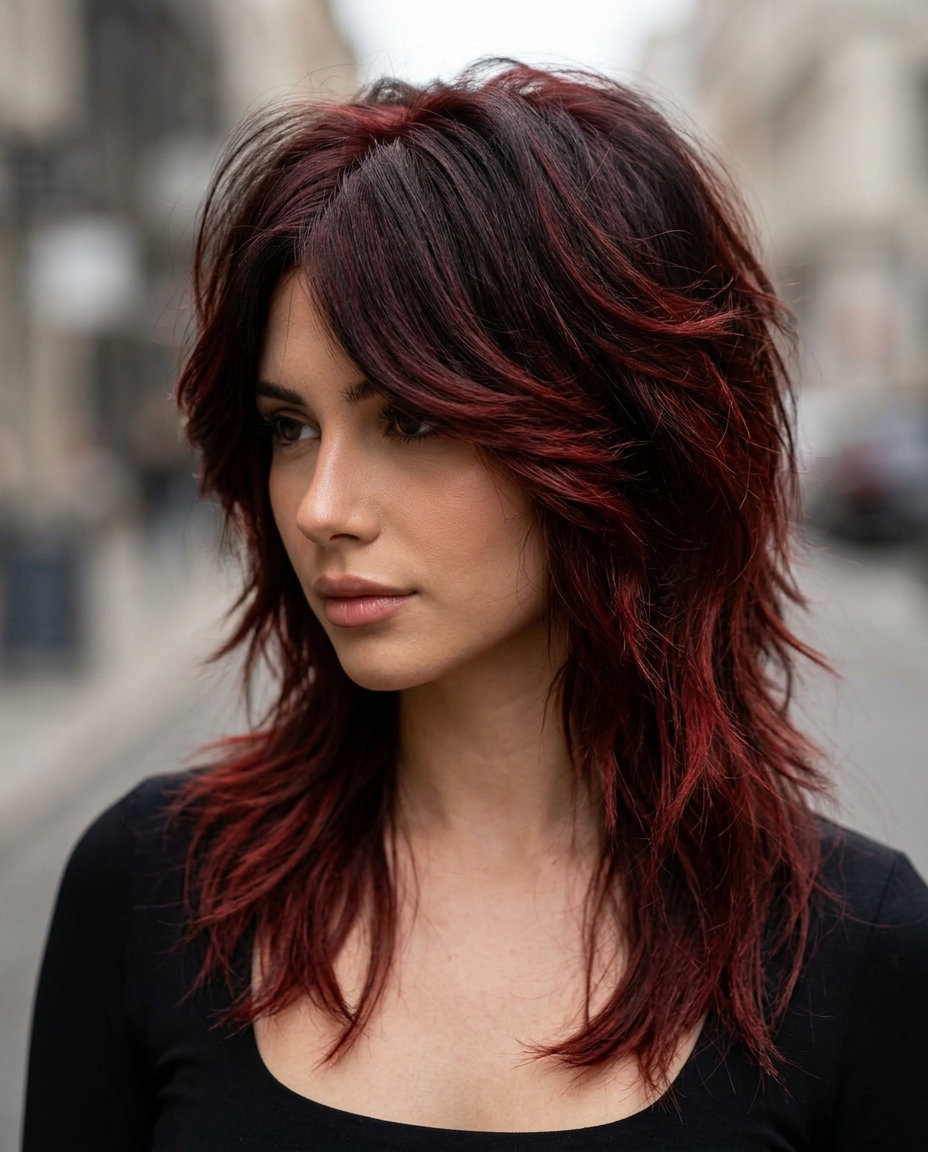
Aggressive point-cutting around the crown creates maximum volume and a deliberately ‘spiky’ texture—this is the punk-rock version of the wolf cut, and it earns every ounce of attitude it claims. The color (cherry cola, a deep red-burgundy hybrid) does the heavy lifting alongside the cut, which means the investment is split between salon cost and color maintenance. Choppy fringe held its punk-rock edge for 3 weeks before needing a trim, or maybe just a great stylist who understood exactly what ‘spiky’ meant in this context. The technical demand here is real: you need someone who knows how to point-cut without creating straw.
This aggressive, spiky texture requires frequent trims to maintain its sharp, edgy look—which is why the color story matters so much. A shadow root or root smudge in the base extends your color intervals and disguises the grow-out period, making the whole look feel intentional through the transition. The cherry cola hair color wolf cut isn’t a beginner’s cut or a color; it’s a commitment to showing up every four to six weeks. But when it works, it’s Pure rock ‘n’ roll.
The Buttercream Blonde Wolf
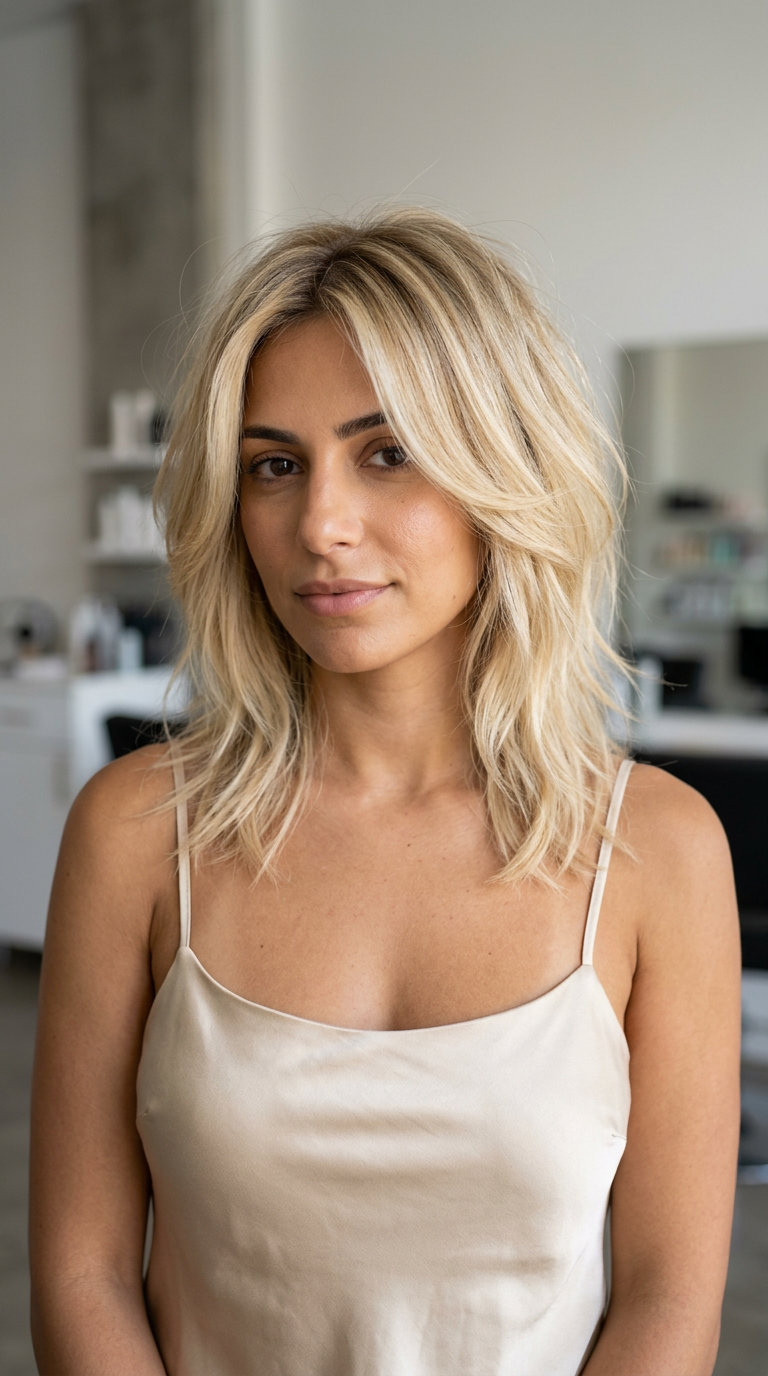
Soft internal layers starting at the cheekbones create maximum crown volume and face-framing—this is the architecture that makes a buttercream blonde wolf cut actually work instead of just sitting there. The color itself does half the heavy lifting: warm, buttery blonde reads less severe than platinum, which means you can get away with sharper layers underneath without looking like you’re actively angry at your hair. This cut suits wavy, fine to medium density hair that needs somewhere to go, and internal layers are exactly that somewhere.
The internal layers delivered maximum crown volume for 6 weeks with minimal styling, which is remarkable considering how many people expect wolf cuts to demand a blow dryer and three products just to leave the house. You’re working with soft movement here, not spiky drama. The buttercream shade extends the stretch between color maintenance visits too—root grow-out on this warm tone reads intentional instead of neglected, buying you an extra two weeks before it starts looking fuzzy. That’s the real math that matters. Volume for days.
Still Deciding? Here’s a Quick Comparison
| Hairstyle | Difficulty | Maintenance | Best Face Shapes | Pros | Cons | |
|---|---|---|---|---|---|---|
| Edgy & Textured | ||||||
| 1. Apricot Crush Wispy Wolf | Moderate | High — every 3-4 weeks | oval, heart, long | Suits most face shapesWorks on multiple texturesLayers add movement | Frequent salon visits needed |
| 2. Mushroom Bronde Shag Wolf | Easy | Low — every 10-12 weeks | oval, square, diamond | Low maintenanceEasy to style at homeSuits most face shapes | Not ideal for very curly hair |
| 3. Deep Mocha Wild Wolf | Easy | Low — every 8-10 weeks | round, square, oval | Low maintenanceEasy to style at homeSuits most face shapes | Not ideal for fine hair |
| 6. The Jet Black Pixie Wolf | Moderate | Medium — every 4-6 weeks | heart, oval, diamond | Suits most face shapesWorks on multiple texturesLayers add movement | Not ideal for very curly hair |
| 7. Buttercream Blonde Wolf | Moderate | Medium — every 10-12 weeks | oval, round, diamond | Suits most face shapesWorks on multiple texturesLayers add movement | Not ideal for very curly hair |
| 8. The Lilac Haze Wolf | Salon-only | High — every 2-3 weeks | round, oval, heart | Suits most face shapesWorks on multiple texturesLayers add movement | Requires professional styling |
| 10. Espresso Roast Polished Wolf | Moderate | Medium — every 8-10 weeks | All face shapes | Suits most face shapesWorks on multiple texturesLayers add movement | Not ideal for very curly hair |
| 12. Smoky Quartz Wolf Cut | Moderate | Medium — every 8 weeks | oval, square, heart | Suits most face shapesWorks on multiple texturesLayers add movement | Not ideal for very curly hair |
| 13. Golden Honey Ripple Wolf | Moderate | Medium — every 10-12 weeks | oval, heart, round | Suits most face shapesWorks on multiple texturesLayers add movement | Not ideal for very curly hair |
| 14. The Cotton Candy Dream Wolf | Salon-only | High — every 2-3 weeks | heart, oval, diamond | Suits most face shapesWorks on multiple texturesLayers add movement | Requires professional styling |
| 16. The Smoky Grey Cyber Wolf | Moderate | High — every 3-4 weeks | diamond, oval, long | Suits most face shapesWorks on multiple texturesLayers add movement | Frequent salon visits needed |
| 19. The Caramel Swirl Wolf | Moderate | Medium — every 8-10 weeks | oval, heart, square | Suits most face shapesWorks on multiple texturesLayers add movement | Not ideal for very curly hair |
| 21. The Crimson Siren Wolf | Moderate | High — every 4-6 weeks | square, diamond, oval | Suits most face shapesWorks on multiple texturesLayers add movement | Frequent salon visits needed |
| 23. The Deep Auburn Enchantress Wolf | Moderate | Medium — every 6-8 weeks | round, oval, heart | Suits most face shapesWorks on multiple texturesLayers add movement | Not ideal for fine hair |
| 24. Cherry Cola Wolf Cut | Moderate | High — every 4-5 weeks | heart, oval, long | Suits most face shapesWorks on multiple texturesLayers add movement | Frequent salon visits needed |
| 25. Sun-Kissed Buttercream Wolf | Moderate | Medium — every 8-10 weeks | oval, round, heart | Suits most face shapesWorks on multiple texturesLayers add movement | Not ideal for very curly hair |
| Classic & Clean | ||||||
| 17. Ash Blonde Chic Wolf | Moderate | Medium — every 6-8 weeks | square, diamond, oval | Suits most face shapesWorks on multiple texturesLayers add movement | Not ideal for very curly hair |
| 18. Dimensional Bronde Wolf Cut | Moderate | Medium — every 8-10 weeks | All face shapes | Suits most face shapesWorks on multiple texturesLayers add movement | Not ideal for very curly hair |
| 20. The Ash Blonde ‘Lived-In’ Wolf | Moderate | Medium — every 12-16 weeks | oval, square, long | Suits most face shapesWorks on multiple texturesLayers add movement | Not ideal for very curly hair |
| Bold & Statement | ||||||
| 11. Cherry Cola Shag Wolf | Moderate | High — every 4-5 weeks | heart, oval, long | Suits most face shapesWorks on multiple texturesLayers add movement | Frequent salon visits needed |
| Soft & Romantic | ||||||
| 5. The Lived-In Shadow Wolf | Easy | Low — every 10-12 weeks | all | Low maintenanceEasy to style at homeWorks on multiple textures | Not ideal for very curly hair |
| 22. Rose Gold Dreamer Wolf | Moderate | High — every 3-4 weeks | oval, long, heart | Suits most face shapesWorks on multiple texturesLayers add movement | Frequent salon visits needed |
Frequently Asked Questions
What’s the easiest wolf cut to style myself for summer 2026?
The Mushroom Bronde Shag Wolf and The Lived-In Shadow Wolf are both rated easy with quick air-dry styling (5–10 minutes active time). The Deep Mocha Wild Wolf is equally low-effort—just a quick diffuser boost if you want extra texture, but it looks intentional wet or dry. All three work with a color-safe shampoo and leave-in conditioner; no heat tools required.
Do I need heat tools for these summer wolf cut styles?
Not necessarily. The Mushroom Bronde Shag Wolf, Deep Mocha Wild Wolf, and The Lived-In Shadow Wolf are all designed for air-drying and look best that way. The Apricot Crush Wispy Wolf and The Copper Penny Wolf do benefit from a curling iron or diffuser for specific texture definition, but air-drying still works if you’re willing to embrace a softer, less defined version.
How do I make my wolf cut color last through summer activities?
High-impact colors like Apricot Crush Wispy Wolf and The Copper Penny Wolf require color-safe shampoo, regular leave-in conditioner with UV protection, and refreshes every 3–6 weeks. Mushroom Bronde Shag Wolf needs weekly purple shampoo or toner to keep the blonde from going brassy. The Lived-In Shadow Wolf is the most forgiving—it only needs refreshes every 4–6 months, making it ideal if you’re swimming or spending serious time in direct sun.
Which wolf cut is best for thick or curly hair in summer humidity?
The Deep Mocha Wild Wolf is specifically designed for wavy, curly, and thick hair—it embraces texture instead of fighting it and air-dries beautifully. The Copper Penny Wolf also suits medium to thick, wavy hair, using heavy internal layering to enhance movement without creating frizz. Both cuts rely on point-cutting and internal channeling to remove bulk while keeping definition.
How often do I need to trim a summer wolf cut to keep it looking intentional?
Most wolf cuts in this range need a trim every 4–6 weeks to maintain their shape and prevent that fuzzy, grown-out look. The Mushroom Bronde Shag Wolf and The Lived-In Shadow Wolf are more forgiving (6–8 weeks), while heavily layered styles like The Apricot Crush Wispy Wolf need tighter trims (4–5 weeks) to keep the wispy ends defined. Ask your stylist to show you what the cut looks like at 6 weeks—some wolf cuts grow out gracefully, others lose their structure fast.
Final Thoughts
Here’s what I learned writing this: the summer wolf cut 2026 isn’t actually about looking wild. It’s about looking like you woke up with intention instead of accident. The buttercream shade buys you grace period between color appointments. The layers do the work while you sleep. And the mousse? That’s just insurance.
Sometimes the ‘wild’ look just needs a good volumizing mousse, the right heat protectant for those UV-heavy days, and zero overthinking. Your stylist will ask about internal layering and point-cutting—say yes to both. Then go enjoy your summer without thinking about your hair again.